Showing posts with label trade. Show all posts

Monday, March 21, 2016

Leaked Documents Expose the TTIP Trade Deal as a Subversive Imperial Scam

Liberty Blitzkrieg | Michael Krieger | Posted Friday Mar 18, 2016


At least 150,000 people marched in Berlin on Saturday in protest against a planned free trade deal between Europe and the United States that they say is anti-democratic and will lower food safety, labor and environmental standards.

Organizers – an alliance of environmental groups, charities and opposition parties – said 250,000 people had taken part in the rally against free trade deals with both the United States and Canada, far more than they had anticipated.

Opposition to the so-called Transatlantic Trade and Investment Partnership (TTIP) has risen over the past year in Germany, with critics fearing the pact will hand too much power to big multinationals at the expense of consumers and workers.

– From the post: Merkel “Surprised” as Hundreds of Thousands March in Berlin Against TTIP “Corporate Dictatorship”

The Trans Pacific Partnership (TPP) is under total assault here in these United States, as the general public has become aware that these fake trade deals are merely oppressive power grabs written by lobbyists to benefit multinational corporations at the expense of the general public.


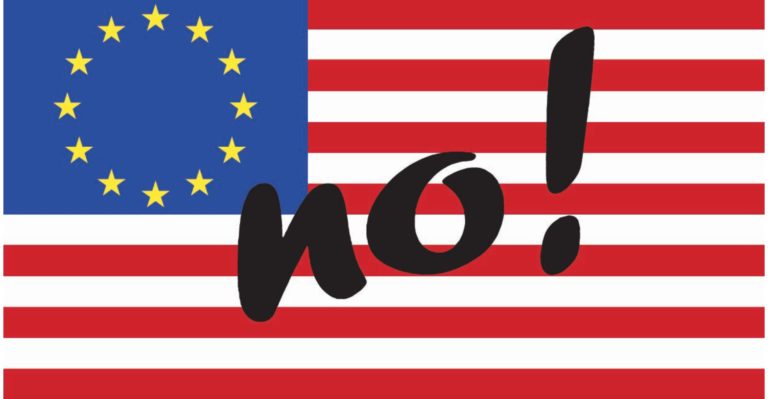
Less well known to the American public is a similar scam targeting Europe, known as the Transatlantic Trade and Investment Partnership (TTIP). Recently leaked documents have highlighted its profound dangers.

The Independent reports:

The European Commission will be obliged to consult with US authorities before adopting new legislative proposals following passage of a controversial series of trade negotiations being carried out mostly in secret.

A leaked document obtained by campaign group Corporate Europe Observatory (CEO) and the Independent from the ongoing EU-US Transatlantic Trade and Investment Partnership (TTIP) negotiations reveals the unelected Commission will have authority to decide in which areas there should be cooperation with the US – leaving EU member states and the European Parliament further sidelined.

The leaked document concerns the “regulatory cooperation” chapter of the talks, which the European Union says will result in “cutting red tape for EU firms without cutting corners”. It shows a labyrinth of procedures that could tie up any EU proposals that go against US interests, according to analysis by CEO.

The plans revealed by the document will give the US regulatory authorities a “questionable role” in Brussels lawmaking and weaken the European Parliament, CEO argues.

Nick Dearden, director of the Global Justice Now campaign group, said: “The leak absolutely confirms our fears about TTIP. It’s all about giving big business more power over a very wide range of laws and regulations. In fact, business lobbies are on record as saying they want to co-write laws with governments – this gets them a step closer. This isn’t an ‘add on’ or a small part of TTIP – it’s absolutely central.”

Mr Dearden said it was “scary” that the US could get the power to challenge and amend European regulations before elected European politicians have had the chance to debate them.

Referring to the imminent EU referendum, he said: “We’re talking about sovereignty at the moment in this country – it’s difficult to imagine a more serious threat to our sovereignty than this trade deal.”

All in all, the extent to which big business will be able to influence regulations under these proposals is a serious threat to democracy as we know it.

Considering Europe is already just a vessel state of the American imperial oligarchy, I guess we may as well put it in writing.

Tuesday, February 23, 2016

MSNBC CENSORS SANDERS CONDEMNING TPP

Kit Daniels | Infowars - FEBRUARY 23, 2016

IMAGE CREDITS: GAGE SKIDMORE / FLICKR.

MSNBC cut away from live coverage of a Bernie Sanders press conference once he began to condemn the controversial Trans-Pacific Partnership.


Social media exploded as a result as viewers felt the break in Monday’s coverage was due to MSNBC’s owner, Comcast, not wanting to air criticism of the TPP because it benefits greatly from the treaty.


Scroll to the 1:40 mark.

“Of the near $16 million Comcast spent lobbying politicians in 2015, $40,000 alone was spent in the first three months of the year targeting the Senate and House of Representatives on issues relating to TPP,” RTreported. “Over an 18-month period between 2013 and 2015, Media Matters found that MSNBC only discussed TPP twice, with the exception of Ed Schultz, who discussed the agreement during 71 broadcasts while he was still hosting The Ed Show for MSNBC.”

Schultz later left MSNBC for RT America.

MSNBC isn’t alone in suppressing TPP coverage; CBS, ABC and NBC also barely mentioned the treaty over an 18-month period despite the TPP’s severe implications on both the U.S. economy and global human trafficking.

For one thing, not long after the White House invited Thailand to join the TPP, the AP reported the country was relying on slave labor to ship shrimp to the U.S.

“For… 16 hours, No. 31 and his wife stood in the factory that owned them with their aching hands in ice water,” the AP revealed. “They ripped the guts, heads, tails and shells off shrimp bound for overseas markets, including grocery stores and all-you-can-eat buffets across the United States.”

“After being sold to the Gig Peeling Factory, they were at the mercy of their Thai bosses, trapped with nearly 100 other Burmese migrants.”

It’s unlikely Thailand’s billion-dollar slave industry would prevent it from joining the TPP considering that President Obama previously removed an anti-slavery provision from the treaty and also allowed Vietnam to join the partnership despite its flourishing slave trade.

Interestingly, Obama quietly removed the TPP’s anti-slavery clause at the same time he was attacking the Confederate flag as a “symbol of slavery” last summer.

Thursday, February 11, 2016

The Telegraph Fears a Populist Uprising

Brushfyre | James Menendez | February 11, 2016


Allister Heath, deputy Editor for the Telegraph, penned an article in today's Telegraph warning those who ally with globalism that a populist uprising of right-leaning affiliation could be disastrous for the left, the global banks and their ilk.


I literally read each tantalizing word of this article this morning with my mouth agape. I couldn't believe the admissions that one by one were being exposed via the ranting of this globalist. Let's run through them, shall we?

'We' can survive another collapse


We are too fragile, fiscally as well as psychologically. Our economies, cultures and polities are still paying a heavy price for the Great Recession; another collapse, especially were it to be accompanied by a fresh banking bailout by the taxpayer, would trigger a cataclysmic, uncontrollable backlash.

The public, whose faith in elites and the private sector was rattled after 2007-09, would simply not wear it. Its anger would be so explosive, so-all encompassing that it would threaten the very survival of free trade, of globalisation and of the market-based economy. There would be calls for wage and price controls, punitive, ultra-progressive taxes, a war on the City and arbitrary jail sentences.
Emphasis mine. By 'We' he means 'them', that is: the globalists. It is extremely apparent in the article that the author does not see himself as one of 'us'. He speaks as if he is talking to his bankster globalist masters, supplicating himself prostrate before them saying 'your way is the best'.

Politicians would become 'Extremist' and 'Populist'

Trump wants to make America Great again.

The fact that Donald Trump and Bernie Sanders both won their respective New Hampshire primaries is certainly one remarkable indication of the state of mind of many US political activists

The key thing here is that the author is not interested in making America great again. He wants the Fed to continue it globalised central bank policy of managing inflation by printing vast sums of cash for the banks (not you). 

More of the Status Quo

More from the article:

History never repeats itself exactly, but the last time a recession was met by pure, unadulterated populism was in the Thirties, when the Americans turned a stock market crash and a series of monetary policy blunders into a depression. President Herbert Hoover signed into law the Smoot-Hawley Tariff Act, dreamt up by two economically illiterate Republican senators, slapping massive taxes on the imports of 20,000 goods and triggering a global trade war. It was perhaps the most economically destructive piece of legislation ever devised, and it took until the Nineties before the damage was finally erased.
Emphasis mine. Let's make sure the banks keep getting their way. He uses the example of the Smoot-Hawley Tariff Act of 1930. This Act of Congress was great for America but really bad for the globalists. The author mentions that this disaster wasn't fixed until the 1990's. What happened in 1990's that would have bolstered globalism and consequently the destruction of American jobs? That's right: NAFTA and GATT. The 'giant sucking sound' Ross Perot warned us about.

If it is not working, why continue failed policies?


The question one has to ask is: why, if the current policies that this author is defending have failed would he continue to argue for the same policies? Make no mistake these policies will lead to the systematic downfall of every country that adopts them. Perhaps then this is the plan: the destruction of every world economy so that one economy can rise above them and take over all the broken countries. A one-world government for instance. That is what globalism is after all, isn't it? One world the central bankers in charge?


Thursday, February 4, 2016

Obama Urges Congress to Approve TPP ‘This Year’; Leading Presidential Candidates Oppose It

CNS News | By Patrick Goodenough | February 4, 2016 | 4:17 AM EST


After trade ministers from the U.S. and 11 other countries on either side of the Pacific on Thursday signed one of the biggest trade deals in history, President Obama called on Republicans and Democrats to approve it “this year.”


Obama said in a statement he would “continue working with Democrats and Republicans in Congress to enact it [the Trans-Pacific Partnership] into law as soon as possible so our economy can immediately start benefiting from the tens of billions of dollars in new export opportunities.”

“We should get TPP done this year and give more American workers the shot at success they deserve and help more American businesses compete and win around the world,” he said.

Obama clearly has the November election in mind: Leading candidates in both parties oppose the TPP while the deal has supporters and critics on both sides of the aisle in Congress.

America’s 11 partners in the TPP, which has been under negotiation for five years, are Australia, Brunei, Canada, Chile, Japan, Malaysia, Mexico, New Zealand, Peru, Singapore, and Vietnam. All 12 countries must now ratify it.

At the signing ceremony in Auckland, New Zealand, U.S. Trade Representative Michael Froman expressed confidence that Congress would approve the deal.

“We are working with members of Congress, working with the leadership of Congress, educating everybody as to what’s in the agreement, addressing their questions and concerns,” he said.

“And I’m confident that at the end of the day, because of the strong benefits to the U.S. economy – which have been estimated to be over $130 billion a year in GDP growth, as well as more than $350 billion in additional exports – that members of Congress will see the benefits for their constituents and we’ll have the necessary bipartisan support to be approved,” Froman said.


Democratic primary frontrunner Hillary Clinton moved from backing the TPP while secretary of state – saying in 2012 that it set “the gold standard in trade agreements” – to rejecting it last July.

Her socialist opponent, Sen. Bernie Sanders of Vermont, pledged last October to “lead the effort to defeat” the TPP.

Republican frontrunner Donald Trump has called the TPP “a horrible deal,”charging during a Fox Business Network debate last November that it was “designed for China to come in, as they always do, through the back door and totally take advantage of everyone.”

(Sen. Rand Paul accused Trump of mistakenly saying China was a TPP member although Trump did not exactly do so; TPP critics have warned that China may later join the original 12 members. Nonetheless, Politifact ratedTrump’s statement untrue.)

Among the other GOP candidates, former Florida Gov. Jeb Bush has been most supportive of the trade deal.

Sen. Marco Rubio of Florida voted last June in favor of Trade Promotion Authority (TPA), giving the president “fast track” authority to negotiate agreements like the TPP. Later in the year he declared himself “generally very much in favor of free trade” but said he would need to understand the details of the TPP “before we can commit to voting for something. But generally, it’s very positive.”

Sen. Ted Cruz of Texas voted against the TPA. After not taking a position in favor or against the TPP for months, he said in Iowa in November that he would vote against the trade pact.

Among others in the GOP pack, the TPP has the support of neurosurgeonBen Carson (“with reservations”) and of Ohio Gov. John Kasich, who has called it “critical.”

Former Hewlett-Packard CEO Carly Fiorina last June voiced skepticism about the TPP, and also cited concerns that China could join later.

New Jersey Gov. Chris Christie is on the record as saying he generally believes in free trade but that he has “real concerns about this president’s ability to negotiate anything that represents a great deal for America.”

Monday, February 1, 2016

RETAIL APOCALYPSE: 2016 BRINGS EMPTY SHELVES AND STORE CLOSINGS ALL ACROSS AMERICA

Michael Snyder | End Of The American Dream - FEBRUARY 1, 2016

IMAGE CREDITS: TWITTER, EZLEEINFAMOUS.


Major retailers in the United States are shutting down hundreds of stores, and shoppers are reporting alarmingly bare shelves in many retail locations that are still open all over the country.


It appears that the retail apocalypse that made so many headlines in 2015 has gone to an entirely new level as we enter 2016. As economic activityslows down and Internet retailers capture more of the market, brick and mortar retailers are cutting their losses. This is especially true in areas that are on the lower portion of the income scale. In impoverished urban centers all over the nation, it is not uncommon to find entire malls that have now been completely abandoned. It has been estimated that there is about a billion square feet of retail space sitting empty in this country, and this crisis is only going to get worse as the retail apocalypse accelerates.

We always get a wave of store closings after the holiday shopping season, but this year has been particularly active. The following are just a few of the big retailers that have already made major announcements…

-Wal-Mart is closing 269 stores, including 154 inside the United States.

-K-Mart is closing down more than two dozen stores over the next several months.

-J.C. Penney will be permanently shutting down 47 more stores after closing a total of 40 stores in 2015.

-Macy’s has decided that it needs to shutter 36 stores and lay offapproximately 2,500 employees.

-The Gap is in the process of closing 175 stores in North America.

-Aeropostale is in the process of closing 84 stores all across America.

-Finish Line has announced that 150 stores will be shutting down over the next few years.

-Sears has shut down about 600 stores over the past year or so, but sales at the stores that remain open continue to fall precipitously.

But these store closings are only part of the story.

All over the country, shoppers are noticing bare shelves and alarmingly low inventory levels. This is happening even at the largest and most prominent retailers.

I want to share with you an excerpt from a recent article by Jeremiah Johnson. The anecdotes that he shares definitely set off alarm bells with me. Read them for yourself and see what you think…

*****

I came across two excellent comments upon Steve Quayle’s website that bear reading, as these are two people with experience in retail marketing, inventory, ordering, and purchases. Take a look at these:

#1 (From DJ, January 24, 2016)
“Steve-
[Regarding the] alerts about the current state of the RR industry. This is in line with what I’ve been noticing as I visited our local/regional grocery store, Walmart, and Target this week in WI. I worked in big box retail for 20 years specializing in Inventory Management. These stores are all using computerized inventory management systems that monitor and automatically replenish inventory when levels/shelf stock get low. This prevents “out of stocks” and lost sales. These companies rely on the ability to replenish inventory quickly from regional warehouses.
As I shopped this week and looked at inventory levels I was shocked. There were numerous (above and beyond acceptable levels) out of stocks across category lines at all three retailers. And even where inventory was on the shelf, the overall levels were noticeably reduced. Based on my experience, working for two of these three organizations in store management, they have drastically/intentionally reduced their inventory levels. This is either due to financial stresses/poor sales effecting their ability to acquire new inventory, or it could be the result of what was mentioned earlier regarding the transporting of goods to these regional warehouses. Either way this doesn’t bode well for the what’s to come. Stock up now while you can!”

#2 (From a Commenter following up #1 who didn’t provide a name, January 26, 2016)

“I’d like to tailgate on the SQ Alert “based on my experience…” regarding stock levels in big box stores. This weekend we were in two such stores, each in fairly isolated communities which are easily the communities’ best source for acquiring grocery items in quantity.
I myself worked in retail (meat) for thirty years so I know exactly what a well-stocked store looks like, understand the key categories and category drivers, and how shelves are stocked and displays are built to drive sales and profits. I also understand supply chain and distribution methodologies quite well.
Each of the stores we were in were woefully under-stocked.This time of year-the few weeks following the holidays-is usually big business in groceries and low stock levels suggest either poor ordering at the store level, poor purchasing at the distribution level or a purposeful desire to be under-stocked.

Anyone familiar with the retail grocery industry is also familiar with how highly touted “the big box store’s” infrastructure is. They know exactly when demand is high and for what items and in what quantities. It is very unlikely that both stores somehow got “surprised” by unusually high demand. It is reasonable then to imagine that low stock levels in rural areas with few options is a purposed endeavor to assure that both the budget conscious and the folks in more remote areas are not fully able to load up their pantries.

Simply put I believe the major retailer in question is doing their part to limit the ability of rural America to be sufficiently prepared. Nevertheless, we are wise to do our best to keep ahead of the curve. God bless your efforts, Steve.”

*****

Yes, this is just anecdotal evidence, but it lines up perfectly with hard numbers that I have been discussing on The Economic Collapse Blog.

Exports are plummeting all over the globe, and the Baltic Dry Index just plunged to another new all-time record low. The amount of stuff being shipped around by air, truck and rail inside this country has been dropping significantly, and this tells us that real economic activity is really slowing down.

If you currently work in the retail industry, your job is not secure, and you may want to start evaluating your options.

We have entered the initial phases of a major economic downturn, and it is going to be especially cruel to those on the low end of the income spectrum. Do what you can to get prepared now, because the economy is not going to be getting better any time soon.

Tuesday, January 26, 2016

Canada will sign TPP trade deal Feb. 4, but ratification not certain

CBC News | By Andy Blatchford, The Canadian Press | Jan 25, 2016 11:33 AM ET

International Trade Minister Chrystia Freeland says Canada will sign on to the Trans-Pacific Partnership trade deal at a ceremony in New Zealand on Feb. 4. But as for ratifying the deal, Freeland said that will still be a matter for Parliament. (Sean Kilpatrick/Canadian Press)

The federal government has confirmed that it intends to sign the controversial Trans-Pacific Partnership trade deal at a meeting next week in New Zealand.

But when it comes to ratification of the 12-country treaty, the Liberals are still perched squarely atop the fence.

"Just as it is too soon to endorse the TPP, it is also too soon to close the door," International Trade Minister Chrystia Freeland wrote Monday in an open letter posted on her department's website.

"Signing does not equal ratifying.... Signing is simply a technical step in the process, allowing the TPP text to be tabled in Parliament for consideration and debate before any final decision is made."

Only a majority vote in the House of Commons would ensure that Canada seals the deal, she added. She has also requested a thorough, transparent study of the agreement by parliamentary committee.

In recent weeks, Freeland has conducted public consultations on the wide-ranging accord, which — if ratified — would also set new international rules for sectors beyond trade. Those other areas include intellectual property, which worries some experts.

"It is clear that many feel the TPP presents significant opportunities, while others have concerns," Freeland wrote.

"Many Canadians still have not made up their minds and many more still have questions."

The minister has already indicated the massive accord, which includes major economies such as the United States and Japan, cannot be renegotiated.
2-year ratification deadline

Freeland said each country has up to two years to consider ratification before making a final decision. She pointed out that by signing the deal Canada will keep its status as a potential full partner in the agreement.

Trade ministers from the TPP's partner countries have been invited to sign the deal on Feb. 4 in Auckland.

The former Conservative government announced an agreement-in-principle on the pact in October during the federal election campaign.

At the time, then-prime minister Stephen Harper hailed the TPP as a deal that would give Canada access to a massive market of nearly 800 million people.

Harper warned Canada couldn't afford to pass up on the agreement, a deal that came under heavy criticism in part because the talks took place in secrecy.

The treaty can take effect if it's ratified by half the participating countries representing 85 per cent of the proposed trade zone's economy.

It remains unclear, however, whether U.S. lawmakers will ratify the accord.
'Western Canada is hurting'

On Monday, Conservative Leader Rona Ambrose urged the government to support the TPP to help Canada's limping economy.

"Right now when Western Canada is hurting... the Trans-Pacific Partnership offers huge opportunities, particularly in the business services sector and the agricultural sector," Ambrose said in Ottawa.

In a recent interview with The Canadian Press, Freeland recalled hearing people on both sides of the TPP debate express their views during her cross-Canada consultations.

For example, she said she heard from groups representing farmers in Alberta and the Port of Vancouver that were very strongly in favour of TPP, a deal that would open up new foreign markets for many Canadian firms.

On the other hand, Freeland also heard concerns from Canadian and U.S. academics at a recent event at the University of Toronto. Several trade experts who addressed the conference criticized the TPP's provisions on intellectual property and warned they would be harmful for Canada.

Freeland has said Canada must remain deeply connected to the global economy, particularly since the country boasts just the 11th-biggest economy in the world.

"We are strongly in favour of free trade," she said in the interview. "Having said that, we're not the government that negotiated the TPP."