Showing posts with label intelligence. Show all posts

Tuesday, February 9, 2016

US intelligence chief: we might use the internet of things to spy on you

The GuardianSpencer Ackerman and Sam Thielman | 9 February 2016 16.51 EST


The US intelligence chief has acknowledged for the first time that agencies might use a new generation of smart household devices to increase their surveillance capabilities.


As increasing numbers of devices connect to the internet and to one another, the so-called internet of things promises consumers increased convenience – the remotely operated thermostat from Google-owned Nest is a leading example. But as home computing migrates away from the laptop, the tablet and the smartphone, experts warn that the security features on the coming wave of automobiles, dishwashers and alarm systems lag far behind.

The government just admitted it will use smart home devices for spying.

In an appearance at a Washington thinktank last month, the director of the National Security Agency, Adm Michael Rogers, said that it was time to consider making the home devices “more defensible”, but did not address the opportunities that increased numbers and even categories of connected devices provide to his surveillance agency.

However, James Clapper, the US director of national intelligence, was more direct in testimony submitted to the Senate on Tuesday as part of an assessment of threats facing the United States.

“In the future, intelligence services might use the [internet of things] for identification, surveillance, monitoring, location tracking, and targeting for recruitment, or to gain access to networks or user credentials,” Clapper said.

Clapper did not specifically name any intelligence agency as involved in household-device surveillance. But security experts examining the internet of things take as a given that the US and other surveillance services will intercept the signals the newly networked devices emit, much as they do with those from cellphones. Amateurs are already interested in easily compromised hardware; computer programmer John Matherly’s search engine Shodan indexes thousands of completely unsecured web-connected devices.

Online threats again topped the intelligence chief’s list of “worldwide threats” the US faces, with the mutating threat of low-intensity terrorism quickly following. While Clapper has for years used the equivocal term “evolving” when asked about the scope of the threat, he said Tuesday that Sunni violent extremism “has more groups, members, and safe havens than at any other point in history”.


The Islamic State topped the threat index, but Clapper also warned that the US-backed Saudi war in Yemen was redounding to the benefit of al-Qaida’s local affiliate.

Domestically, “homegrown extremists” are the greatest terrorist threat, rather than Islamic State or al-Qaida attacks planned from overseas. Clapper cited the San Bernardino and Chattanooga shootings as examples of lethal operations emanating from self-starting extremists “without direct guidance from [Isis] leadership”.

US intelligence officials did not foresee Isis suffering significant setbacks in 2016 despite a war in Syria and Iraq that the Pentagon has pledged to escalate. The chief of defense intelligence, Marine Lt Gen Vincent Stewart, said the jihadist army would “probably retain Sunni Arab urban centers” in 2016, even as military leaders pledged to wrest the key cities of Raqqa and Mosul from it.

Contradicting the US defense secretary, Ashton Carter, Stewart said he was “less optimistic in the near term about Mosul”, saying the US and Iraqi government would “certainly not” retake it in 2016.

The negative outlook comes as Carter traveled on Tuesday to meet with his fellow defense chiefs in Brussels for a discussion on increasing their contributions against Isis.

On the Iran nuclear deal, Clapper said intelligence agencies were in a “distrust and verify mode”, but added: “We have no evidence thus far that they’re moving toward violation.”

Clapper’s admission about the surveillance potential for networked home devices is rare for a US official. But in an overlooked 2012 speech, the then CIA director David Petraeus called the surveillance implications of the internet of things “transformational … particularly to their effect on clandestine tradecraft”.

During testimony to both the Senate armed services committee and the intelligence panel, Clapper cited Russia, China, Iran, North Korea and the Islamic State as bolstering their online espionage, disinformation, theft, propaganda and data-destruction capabilities. He warned that the US’s ability to correctly attribute the culprits of those actions would probably diminish with “improving offensive tradecraft, the use of proxies, and the creation of cover organizations”.

Clapper suggested that US adversaries had overtaken its online capabilities: “Russia and China continue to have the most sophisticated cyber programs.”

The White House’s new cybersecurity initiative, unveiled on Tuesday, pledged increased security for nontraditional networked home devices. It tasked the Department of Homeland Security to “test and certify networked devices within the ‘Internet of Things’.” It did not discuss any tension between the US’s twin cybersecurity and surveillance priorities.

Connected household devices are a potential treasure trove to intelligence agencies seeking unobtrusive ways to listen and watch a target, according to a study that Harvard’s Berkman Center for Internet and Society released last week. The study found that the signals explosion represented by the internet of things would overwhelm any privacy benefits by users of commercial encryption – even as Clapper in his testimony again alleged that the growth of encryption was having a “negative effect on intelligence gathering”.

The report’s authors cited a 2001 case in which the FBI had sought to compel a company that makes emergency communications hardware for automobiles – similar by description to OnStar, though the company was not named – to assist agents in Nevada in listening in on conversations in a client’s car.

In February 2015, news reports revealed that microphones on Samsung “smart” televisions were “always on” so as to receive any audio that it could interpret as an instruction.

“Law enforcement or intelligence agencies may start to seek orders compelling Samsung, Google, Mattel, Nest or vendors of other networked devices to push an update or flip a digital switch to intercept the ambient communications of a target,” the authors wrote.

Thursday, February 4, 2016

Clinton’s Security Clearance Is Under Scrutiny

Bloomberg | By Eli Lake & Josh Rogin | FEB 4, 2016 6:00 AM EST

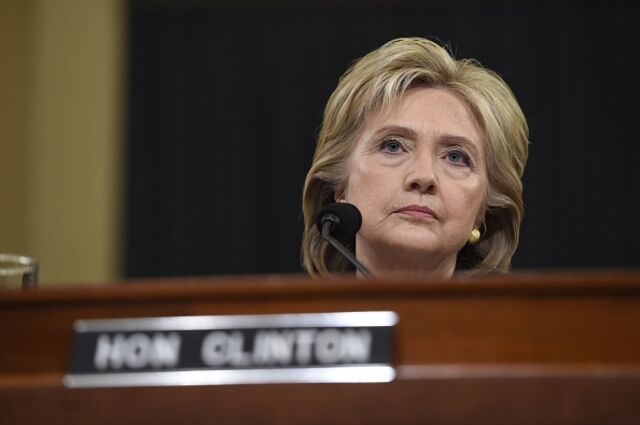
SHE'S USED TO SCRUTINY. PHOTOGRAPHER: SAUL LOEB/AFP/GETTY IMAGES

Now that several e-mails on Hillary Clinton's private server have been classified, there is a more immediate question than the outcome of the investigation: Should the former secretary of state retain her security clearance during the inquiry? Congressional Republicans and Democrats offer predictably different answers.


The State Department announced Friday that it would not release 22 e-mails from Clinton’s private server after a review found they contained information designated as top secret. U.S. officials who reviewed the e-mails tell us they contain the names of U.S. intelligence officers overseas, but not the identities of undercover spies; summaries of sensitive meetings with foreign officials; and information on classified programs like drone strikes and intelligence-collection efforts in North Korea.

The FBI is investigating the use of Clinton’s home server when she was secretary of state, which the bureau now has. The New York Times reported in August that Clinton is not a target of that investigation. We reported in September that one goal is to discover whether a foreign intelligence service hacked in.

Representative Adam Schiff, the ranking Democrat on the House Intelligence Committee, said Clinton should not lose her security clearance for receiving information that was not marked classified at the time. "I'm sure she does hold a clearance, and she should," he told us.

Representative Mike Pompeo, a Republican member of that committee who also has read the e-mails, told us, "It's important, given all the information we now know, that the House of Representatives work alongside the executive branch to determine whether it's appropriate for Secretary Clinton to continue to hold her security clearances."

Senate Intelligence Chairman Richard Burr told us the decision lies with the White House. “I think that’s up to what the National Security Council is comfortable with,” he said.

Burr, who has also read all 22 e-mails, said Clinton should have known to better protect the information they contain. “They are definitely sensitive," he said. "Anybody in the intelligence world would know that the content was sensitive.”

His Democratic counterpart, Senator Dianne Feinstein, who also read them, told us that Clinton didn’t originally send any of the e-mails and that they were largely from her staff, although she did sometimes reply. Feinstein said the intelligence community is being overly cautious by designating the e-mails as top secret.

“There’s no question that they are over-classifying this stuff,” she said.

Clinton’s discussion of classified programs on an unclassified e-mail system is hardly rare. The issue, called “spillage,” has plagued the government for years. It can apply to anything from a spoken conversation about intelligence programs outside of a secure facility, to printing out a document with classified information on an insecure printer.

Still, it is forbidden. The State Department's Foreign Affairs Manual says "transmitting classified information over a communication channel that is unauthorized for the level of information being transmitted" is a "security violation." Such violations must be investigated by the State Department's own bureaus of human resources and diplomatic security. Punishment can vary from a letter of reprimand to loss of security clearance, according to the manual.

When asked about the status of Clinton's security clearance, State Department spokesman John Kirby said: "The State Department does not comment on individuals’ security clearance status. We will say, however, that generally speaking there is a long tradition of secretaries of state making themselves available to future secretaries and presidents. Secretaries are typically allowed to maintain their security clearance and access to their own records for use in writing their memoirs and the like.”

The Clinton campaign declined to comment.

During the Obama administration, it has not been automatic for officials to lose their security clearance while an investigation is underway. Just last week, the Washington Post reported that the chief of naval intelligence, Vice Adm. Ted Branch, had his security clearance suspended because he is wrapped up in a Justice Department investigation into contracting corruption. He has not been able to read, see, or hear classified information since November 2013. Branch has not been charged with any crime and continues to serve in that post.

But when then-CIA director David Petraeus came under FBI investigation at the end of 2012, his security clearance was not formally revoked. After he resigned, his access to classified information was suspended, according to U.S. officials. In that case, Petraeus had provided notebooks with highly classified information to his biographer and mistress Paula Broadwell, whose security clearances did not permit her to receive it.

Unlike Broadwell, officials familiar with the e-mails tell us that Clinton and her e-mail correspondents were cleared to receive the information that has been classified after the fact. Steven Aftergood, who heads the project on government secrecy for the Federation of American Scientists, told us, "It's entirely possible for information to start out as unclassified and to be classified only when the question of public disclosure arises."

William Leonard, who oversaw the government's security classification process between 2002 and 2008 as the director of the Information Security Oversight Office, told us this kind of "spillage" was common. "The bottom line is this, if you have the opportunity to pore through any cleared individual's unclassified e-mail account, it's almost inevitable you would find material that someone, some way would point out should be classified." He also said that in Clinton's case, "there is no indication that she deliberately disregarded the rules for handling classified information so I see no reason why she should not remain eligible for a security clearance."

Nonetheless, Leonard added that Clinton's decision to use the private e-mail server as secretary of state "reflected exceedingly poor judgment, and those that advised her on this did not serve her well."

The FBI investigation may determine that neither Clinton nor her aides broke the law, but Clinton herself has said she used poor judgment. It's an open question how that poor judgment will affect her access to state secrets, during and after the FBI's investigation.

Friday, January 29, 2016

State to release some Clinton emails on Friday; thousands still delayed

The Hill | By Julian Hattem - 01/29/16 09:14 AM EST

IMAGE SOURCE: WIKIPEDIA

The State Department on Friday will release roughly 2,000 pages of Hillary Clinton’s emails, but will delay the final batch of messages until after voters go to the polls in early primary states.


In a court filing late on Thursday evening, the department insisted that it “regrets” its inability to publish the final 7,000 pages on Friday, as a federal court ordered it to do last year.

Yet it defended the delay, blaming an internal oversight and the snowstorm that crippled Washington in the past week.

As part of the process of making the emails public, the State Department is required to have other agencies review Clinton’s emails to check if any information should be redacted or marked as classified.

According to the department, it simply “missed” sending roughly 7,000 pages of emails to other agencies, and did not notice the oversight until earlier this month. Its efforts to correct the problem were further delayed by the snowstorm, which closed the federal government through Wednesday.

The department has not even sent out documents to 12 agencies to review, it said.

Last week, the department pushed to delay the final deadline until Feb. 29.

As the journalist who sued the department to force the emails’ release pointed out, however, that would be after voters in the first four primary states have gone to the polls.

“[I]f the Court allows State to delay release of thousands of pages of Democratic presidential candidate Hillary Clinton’s official work emails, a substantial portion of the electorate will be forced to vote without the benefit of important information to which it is entitled about the performance of one of the candidates for U.S. President while serving as Secretary of State,” lawyers opposing the department’s schedule claimed earlier this week.

The Obama administration was unmoved.

“Upcoming electoral events, while admittedly important to the public, do not change the fact that State needs this reasonable amount of additional time to complete the final stage of this enormous and complex undertaking,” lawyers representing the State Department wrote.

Critics have warned that the final tranche of emails could contain scandalous or scintillating nuggets about Clinton’s time in the State Department. Administration lawyers this week attempted to dismiss those allegations.

The 7,000 pages of emails that won’t be out for another month needed to go through “multiple” other agencies for review, they claimed.

“But that does not mean that these emails are more ‘controversial’ than other emails, or that the oversight that led to them not being sent to all the necessary agencies was related to their substance," they wrote.

Thursday, January 28, 2016

The admiral in charge of Navy intelligence has not been allowed to see military secrets for years

The Washington Post | By Craig Whitlock | January 27 at 8:06 PM

In this 2012 photo, Rear Adm. Ted “Twig” Branch, commander of Naval Air Force Atlantic, speaks to the crew aboard the aircraft carrier USS Enterprise. (U.S. Navy photo by Mass Communication Spec. 3rd Class Heath Zeigler)

For more than two years, the Navy’s intelligence chief has been stuck with a major handicap: He’s not allowed to know any secrets.

Vice Adm. Ted “Twig” Branch has been barred from reading, seeing or hearing classified information since November 2013, when the Navy learned from the Justice Department that his name had surfaced in a giant corruption investigation involving a foreign defense contractor and scores of Navy personnel.

Worried that Branch was on the verge of being indicted, Navy leaderssuspended his access to classified materials. They did the same to one of his deputies, Rear Adm. Bruce F. Loveless, the Navy’s director of intelligence operations.

More than 800 days later, neither Branch nor Loveless has been charged. But neither has been cleared, either. Their access to classified information remains blocked.

Although the Navy transferred Loveless to a slightly less sensitive post, it kept Branch in charge of its intelligence division. That has resulted in an awkward arrangement, akin to sending a warship into battle with its skipper stuck onshore.

[Epic Navy bribery scandal shows how easy it can be to steal military secrets]

Branch can’t meet with other senior U.S. intelligence leaders to discuss sensitive operations, or hear updates from his staff about secret missions or projects. It can be a chore just to set foot in colleagues’ offices; in keeping with regulations, they must conduct a sweep beforehand to make sure any classified documents are locked up.

Some critics have questioned how smart it is for the Navy to retain an intelligence chief with such limitations, for so long, especially at a time when the Pentagon is confronted by crises in the Middle East, the South China Sea, the Korean Peninsula and other hotspots.

“I have never heard of anything as asinine, bizarre or stupid in all my years,” Norman Polmar, a naval analyst and historian, said in an interview.


In an op-ed in Navy Times last fall, Polmar urged Navy leaders to replace Branch and Loveless for the sake of national security. He cited complaints from several unnamed Navy officers that “intelligence management is being hampered at a moment of great turmoil.”

It’s a touchy subject for Navy brass, who have struggled to replace Branch. Twice in the past 14 months, they have taken steps to nominate a new intelligence chief — who must be confirmed by the Senate — but haven’t followed through. There’s no indication that a successor will be in place anytime soon.

In a statement, Rear Adm. Dawn Cutler, the Navy’s chief spokeswoman, said the Justice Department’s ongoing investigation of Branch and Loveless “has not impacted the Navy’s ability to manage operations.” She said the two still perform managerial duties while their civilian and military deputies handle the classified aspects of their jobs.

Branch and Loveless declined interview requests placed through the Navy.

In addition to serving as chief of Navy intelligence, Branch holds the title of the Navy’s chief information officer, oversees the Navy’s 55,000-member Information Dominance Corps and is in charge of many cybersecurity programs.

Privately, some Navy leaders acknowledged that dealing with the fallout from the Justice Department’s investigation has been a nightmare, and that they never anticipated the case would drag on so long.

“We had the understanding that this was going to resolve itself pretty quickly,” said a senior Navy official, who spoke on the condition of anonymity to avoid antagonizing federal prosecutors. “We have no actionable information on Admiral Branch, good, bad or otherwise. All we know is that he’s wrapped up in this somehow.”

“Until these things resolve themselves, we’re kind of frozen,” the senior official added. “Is it optimum? No, it’s not optimum. But it’s where we are.”


Cigars and suckling pigs


Branch has long been a star in the Navy’s officer corps. A fighter pilot by training, he has flown combat missions over Grenada, Lebanon, the Balkans and Iraq.


He’s perhaps best known for his leading role in a 10-part PBS documentary, “Carrier,” an inside account of life aboard the world’s largest aircraft carrier, the USS Nimitz, which he commanded in 2005.

In July 2013, he was promoted to become a three-star admiral and director of naval intelligence. But he would soon become hamstrung in the job.

About the same time, the Naval Criminal Investigative Service and the Justice Department were intensifying an investigation of Glenn Defense Marine Asia, a Singapore-based firm that had resupplied U.S. Navy vessels at Asian ports for a quarter century.

The company’s chief executive, Leonard Glenn Francis, was lured to the United States in a sting operation and was arrested at a San Diego hotel. A large and charismatic man known as “Fat Leonard,” he was charged with running a bribery scheme and defrauding the Navy of more than $20 million.

Several Navy officials were arrested, including a senior NCIS agent who confessed to feeding inside information to Francis for years.

As the case unfolded in federal court, prosecutors described in astonishing detail how Francis had bribed Navy officers with prostitutes, cash-stuffed envelopes, lavish hotel stays, spa treatments, and epicurean dinners featuring champagne, Cuban cigars, Kobe beef and Spanish suckling pigs.

In exchange, prosecutors said, some Navy officials provided Francis with classified information and steered Navy vessels to ports he controlled so he could overcharge the U.S. government for fuel, food, water and other supplies.

The investigation escalated quickly as federal agents traced Francis’s interactions with hundreds of Navy personnel over the previous decade.

On Nov. 8, 2013, late on a Friday night, the Navy announced that Branch and Loveless had been swept up in the case.

The Navy gave no details about what they were alleged to have done. Although the Navy said there was no evidence that either admiral had compromised military secrets, it suspended their access to classified material, saying the move was “prudent given the sensitive nature of their current duties.”

‘Good time on Leonard’s dime’


Little information about their predicament has surfaced since then.

One year later, Branch issued a statement to the Navy Times in which he said investigators were examining work performed by Glenn Defense Marine Asia while he served as the commander of the Nimitz.
He didn’t elaborate, but said he looked forward to the end of the inquiry “so that I can resume in full my service to the Navy and the country.”

Justice Department officials declined to answer questions about their scrutiny of Branch or to discuss why the inquiry has taken so long.

“This remains an active, ongoing investigation that covers conduct that spans more than a decade and involves a massive amount of evidence, multiple countries, tens of millions of dollars in fraud, and millions of dollars in bribes and gifts to scores of U.S. Navy officials,” Laura Duffy, the U.S. attorney in San Diego, said in a statement.

[Three U.S. naval officers censured in ‘Fat Leonard’ corruption probe]

A source close to the investigation said more than 100 Navy personnel and other people remain under investigation for potential criminal, financial or ethical violations.

“The sheer number of people involved here is extraordinary,” the source said, speaking on the condition of anonymity because the case is ongoing.

A second source close to the investigation said that Branch met Francis 16 years ago, when Branch was the executive officer of the aircraft carrier USS John C. Stennis, and that the pair stayed in regular contact.

The source said Francis has also known Loveless for many years, dating to his deployments in Asia as an intelligence officer aboard the aircraft carrier USS Kitty Hawk and as intelligence chief for the Navy’s 7th Fleet, based in Japan.

Although it is against federal ethics regulations to accept gifts from contractors, the Justice Department is focusing on Navy personnel who in turn did Francis’s bidding by sharing inside information or enabling him to overcharge the government.


“Some guys were just having a good time on Leonard’s dime,” the second source close to the investigation said. “Other guys were passing on classified information.”

Prosecutors have suggested that more arrests are likely. Seven defendants, including Francis, have pleaded guilty so far in federal court.

Federal corruption charges also are pending against a Navy commander and a senior Pentagon civilian. In addition, a former Navy contracting official living in Singapore was arrested there last month.

The extent of the scandal has been deeply humiliating for the Navy. Last week, at the sentencing of an enlisted sailor who forked over military secrets in exchange for cash and electronic gadgets, Rear Adm. Jonathan A. Yuen, the chief of the Navy Supply Corps, said he was mortified by the revelations in court.

“I do not have the words to express the depth of the betrayal,” Yuen testified. “No amount of money is worth betraying our nation, our Navy or our shipmates.”

In addition to those facing criminal prosecution by the Justice Department, the Navy has been investigating an unspecified number of people suspected of violating military regulations.

In February, for instance, the Navy officially censured three admirals for dining at “extravagant” banquets and accepting other gifts from Francis when they were assigned to the USS Ronald Reagan aircraft carrier strike group a decade ago.

Three stars or two stars


With Loveless’s status in limbo, the Navy transferred him to another position in December 2014.

As the corporate director for information dominance, he still works for Navy intelligence. But he deals primarily with issues that don’t require a security clearance, such as personnel and training, officials said.

The Navy has twice taken steps to replace Branch as well, but for reasons that remain unclear, hasn’t gone through with it.

In November 2014, the Navy prepared a nomination package for Rear Adm. Elizabeth Train to become the service’s intelligence head. But her promotion was put on hold after someone filed a complaint against her with the Navy inspector general.

Details of the complaint couldn’t be learned, but Pentagon officials said Train was cleared of wrongdoing by the inspector general. Her nomination was finally sent to the Senate Armed Services Committee in September.

Nothing has happened since. Pentagon officials said that her nomination has been placed on the back burner and that she’s not scheduled for promotion until July, although they declined to explain why.
Such a delay could work in Branch’s favor.

If he remains in his current job until July, he will have enough service time to qualify to retire as a vice admiral. If forced to leave before then, it’s more likely that he would have to retire at a lower rank as a two-star admiral, with a smaller pension.

The senior Navy official disputed that Branch’s rank and retirement eligibility was influencing the timetable to replace him. “That has not been a factor whatsoever,” the official said.
Even if Branch were cleared of wrongdoing by the Justice Department and the Navy tomorrow, he would face a much longer wait to regain access to military secrets.

Pentagon officials said his security clearance would have to be restored by a separate arm of the bureaucracy — the Defense Department’s Central Adjudication Facility — in a process that usually takes months.