Showing posts with label sci-tech. Show all posts

Wednesday, February 17, 2016

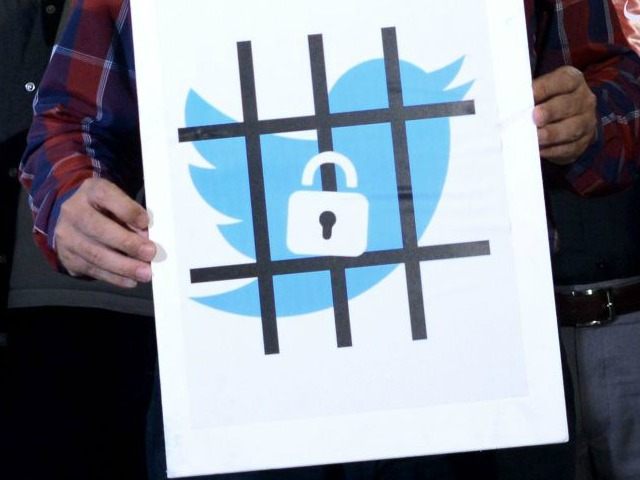
Twitter Shadowbanning ‘Real and Happening Every Day’ Says Inside Source

Breitbart | by MILO YIANNOPOULOS | 16 Feb 2016

AP Photo/Isa Simsek, Zaman

Rumours that Twitter has begun ‘shadowbanning’ politically inconvenient users have been confirmed by a source inside the company, who spoke exclusively to Breitbart Tech. His claim was corroborated by a senior editor at a major publisher.


According to the source, Twitter maintains a ‘whitelist’ of favoured Twitter accounts and a ‘blacklist’ of unfavoured accounts. Accounts on the whitelist are prioritised in search results, even if they’re not the most popular among users. Meanwhile, accounts on the blacklist have their posts hidden from both search results and other users’ timelines.

Our source was backed up by a senior editor at a major digital publisher, who told Breitbart that Twitter told him it deliberately whitelists and blacklists users. He added that he was afraid of the site’s power, noting that his tweets could disappear from users’ timelines if he got on the wrong side of the company.

Shadowbanning, sometimes known as “Stealth Banning” or “Hell Banning,” is commonly used by online community managers to block content posted by spammers. Instead of banning a user directly (which would alert the spammer to their status, prompting them to create a new account), their content is merely hidden from public view.

For site owners, the ideal shadowban is when a user never realizes he’s been shadowbanned.

However, Twitter isn’t merely targeting spammers. For weeks, users have been reporting that tweets from populist conservatives, members of the alternative right, cultural libertarians, and other anti-PC dissidents have disappeared from their timelines.

Among the users complaining of shadowbans are sci-fi author and alt-right figurehead Vox Day, geek culture blogger “Daddy Warpig,” and the popular pro-Trump account Ricky Vaughn. League of Gamers founder and former World of Warcraft team lead Mark Kern, as well as adult actress and anti-censorship activist Mercedes Carrera, have also reported that their tweets are not appearing on the timelines of their followers.

The pattern of shadowban reports, which skews towards the alt-right, the populist right, and cultural libertarians, follows close on the heels of Twitter’s establishment of a “Trust and Safety Council” packed with left-wing advocacy groups, as well as Islamic research centre the Wahid Institute.

It also follows my prediction that Twitter would use its influence to interfere in the 2016 presidential election by muffling conservative voices on the platform.

For close to a year now, Breitbart has covered Twitter’s march towards political censorship. In May 2015 Allum Bokhari reported that the site had begun to experiment with shadowbans, ostensibly to protect users from abuse. Then, as now, it was suspected that “protecting users from abuse” was an excuse to implement a system that would later be used for political censorship.

With shadowbans now confirmed by an inside source, there is little room for doubt that the platform is intent on silencing conservatives. Furthermore, it has demonstrated a complete lack of regard for transparency, concealing its shadowbanning system from users and hiding its political bias behind a veneer of opposition to online abuse. (In reality, the site turns a blind eye to abuse from left-wingers.)

Users in search of a transparent, politically unbiased platform will soon have to find — or build — an alternative.

Friday, February 12, 2016

NYPD TRACKED CITIZENS’ CELLPHONES 1,000 TIMES SINCE 2008 WITHOUT WARRANTS

Ciara McCarthy | The Guardian - FEBRUARY 11, 2016

IMAGE CREDITS: FLICKR, 49770271@N08.

New York City police have tracked citizens’ cellphones over 1,000 times since 2008 without using warrants, according to public records obtained by the New York Civil Liberties Union.


The organization announced on Thursday that the NYPD has typically used “stingrays” after obtaining lower-level court orders, but not warrants, before using the devices. The department also does not have a policy guiding how police can use the controversial devices. This is the first time that the scope of stingray use by the nation’s largest police agency has been confirmed.

The devices, generically known as stingrays, work by mimicking cell towers and tracking a cellphone’s location at a specific time. Law enforcement agencies can use the technology to track people’s movements through their cellphone use. Stingrays can also detect the phone numbers that a person has been communicating with, according to the NYCLU. The devices allow law enforcement to bypass cellphone carriers, who have provided information to police in the past, and can track data about bystanders in close proximity to the intended target.

Mariko Hirose, the NYCLU attorney who filed the records request, said the records reveal knowledge about NYPD’s stingray use that should have been divulged before police decided to start using them.

Read more

Tuesday, February 9, 2016

US intelligence chief: we might use the internet of things to spy on you

The Guardian | Spencer Ackerman and Sam Thielman | 9 February 2016 16.51 EST


The US intelligence chief has acknowledged for the first time that agencies might use a new generation of smart household devices to increase their surveillance capabilities.


As increasing numbers of devices connect to the internet and to one another, the so-called internet of things promises consumers increased convenience – the remotely operated thermostat from Google-owned Nest is a leading example. But as home computing migrates away from the laptop, the tablet and the smartphone, experts warn that the security features on the coming wave of automobiles, dishwashers and alarm systems lag far behind.

The government just admitted it will use smart home devices for spying.

In an appearance at a Washington thinktank last month, the director of the National Security Agency, Adm Michael Rogers, said that it was time to consider making the home devices “more defensible”, but did not address the opportunities that increased numbers and even categories of connected devices provide to his surveillance agency.

However, James Clapper, the US director of national intelligence, was more direct in testimony submitted to the Senate on Tuesday as part of an assessment of threats facing the United States.

“In the future, intelligence services might use the [internet of things] for identification, surveillance, monitoring, location tracking, and targeting for recruitment, or to gain access to networks or user credentials,” Clapper said.

Clapper did not specifically name any intelligence agency as involved in household-device surveillance. But security experts examining the internet of things take as a given that the US and other surveillance services will intercept the signals the newly networked devices emit, much as they do with those from cellphones. Amateurs are already interested in easily compromised hardware; computer programmer John Matherly’s search engine Shodan indexes thousands of completely unsecured web-connected devices.

Online threats again topped the intelligence chief’s list of “worldwide threats” the US faces, with the mutating threat of low-intensity terrorism quickly following. While Clapper has for years used the equivocal term “evolving” when asked about the scope of the threat, he said Tuesday that Sunni violent extremism “has more groups, members, and safe havens than at any other point in history”.


The Islamic State topped the threat index, but Clapper also warned that the US-backed Saudi war in Yemen was redounding to the benefit of al-Qaida’s local affiliate.

Domestically, “homegrown extremists” are the greatest terrorist threat, rather than Islamic State or al-Qaida attacks planned from overseas. Clapper cited the San Bernardino and Chattanooga shootings as examples of lethal operations emanating from self-starting extremists “without direct guidance from [Isis] leadership”.

US intelligence officials did not foresee Isis suffering significant setbacks in 2016 despite a war in Syria and Iraq that the Pentagon has pledged to escalate. The chief of defense intelligence, Marine Lt Gen Vincent Stewart, said the jihadist army would “probably retain Sunni Arab urban centers” in 2016, even as military leaders pledged to wrest the key cities of Raqqa and Mosul from it.

Contradicting the US defense secretary, Ashton Carter, Stewart said he was “less optimistic in the near term about Mosul”, saying the US and Iraqi government would “certainly not” retake it in 2016.

The negative outlook comes as Carter traveled on Tuesday to meet with his fellow defense chiefs in Brussels for a discussion on increasing their contributions against Isis.

On the Iran nuclear deal, Clapper said intelligence agencies were in a “distrust and verify mode”, but added: “We have no evidence thus far that they’re moving toward violation.”

Clapper’s admission about the surveillance potential for networked home devices is rare for a US official. But in an overlooked 2012 speech, the then CIA director David Petraeus called the surveillance implications of the internet of things “transformational … particularly to their effect on clandestine tradecraft”.

During testimony to both the Senate armed services committee and the intelligence panel, Clapper cited Russia, China, Iran, North Korea and the Islamic State as bolstering their online espionage, disinformation, theft, propaganda and data-destruction capabilities. He warned that the US’s ability to correctly attribute the culprits of those actions would probably diminish with “improving offensive tradecraft, the use of proxies, and the creation of cover organizations”.

Clapper suggested that US adversaries had overtaken its online capabilities: “Russia and China continue to have the most sophisticated cyber programs.”

The White House’s new cybersecurity initiative, unveiled on Tuesday, pledged increased security for nontraditional networked home devices. It tasked the Department of Homeland Security to “test and certify networked devices within the ‘Internet of Things’.” It did not discuss any tension between the US’s twin cybersecurity and surveillance priorities.

Connected household devices are a potential treasure trove to intelligence agencies seeking unobtrusive ways to listen and watch a target, according to a study that Harvard’s Berkman Center for Internet and Society released last week. The study found that the signals explosion represented by the internet of things would overwhelm any privacy benefits by users of commercial encryption – even as Clapper in his testimony again alleged that the growth of encryption was having a “negative effect on intelligence gathering”.

The report’s authors cited a 2001 case in which the FBI had sought to compel a company that makes emergency communications hardware for automobiles – similar by description to OnStar, though the company was not named – to assist agents in Nevada in listening in on conversations in a client’s car.

In February 2015, news reports revealed that microphones on Samsung “smart” televisions were “always on” so as to receive any audio that it could interpret as an instruction.

“Law enforcement or intelligence agencies may start to seek orders compelling Samsung, Google, Mattel, Nest or vendors of other networked devices to push an update or flip a digital switch to intercept the ambient communications of a target,” the authors wrote.

Robots will force experts to find other routes to the top

FT | Andrew Hill | February 8, 2016


There is a point in any talk about the automated future of the professions when the audience visibly relaxes.


It comes when futurists concede that a few expert lawyers, consultants or accountants will still be needed, even after cheaper, more efficient computer systems have taken over many of their juniors’ tasks.


It happened last week at a lecture by Richard and Daniel Susskind, which the organisers claimed was the largest ever gathering of senior managers in UK professional services firms.

The father-and-son authors of The Future of the Professions predicted radical change in the sector. But the tense scepticism in the room dissipated as each senior partner or director quietly acknowledged he or she would be a survivor, even if algorithms and artificial intelligence swept away the consultant or solicitor in the next seat.

This cohort may well reach retirement unscathed — and without much incentive to alter how they work. As Richard Susskind told me afterwards, “it’s hard to convince a room full of millionaires that they have got their model wrong”. But change is coming. The main difference of opinion is over its pace and extent.

You can already ask Kim, a legal “virtual assistant” launched by Riverview Law, for help managing your caseload, or get Ross, IBM Watson’s “super intelligent attorney”, to research the entire body of law in seconds. But a crystal-ball-gazing report by The Law Society, the trade body for solicitors in England and Wales, expects the impact of this type of automation to level off by 2020.

The society’s Stephen Denyer told last week’s gathering that clients were not only looking for practical counsel, but for “negotiating skills, judgment, ethical standards, and reassurance about the direction they’re taking”.

Fine. But how will the senior partners of the future achieve that level of wisdom when machines are doing the tasks that allow them to build and hone their expertise?

Take financial journalism. I spent three years as a trainee building confidence and skill by churning out news about corporate earnings. This is precisely the type of report that, quite rightly, Associated Press now produces automatically, in partnership with a company called — ominously for all columnists — Automated Insights.

Another parallel is aviation, where crashes often trigger fears that autopilots are undermining human skills. Interviewed last year about the 2009 Air France crash, Delmar Fadden, Boeing’s former chief of cockpit technology, told Vanity Fair that, having automated 98 per cent of pilots’ routine work, “we really worry about the tasks we ask them to do just occasionally”.

The answer is not to halt the march of the robots. Indeed, technology is part of the solution. Novice astronauts are not trained by sending them on repeated costly moonshots. They practise the tasks and challenges they will face in carefully designed simulations, until they are finally ready for the launch pad.

As Prof Susskind points out, law students at the University of Strathclyde play out real-world legal problems in a fictional virtual community called “Ardcalloch”.

In the real world, professionals must recognise much of the work they hand to juniors is repetitive servitude, often imposed on the tacit assumption that, if they had to do it, so should the new generation. Clients may still prefer dealing with human experts but they do not much like paying for their juniors’ billable training.

Knowledge can be imparted in other ways, including simply by working closely, apprentice-style, with senior colleagues. I still value the guidance I received as a beginner from experienced editors and writers but I am not sure I needed to write five similar corporate earnings stories a day to achieve mastery. Newbies can acquire specific skills through working, under close supervision, on a sample of the basic tasks they once spent years slogging through.

Meanwhile, new roles will evolve. The Susskinds suggest that one could be the “empathiser”. A sympathetic human may eventually act as assistant to Kim or Ross or their more cognitively capable descendants.

This prospect causes conniptions among some consultants and accountants. It may not happen at the top for years — or ever, in complex lawsuits or tax audits. But aspiring partners should start honing their listening skills, just in case.

Wednesday, February 3, 2016

The “Zika” Virus Was Created and Patented By The Rockefeller’s, The goal Is to kill Millions of People

By conspiracyclub | Feb 2, 2016


According to WHO “Zika virus expands explosively” and the infectious agent, possibly genetically modified mosquitoes Panda foremen psychopaths who control world power, is already present in 23 countries in Latin America.

In Spain Valladolid it has been diagnosed in the third case of the virus in Spain zika in a man who had returned from an area of risk for this disease as Colombia.

Panda criminals who rules the world is the same that controls anti WHO reports to hide their interests while reporting falsehoods to allow countless harmful to health from certain vaccines and transgenic glyphosate herbicides criminal Monsanto, to the permissibility of harmful technologies such as phone masts or wireless waves, or even fear of Ebola spreading or complicity with swine flu and some others of atrocities.


These bullies are the same who profit by Big Pharma to hide preventive medicines for the benefit of the proliferation of medical products unsuitable for the population.

Well, not to tire reiterándonos to denounce these tipejos, Zika virus (ATCC® VR-84 ™) was patented, yes, patented in 1947 by the Rockefeller Foundation, one of the families more interested in manipulating power even in scientific medicine to study in universities to train future professionals who unknowingly diagnose and prescribe as learned bases.


Source:

http://www.lgcstandards-atcc.org/products/all/VR-84.aspx?geo_country=es#history

Babies With Genes From Three People Could Be Ethical, Panel Says

KRWG | By ROB STEIN | Feb 3, 2016


Editor's note: This post was updated Feb. 3, 2016, at 12:25 pm to include a statement from the Food and Drug Administration.

Would it be ethical for scientists to try to create babies that have genetic material from three different people? An influential panel of experts has concluded the answer could be yes.


The 12-member panel, assembled by the National Academies of Sciences, Engineering and Medicine, released a 164-page report Wednesday outlining a plan for how scientists could ethically pursue the controversial research.

"The committee concludes that it is ethically permissible" to conduct such experiments, the report says, but then goes on to detail a long list of conditions that would have to be met first.

For example, scientists would have to perform extensive preliminary research in the laboratory and with animals to try make sure it is safe. And then researchers should initially try to make only male babies, because they would be incapable of passing their unusual amalgamation of DNA on to future generations.

"Minimizing risk to future children should be of highest priority," the committee writes.

The report was requested by the Food and Drug Administration in response to applications by two groups of scientists in New York and Oregon to conduct the experiments. Their goal is to help women have healthy babies even though they come from families plagued by genetic disorders.

A statement issued by the FDA immediately after the report's release raised questions about whether the FDA would permit the research to move forward.

The FDA email praised the "thoughtful work" of the panel and said the agency would be "reviewing" the recommendations. But it noted that federal law "prevents the FDA from using funds to review applications in which a human embryo is intentionally created or modified to include" changes that could be passed down to future generations. As a result, the email says, any such research "cannot be performed in the United States."

"I think it's a great step in the right direction," Mark Sauer, a professor of obstetrics and gynecology at Columbia University who is a member of one of the teams, said of the National Academies report in an interview before the FDA issued its statement.

Sauer calls the report more of a "yellow light" than a "green light," because of the long list of caveats and cautions. But that is "better than a red light," he says.

"Most importantly to us is that it allows the work to continue to hopefully produce children without these disorders," Sauer says.

Critics, however, say the number of women who could benefit from the experiments are so small that it's not worth crossing a line that's long been considered off limits – making genetic changes that could be passed down for generations.

"The possibility of what you could call mission creep is very real," says Marcy Darnovsky, executive director of the Center for Genetics and Society, a watchdog group based on Berkeley, Calif. "People are talking about going forward not just with this but with the kind of genetic engineering that will produce outright genetically modified human beings."

Once that happens, Darnovsky says, "I think you get into a situation of where some people are genetically enhanced and other people are the regular old variety of human being. And I don't think that's a world we want to live in."

The goal of the research to help women carrying diseases known as mitochondrial disorders, which are only passed down by women through defects in the genetic material in their eggs.

Specifically, the defects are in a type of genetic material known as mitochondrial DNA.

Unlike the DNA that most people are familiar with — the 23 pairs of human chromosomes that program most of our body processes and traits — mitochondrial DNA consists of just 37 genes inside mitochondria, which are structures inside cells that provide their energy.

Mitochondrial disorders range from mild to severe. In many cases there is no treatment, and the affected child dies early in life after suffering progressive, debilitating symptoms.

In the experiments, scientists would take eggs from women carrying defective mitochondrial DNA, remove all the genes except for the mitochondrial DNA, and then do the same thing to eggs that have been donated by women with healthy genes.

The DNA of the woman who wants to have the healthy child would be transferred into that egg, which would then be fertilized in the laboratory with sperm and implanted in her womb to develop.

The British government recently approved such experiments in that country.

But this remains controversial, not only due to the fact that the resulting children would have DNA from three people. Because the transplanted DNA could be passed down for generations, critics fear it could accidentally introduce errors into the human gene pool that could create new diseases.

They also worry it would set a precedent that could open the door to creating designer babies, in which parents can pick and chose the traits of their children.

Because of such concerns, making any change in DNA that could be passed down for generations has long been considered off limits.

The committee report acknowledged that making babies with DNA from three different people could create have "psychological and social effects" on the offspring, including issues about their "conception of identity."

In addition, the committee acknowledged the possibility that it could lead to attempts at genetic "enhancements."

Such work would raise thorny regulatory issues, the committee noted. For example, the federal government is prohibited from funding research that involves destroying human embryos. As a result, "even an agency request" for data from such research in support of FDA approval "could well be controversial," the report says.

Nevertheless, the committee says the potential benefits make the work worth pursuing with careful oversight.

Moreover, the FDA could at some point even consider letting experiments proceed to try to create female babies if certain criteria are met, the report said, including the production of "clear evidence of safety and efficacy from male" experiments and signs that it would be publicly acceptable.

These four-foot-tall robots could change the way warehouse workers do their jobs

Tech Insider | Leanna Garfield | Feb 2, 2016

Locus Robotics

The Locus robot can zip around a clothing warehouse larger than the size of six football fields. It can also work for 24 hours, without a break for lunch or a salary.


The new bot, created by Locus Robotics, just launched in its first warehouse: a Devens, Massachusetts space owned by Quiet Logistics, a warehousing company that fills online orders for both small startups and megabrands like Zara and Bonobos. The robots transport items that have been picked off the shelves by humans, and bring them to the front of the warehouse to be sealed and delivered.

"We developed a system where the robots do all the walking," Locus Robotics CEO Bruce Welty tells Tech Insider. "As retailers continue to exceed expectation around next-day shipping, they're going to look to technology to help them provide an even faster turn-around."

The bots work alongside humans and do all the normal grunt work. Warehouse workers usually walk 12 to 16 miles each day. With the robots, they don't have to.

The robots now meet the human workers in the middle of the warehouse. As soon as someone completes an order online, the bot's system knows exactly where to go in the 275,000-square-foot warehouse.

Each bot (which doesn't look anything like a human) has a platform for arms and a two-foot-diameter base with wheels for feet. It zips around at about 4.5 mph, or the equivalent of a fast walk. If stray boxes or wires stand in its path, its vision technology can "see" in real-time to avoid them.

locus robot picking
Locus Robotics

Since the robots are able to move faster than humans without tiring, Welty says the system will boost warehouse productivity by up to 800%. The bots will also not be subject to human error, which means that they can get the order right nearly every time.

As a way to increase productivity and speed, many online retailers have been using robots, conveyor belts, and cranes to fulfill orders for the past decade. Amazon has exclusive rightsto Kiva Systems' robots, but Welty says Locus' robots are smaller, and more lightweight and versatile.

Unlike Kiva's bots, the Locus robots can be incorporated into the warehouses' existing infrastructure. The warehouse doesn't need to move any shelves or aisles. Locus can program the robot to navigate the warehouse exactly how it is.
locus robot 1Locus Robotics
"The robots are less industrial and easier to work side-by-side with humans," Welty says.

The robots won't replace any human jobs in Quiet Logistics' warehouse, at least for the time being. It will change the nature of many of their responsibilities, however. Since they don't need to roam the warehouse's aisles looking for the items, they can use that time for other parts of the distribution process. They can now do what they do best: add a personal touch.

As more retailers shift online and promise greater shipping speeds, there's a growing need to make sure that the orders are not only delivered on-time but also feel personalized. This can be as simple as stuffing boxes with pretty tissue paper or even handwritten notes from the brands — a job fit best for humans.

Monday, February 1, 2016

HACKERS ALLEGEDLY HIJACK DRONE AFTER MASSIVE BREACH AT NASA

Mikael Thalen | Infowars | JANUARY 31, 2016

IMAGE CREDIT: INFOWARS.COM


Members of the AnonSec hacking group have released more than 276GB of data after allegedly spending months inside NASA’s internal network.


The collection of files, provided to Infowars by AnonSec admin Dêfãult Vírüsa prior to being made public Sunday, include 631 videos from aircraft and weather radars, 2,143 flight logs as well as the names, email addresses and phone numbers of 2,414 NASA employees.

A “zine,” or self-published paper detailing the hack, dubbed “OpNasaDrones,” reveals everything from AnonSec’s motives to the specific technical vulnerabilities that enabled the extensive breach.


“NASA has been breached more times than most people can honestly remember… However, this hack into NASA wasn’t initially focused on drones [sic] data and upper atmosphere chemical samples. In fact the original breach into NASA systems wasn’t even planned, it was caught up in a gozi virus spread,” the hackers write, referring to an infamous Trojanthat has infected more than 1 million computers to date.

The Hack


After purchasing an “initial foothold” from a hacker with knowledge of NASA servers over two years ago, the group says it began testing how many machines it could “break into” and “root” – a term referring to an account with complete control over a computer or network.

Brute forcing an administrator’s SSH password, which reportedly only took “0.32” seconds due to the credentials being left as default, AnonSec gained further access inside – allowing them to grab even more login data with a hidden packet sniffer (tcpdump).

The hackers say while some members mapped the network, others analyzed the “different missions, airbases and aircraft” listed by the agency. Public missions like “OIB – Operation Ice Bridge” and drones such as the “Global Hawk“ were among those mentioned.

Deleting records of their presence as they hacked deeper into the agency’s system, AnonSec, who even hacked security cameras and uncovered the schematics to one base’s camera layout, then infiltrated the networks at “Glenn Research Center, Goddard Space Flight Center and Dryden Flight Research Center.”

Once inside, the group says it began noticing numerous systems and networked devices “popping up in scans that were not previously visible…”

After sniffing a password belonging to the system administrator, the hackers say they were eventually able to gain full root access to three network-attached storage (NAS) devices tasked with compiling backups of aircraft flight logs.

“Now we had all 3 NAS devices automatically making copies of the logs as they are uploaded from the drones and renaming them to look like semi ordinary index files,” the group writes, mocking the system administrator responsible for protecting the data.

Hackers Attempt to Crash Drone into Pacific Ocean

As the information began flowing unsuspectingly to an AnonSec-controlled server outside of the NASA network, analysis of the data yielded what the hackers described as “weird traffic.”

According to the group, the traffic consisted of “pre-planned route option” files which allow NASA to upload specific flight paths prior to take off.

After protest from several hackers, the group says it decided to carry out a man-in-the-middle (MiTM) attack several months later that replaced the drone route file with one of their own in an attempt to crash the aircraft into the ocean.

“Several members were in disagreement on this because if it worked, we would be labeled terrorists for possibly crashing a $222.7 million US Drone… but we continued anyways lol,” the zine states.

A screenshot from the hackers shows their intended flight path, which they say was cut short after drone pilots on the ground likely noticed the aircraft’s unusual behavior, forcing NASA to restore manual control.


“This recreated flight is from our attempt to crash the GlobalHawk [sic] into the Pacific Ocean but seemed to have been taken off of the malicious pre-planned route and was controlled via SatCom [sic] by a pilot once GroundControl [sic] realized,” the hackers write.

Soon after the alleged drone episode, the group says it was completely shut out from NASA’s networks.

“Whether it was the high amount of traffic sending drone logs across their compromised network or the attempted crashing of a GlowbalHawk [sic] that caused them to FINALLY inspect their networks, we don’t know. But it went down for a while soon after.”

“When they came back up several days later, we had completely lost access.”


Despite NASA’s ability to boot the hackers by changing passwords and patching critical vulnerabilities, vast amounts of information had already been exfiltrated.

“People might find this lack of security surprising but its [sic] pretty standard from our experience,” the group says. “Once you get past the main lines of defense, its [sic] pretty much smooth sailing propagating through a network as long as you can maintain access.”

Aircraft Footage & Flight Logs


The 631 videos siphoned out, filmed during 2012 and 2013, feature footage of weather radar readings as well as both manned and unmanned aircraft in multiple stages of flight.

One 59-minute video from May of 2012 shows one such drone taking off from a NASA runway before cutting out 30 minutes into its mission.


Other videos appear to be above large bodies of ice, likely related to the agency’s climate studies.


Flight logs which seem to coincide with some of the video files include the location of take off, aircraft model, mission name, sensor readings and GPS coordinates.

A screenshot showing a small portion of one log file, possibly from 2014, details the flight of a DC-8 involved in the public “Alternative-Fuel Effects on Contrails and Cruise EmiSSions” project.


The Dox


After examining the list of 2,414 employee names, emails and phone numbers, Infowars was able to confirm the legitimacy of several entries.


Although no calls were answered, names mentioned on each answering machine matched those listed in the hack.

At the time of publishing, Infowars did not receive calls back from any employees on the list or representatives at the Glenn Research Center, Goddard Space Flight Center, Dryden Flight Research Center and the NASA Media Room.

Infowars briefly spoke to NASA’s IT Security Division but did not receive a call back for comment.

Infowars did not receive comment from the FBI after both calling and emailing the agency.

Method Behind the Madness


AnonSec’s zine specifically cites climate engineering methods such as cloud seeding and geoengineering as the main driver behind the hack.

“One of the main purposes of the Operation was to bring awareness to the reality of Chemtrails/CloudSeeding/Geoengineering/WeatherModification, whatever you want to call it, they all represent the same thing. NASA even has several missions dedicated to studying Aerosols [sic] and their affects on the environment and weather, so we targeted their systems.”

Cloud seeding, a weather modification method that uses silver iodide to create precipitation in clouds, was most famously used by the U.S. military under “Operation Popeye” during the Vietnam war. After seeding clouds in the northern part of the country, U.S. forces were able to thwart Viet Cong supply lines by creating heavy rain over the Ho Chi Minh Trail.

Geoengineering, according to NASA’s Erik Conway, involves “injecting sulfate particles into the upper atmosphere – essentially mimicking a large volcanic eruption,” in an attempt to reflect sunlight away from the planet.

A poll conducted by the Independent in 2009, outlined in the article “Climate scientists: it’s time for ‘Plan B,'” states that more than 50 percent of climate scientists support looking into geoengineering.

“Just over half – 54 per cent – of the 80 international specialists in climate science who took part in our survey agreed that the situation is now so dire that we need a backup plan that involves the artificial manipulation of the global climate to counter the effects of man-made emissions of greenhouse gases.”

The hackers link to several mainstream reports and patents as evidence of current weather modification programs.

A 2013 article from Slate entitled, “Climate Intelligence Agency: The CIA is now funding research into manipulating the climate,” examines a 21-month, $630,000 project carried out by The National Academy of Sciences.

“The goal of the CIA-backed NAS study is to conduct a ‘technical evaluation of a limited number of proposed geoengineering techniques,’ according to the NAS website,” the article reads. “Scientists will attempt to determine which geoengineering techniques are feasible and try to evaluate the impacts and risks of each (including ‘national security concerns’).”

Another article from The Telegraph listed by the hackers mentions how “The Chinese government covered Beijing in snow… after meteorologists seeded clouds to bring winter weather to the capital in an effort to combat a lingering drought.”

The hackers argue that if cloud seeding, geoengineering and weather modification “are all publicly acknowledged as real, why are Chemtrails [sic] discredited when its [sic] literally the same exact thing just with a different name?”

“We find it staggering how many people still dont [sic] believe the federal government is doing this when its [sic] already public knowledge that the CIA is funding studies, certain states and countries already have WeatherModification [sic] programs in place for the past several years, not to mention all the government whistleblowers,” the zine says.

AnonSec’s Dêfãult Vírüsa, who spoke with Infowars over encrypted communications, stated that no one involved in the NASA breach has been apprehended by law enforcement.
British scientists granted permission to genetically modify human embryos

The Telegraph | By Sarah Knapton | 10:00AM GMT 01 Feb 2016

Scientists will genetically edit human embryos to work out what causes failure to implant or miscarriage Photo: Alamy


British scientists have been granted permission to genetically modify human embryos by the fertility regulator.

The Francis Crick Institute could begin the controversial experiments as early as March after the Human Fertilisation and Embryology Authority(HFEA) gave the green light this morning.

The scientists want to deactivate genes in leftover embryos from IVF clinics to see if it hinders development.

It will only be the second time in the world that such a procedure has been undertaken and the first time it has been directly approved by a regulator. A Chinese team carried out similar experiments last year to widespread outcry.

'Understanding the crucial process of embryo development could help us understand causes of infertility, miscarriage and some genetic diseases'
Alastair Kent, Director of Genetic Alliance UK

Currently around 50 per cent of fertilised eggs do not develop properly and experts believe that faulty genetic code could be responsible.

If scientists knew which genes were crucial for healthy cell division, then they could screen out embryos where their DNA was not working properly, potentially preventing miscarriages and aiding fertility.

The initial pilot, which will also have to pass an ethics evaluation, will involve up to 30 embryos and the team would like to work on a further three genes, which could bring the total of to 120.

Critics warn that allowing embryos to be edited opens the door to designer babies and genetically modified humans.

But lead scientist Dr Kathy Niakan said that the research could fundamentally change our understanding of human biology and give hope to prospective parents.

“We would really like to understand the genes that are needed for an embryo to develop into a healthy baby,” she told a briefing in central London last month.

“Miscarriage and infertility are extremely common but they are not very well understood. We believe that this research could improve our understanding of the very earliest stages of human life.

Human embryos could be genetically modified for the first time in Britain this Spring Photo: Alamy

“The reason why I think this is so important is that most human embryos fail to reach the blastocyst stage. Over 50 per cent will fail so this window is absolutely critical.

“If we were to understand the genes, it could really help us improve infertility treatment and provide crucial insights into the causes of miscarriage.”

The team at Francis Crick are already in talks with fertility clinics across the country to use their spare embryos.

Sir Paul Nurse, director of the Crick, said: “I am delighted that the HFEA has approved Dr Niakan’s application. Dr Niakan’s proposed research is important for understanding how a healthy human embryo develops and will enhance our understanding of IVF success rates, by looking at the very earliest stage of human development - one to seven days.”

Currently it is not illegal to edit human embryos for research purposes although it has never been done before because they technology has not been available.

When China announced it had carried out similar experiments last year there was a widespread outcry.

A spokesman for the HFEA said: “Our Licence Committee has approved an application from Dr Kathy Niakan of the Francis Crick Institute to renew her laboratory’s research licence to include gene editing of embryos.

“The committee has added a condition to the licence that no research using gene editing may take place until the research has received research ethics approval.

“As with all embryos used in research, it is illegal to transfer them to a woman for treatment.”

All cells in a human embryo have the same DNA code, but they divide into specialised cells depending on gene expression.

Between day five and seven of human development and embryo has around 200 cells of three different types. One set will go on to form the foetus , while another type becomes the placenta, and the third kind the yolk sac which nourishes growing baby. The aim of the new project is to find out what causes the cells to turn into different kinds, a process known as ‘lineage specification.’

The new genetic editing technique, called Crispr, acts like molecular scissors to snip out part of the DNA code so that scientists can see if it was needed.


The embryos will be edited when they are just a few days old

Dr Niakan said: “If you imagine the genome as volumes in an encyclopaedia, at some point in the development some of the cells will start to read a different volume compared to its neighbour cell. One cell will read a volume slightly differently even though they have the same library.”

'It is the very future of the way in which societies accept persons with disabilities that is at play since such gene editing procedures infer that they should not have been brought into existence'
Dr Calum MacKellar, Director of Research of the Scottish Council on Human Bioethics


“Crispr is so efficient and precise that it can go inside a single volume, open up, a specific page, identify a single word, and alter a single letter,” added Prof Niakan.

The first gene that the team is planning to deactivate is OCT4, which in mice appears to be crucial for the healthy development of foetal cells.

However British scientists were among 150 experts who in November called for a worldwide ban on genetic editing of embryos claiming the practice could open the door to ‘irrevocably altering the human species.’

Dr Calum MacKellar, Director of Research of the Scottish Council on Human Bioethics said: “Allowing the gene editing of embryos opens the road to genetically modifying all the descendants of a person as well as full blown eugenics which was condemned by all civilised societies after the Second World War.”

“It is the very future of the way in which societies accept persons with disabilities that is at play since such gene editing procedures infer that they should not have been brought into existence.”

Gene therapy has been available since the 1970s but it is only recently that scientists have developed technology which can snip out parts of genetic code

The technique could permanently remove harmful mutations which lead to inherited diseases like Huntingdon’s, cystic fibrosis and haemophilia, critics say it could have unexpected side effects any may damage healthy strands of DNA.

Alastair Kent, Director of Genetic Alliance UK, said: "“Understanding the crucial process of embryo development could help us to understand causes of infertility, miscarriage and some genetic diseases.

"The team at the Crick Institute have explained to the HFEA why they would like to use genome editing to investigate embryo development and the HFEA have authorised the research to proceed. We hope that this avenue of research is fruitful, and that genome editing is as powerful a research tool as it currently seems to be."

Is technology causing us to 'evolve' into a new SPECIES? Expert believes super humans called Homo optimus will talk to machines and be 'digitally immortal' by 2050

Daily Mail | By SARAH GRIFFITHS | PUBLISHED: 06:14 EST, 1 February 2016


If you're under the age of 40, there is a good chance you will achieve 'electronic immortality' during your lifetime.

This is the idea that all of your thoughts and experiences will be uploaded and stored online for future generations.

That's according to a futurologist who not only believes technology will let humans merge with computers, that this will create an entirely new species called Homo optimus.

And, he claims this could occur as soon as 2050.

The predictions were made by Dr Ian Pearson as part of the lead up to The Big Bang Fair 2016.

He believes that within the next 35 years, humans will 'live' online, and our pets could even 'talk' to us, like real-life Furbies.

He also claims transhumanism – the idea we can make people technologically better – will be the norm by 2050.

'With optimised genomes and bodies enhanced by links to external technology, people could be more beautiful...more intelligent, more emotionally sophisticated, more physically able, more socially connected, generally healthier and happier all round.'

As humans embrace technological advances and gradually become androids, we could gradually see Homo sapiens being replaced by Homo optimus.

'We can expect our evolutionary process to change in response to technology.

'What's exciting is that it is no longer nature which is forcing changes on us but our own breakthroughs enabling changes we want, ' Dr Pearson explained.

 
Futurologist Dr Ian Pearson claims that in the next 35 years, humans will be able to communicate with computers to evolve better senses, memory and even intelligence. Electronic gold skin and tiny implants between cells could enable a direct link with devices, while we could 'wear' muscle too (illustrated above)

As humans embrace technological advances and gradually become androids, we could gradually see Homo sapiens being replaced by Homo optimus. This conceptual image shows four stages of human evolution (left to right) showing Australopithecus, Homo habilis, Homo erectus and Homo sapiens

WE MAY TURN INTO 'FAIRIES' TO EXPLORE SPACE 

Biotech and nanotech developments will make it possible to develop small brains with far greater capabilities, so the rest of the body could be scaled down accordingly.
There are big advantages in being tiny for space travel, Dr Pearson explained, because it is a lot easier to accommodate and transport tiny people.
'It is not frivolous to suggest that most space travellers will be rather like fairies, and wings would make it easy to get around in zero gravity too,' he said.
'This could give rise to some weird and wonderful future forms and creations – from changing video displays on our faces to controlling our own dreams - our (evolving) imaginations are the only limit.'

Dr Pearson believes that with a full link between the human brain and a computer, people could move their mind into an improved android body.

'This would allow people to have multiple expistences and identities, or to carry on living long after their biological death,' he wrote in the 'Future Human Report.'

While this technology could be available as soon as in 2050, it may become cheap enough to be widespread by 2070.

Plus, by the end of the century, there will likely be several types of humans, including human-machine hybrids, and people living in android bodies, as well as 'smart creatures'.

Dr Pearson continued that anyone under the age of 40 today will have a good chance of electronic immortality, meaning they could essentially 'upload' their personality so it can continue posting after their death. In the film Transcendence (pictured) the character played by Johnny Depp uploads his consciousness onto a computer

Research from academics and experts, collated by Dr Pearson for The Big Bang Fair, suggests humans will be able to directly communicate with electronics  and we could clone teeth, fix surfaces and edit genes to make them self-replace (illustrated above)
Research from academics and experts, collated by Dr Pearson for The Big Bang Fair, suggests humans will be able to directly communicate with electronics and we could clone teeth, fix surfaces and edit genes to make them self-replace (illustrated above)

WHAT THE FUTURE COULD LOOK LIKE - FROM SKIN TO MUSCLE TIGHTS

Research from academics and experts collated by Dr Pearson for The Big Bang Fair suggests:
  • We will be able to connect directly with technology through 'electronic skin' or tiny implants between our skin cells.
  • Electronic 'support tights' will boost leg strength with wearable polymer gel muscles 1cm thick.
  • Smudged make-up will be a thing of the past with smart make-up applied on top of a membrane on the skin surface to give a flawless, changeable look.
  • Nanotechnology will monitor and repair our bodies from the inside, making self-replacing teeth a possibility.
  • Technology will be used to enhance pets and wildlife, with the potential to hear our pets talk or to increase their IQ, and to create real versions of kids-craze Furbies. 

'We will certainly technologically advance some of our pets and even wildlife too and we might create entirely new species such as real Furbies,' Dr Pearson continued.

The predictions mean futuristic characters such as Dug the talking dog in Pixar's Up and the human-robot hybrids popular in hit TV shows like Humans could be a reality.

The Big Bang Fair – the UK's largest celebration of science, technology, engineering and maths (Stem) for young people - will give access to technologies shaping these developments, from a sensor placed on the skin that allows people to hear music using bone conduction, to robot orchestras.

'We will certainly technologically advance some of our pets and even wildlife too and we might create entirely new species such as real Furbies,' Dr Pearson continued

'It's the young people who come to the fair who will help drive through the innovations our experts are predicting,' said Paul Jackson, chief executive of EngineeringUK, organisers of The Big Bang Fair.

'Today's young people will not only get to experience 'wearing' muscles or owning smart-pets, they will decide what these look like.'

The Big Bang Fair is free and runs from 16 to 19 March at the Birmingham NEC.

Company Developing ‘Tech Tattoos’ So People Can Track Their Medical, Financial Info

CBS | January 29, 2016 11:18 PM


NEW YORK (CBSNewYork) — Could we soon be carrying all of our medical and financial information on a tattoo?

Software company Chaotic Moon has developed a “tech tattoo” that gets embedded into a person’s arm and can track a person’s financial and medical information.


Eric Schneider, the company’s hardware creative technologist, explained the tattoo can monitor if a person is about to get sick.

“Rather than going to the doctor once a year for your physical, this tech tattoo can be something you put on your body once a year and it monitors everything that they would do in a physical and it sends that to your doctor, and if there’s an issue they can call you,” Schneider said. “So the tech tattoos can really tie in everything into one package. It can look at early signs of fever, your vital signs, heart rate, everything it needs to look at to notify you that you’re getting sick or your child is getting sick.”

The tattoo will transmit this information wirelessly to a mobile app or computer being monitored by their health professionals.

Schneider also said that people would be able to carry their financial information through this tattoo.

“We carry wallets around and they are so vulnerable. With the tech tattoo you can carry all your information on your skin and when you want your credit card information or your ID, you can pull that up automatically through the system,” he said.

The tattoos are made with “electro conductive ink” that contain various sensors, and in some cases tiny microchips. The makers say they will last for up to a year.

Tim Moynihan of Wired Magazine thinks there could be a future with these tech tattoos.

“Twenty percent of Americans, I think, have tattoos so there is a potential market there.” Moynihan told CBS2.

Lance Ulanoff of Mashable called it a “fascinating idea” that could potentially be used to help track missing children or checking up on soldiers in combat.

“Right now they wear suits to try and keep track of all their vitals, and if something goes wrong with the suit then maybe there’s a problem, but if it’s on your skin, they know all the time,” Ulanoff told CBS2.

Cosmetic company L’Oreal is also getting in on the action with a temporary tattoo that can track UV exposure and alert people if they’re in danger of burning.

New Technologies Give Government Ample Means to Track Suspects, Study Finds

NY Times | By DAVID E. SANGER | JAN. 31, 2016

The F.B.I. director, James B. Comey, and other Justice Department officials have said moves by technology firms to encrypt data have choked off critical ways to monitor suspects. Credit: Kevin hagen for The New York Times


WASHINGTON — For more than two years the F.B.I. and intelligence agencies have warned that encrypted communications are creating a “going dark” crisis that will keep them from tracking terrorists and kidnappers.

Now, a study in which current and former intelligence officials participated concludes that the warning is wildly overblown, and that a raft of new technologies — like television sets with microphones and web-connected cars — are creating ample opportunities for the government to track suspects, many of them worrying.


“ ‘Going dark’ does not aptly describe the long-term landscape for government surveillance,” concludes the study, to be published Monday by the Berkman Center for Internet and Society at Harvard.

The study argues that the phrase ignores the flood of new technologies “being packed with sensors and wireless connectivity” that are expected to become the subject of court orders and subpoenas, and are already the target of the National Security Agency as it places “implants” into networks around the world to monitor communications abroad.

The products, ranging from “toasters to bedsheets, light bulbs, cameras, toothbrushes, door locks, cars, watches and other wearables,” will give the government increasing opportunities to track suspects and in many cases reconstruct communications and meetings.

The study, titled, “Don’t Panic: Making Progress on the ‘Going Dark’ Debate,” is among the sharpest counterpoints yet to the contentions of James B. Comey, the F.B.I. director, and other Justice Department officials, mostly by arguing that they have defined the issue too narrowly.

Over the past year, they have repeatedly told Congress that the move byApple to automatically encrypt data on its iPhone, and similar steps by Google and Microsoft, are choking off critical abilities to track suspects, even with a court order.

President Obama, however, concluded last fall that any effort to legislate a government “back door” into encrypted communications would probably create a pathway for hackers — including those working for foreign governments like Russia, China and Iran — to gain access as well, and create a precedent for authoritarian governments demanding similar access.

Most Republican candidates for president have demanded that technology companies create a way for investigators to unlock encrypted communications, and on the Democratic side, Hillary Clinton has taken a tough line on Silicon Valley companies, urging them to join the fight against the Islamic State.

Apple’s chief executive, Timothy D. Cook, has led the charge on the other side. He recently told a group of White House officials seeking technology companies’ voluntary help to counter the Islamic State that the government’s efforts to get the keys to encrypted communications would be a boon for hackers and put legitimate business transactions, financial data and personal communications at greater risk.

The Harvard study, funded by the Hewlett Foundation, was unusual because it involved technical experts, civil libertarians and officials who are, or have been, on the forefront of counterterrorism. Larry Kramer, the former dean of Stanford Law School, who heads the foundation, noted Friday that until now “the policy debate has been impeded by gaps in trust — chasms, really — between academia, civil society, the private sector and the intelligence community” that have impeded the evolution of a “safe, open and resilient Internet.”

Among the chief authors of the report is Matthew G. Olsen, who was a director of the National Counterterrorism Center under Mr. Obama and a general counsel of the National Security Agency.

Two current senior officials of the N.S.A. — John DeLong, the head of the agency’s Commercial Solutions Center, and Anne Neuberger, the agency’s chief risk officer — are described in the report as “core members” of the group, but did not sign the report because they could not act on behalf of the agency or the United States government in endorsing its conclusions, government officials said.

“Encryption is a real problem, and the F.B.I. and intelligence agencies are right to raise it,” Mr. Olsen said Sunday. But he noted that in their testimony officials had not described the other technological breaks that are falling their way, nor had they highlighted cases in which they were able to exploit mistakes made by suspects in applying encryption to their messages.

Jonathan Zittrain, a professor of law and computer science at Harvard who convened the group, said in an interview that the goal was “to have a discussion among people with very different points of view” that would move “the state of the debate beyond its well-known bumper stickers. We managed to do that in part by thinking of a larger picture, specifically in the unexpected ways that surveillance might be attempted.”

He noted that in the current stalemate there was little discussion of the “ever-expanding ‘Internet of things,’ where telemetry from teakettles, televisions and light bulbs might prove surprisingly, and worryingly, amenable to subpoena from governments around the world.”

Those technologies are already being exploited: The government frequently seeks location data from devices like cellphones and EZ Passes to track suspects.

The study notes that such opportunities are expanding rapidly. A Samsung “smart” television contains a microphone meant to relay back to Samsung voice instructions to the TV — “I want to see the last three ‘Star Wars’ movies” — and a Hello, Barbie brought out by Mattel last year records children’s conversations with the doll, processes them over the Internet and sends back a response.

The history of technology shows that what is invented for convenience can soon become a target of surveillance. “Law enforcement or intelligence agencies may start to seek orders compelling Samsung, Google, Mattel, Nest or vendors of other networked devices to push an update or flip a digital switch to intercept the ambient communications of a target,” the report said.

These communications, too, may one day be encrypted. But Google’s business model depends on picking out key words from emails to tailor advertisements for specific users of Gmail, the popular email service. Apple users routinely back up the contents of their phones to iCloud — a service that is not encrypted and now is almost a routine target for investigators or intelligence agencies. So are the tracking and mapping systems for cars that rely on transmitted global positioning data.

“I think what this report shows is that the world today is like living in a big field that is more illuminated than ever before,” said Joseph Nye, a Harvard government professor and former head of the National Intelligence Council. “There will be dark spots — there always will be. But it’s easy to forget that there is far more data available to governments now than ever before.”

Thursday, January 28, 2016

SANDERS CAMPAIGN WORRIED MICROSOFT APP WILL MISREPRESENT IOWA CAUCUS VOTE

Kurt Nimmo | Infowars - JANUARY 28, 2016


IMAGE SOURCE: INFOWARS.COM

On Wednesday the Bernie Sanders campaign said it is concerned software giant Microsoft will tamper with caucus election vote tallies in Iowa next week.

Microsoft has partnered with both establishment parties and will provide a “mobile-enabled, cloud-based platform that will facilitate accuracy and efficiency of the reporting process,” according to its website.

Under the new system, each Iowa political party will have their own app available on all mobile and PC platforms, which will support the party’s unique caucus voting process. The reporting apps may be used in every precinct in Iowa by both parties. The results will be securely stored and managed in Microsoft’s Azure cloud computing platform.

“You’d have to ask yourself why they’d want to give something like that away for free,” said Pete D’Alessandro, who is heading up the Sanders campaign in Iowa.

Both the Sanders and Clinton campaigns have built reporting systems based on the Microsoft app.

In addition to taking money in the past from Citigroup, Goldman Sachs, JPMorgan and George Soros, Clinton has connections to Microsoft through Mark Penn, a former top advisor to both Bill and Hilary Clinton. Penn was Hillary’s “pollster, chief strategist and message guru all wrapped into one,” according to Politico. In 2012, he was named Corporate Vice President for Strategic and Special Projects at Microsoft. Penn was behind Microsoft’s award-winning Super Bowl 2014 ad “Empowering Us All” and the corporation’s “Celebrating the Heroic Women of 2013.”

Last September the Clinton Global Initiative used Microsoft’s audience engagement technology Bing Pulse to gauge audience feedback in real-time during CNBC’s interview with President Bill Clinton. The former president also keynoted the Microsoft SharePoint Conference in Las Vegas in March, 2014 and was interviewed by Wired magazine alongside Microsoft founder Bill Gates in 2013.
Establishment Will Pull Out All Stops to Beat Sanders and Trump

The establishment is in disarray over the presidential campaigns of Sanders and Donald Trump.

“With ever-growing hysteria, the Establishment is begging, cajoling and warning American voters not to elect a rogue President from the Right or the Left, neither Donald Trump nor Bernie Sanders, but to accept instead one of the ‘sane’ mainstream options. Yet, the unspoken truth is that the American Establishment has been off its rocker for decades,” writes Robert Parry.

The establishment’s derailment of the Ron Paul campaign demonstrates it will take drastic measures to distort primary results.

Going into Iowa, Ron Paul held a lead over the other Republican candidates. In response the Iowa GOP changed the final vote count to a secret location and results from 8 precincts—including results from colleges in a state where Paul won 48% of the youth vote—put Mitt Romney and Rick Santorum in the lead. Rule changes and similar tactics were used in the early primary states of Nevada and Florida to defeat Paul.

Activist Bev Harris and others have demonstrated how black box voting is used to flip votes and rig the election process. “We now know that the machines that they’re making that count the votes are not secure from tampering. And add to that, we’ve got a situation where everything inside the machines is secret, we’re not allowed the see how they count the votes. So this is not an acceptable situation,” Harris said back in 2003 when the first Diebold electronic voting machines were rolled out.

During the globalist confab in Davos, Switzerland, the elite expressed their consternation at the prospect of a Donald Trump victory. Harvard University’s Niall Ferguson said Trump’s chances “could be over before Super Tuesday,” and that populists never win the presidency, but that the public is “mad as hell” and this is what’s driving the Trump phenomenon.

Meanwhile, the GOP is working to take down Trump, preferably before the primaries.

According to columnist Ann Coulter, the establishment may cook up a scandal that will be floated before the primaries to take the edge off Trump’s commanding lead. “Look for a fake Trump scandal to break—probably from a conservative news outlet—right before the Iowa caucus,” she wrote on January 20.

Despite the frantic effort to derail the Trump campaign—and that of alleged outsider Ted Cruz as well—some believe Hillary Clinton will win the election regardless of Republican challenge or the email scandal and the Benghazi imbroglio. In the end, Democrats will abandon Sanders and line up behind Clinton.

“It doesn’t matter who the Republicans put up… Hillary will win,” the highly influential CEO of WPP PLC (Wire and Plastic Products), Martin Sorrell, told DC Whispers on January 24.

Fraud at the polls and manipulated poll results in Iowa may help, but in the final wash it will be Hillary because of the fear level of a Republican victory. The Democrat establishment has mastered the art of fear, hysteria and stampeding the rank and file.

The New York Times reports “the Sanders surge is about to hit a wall: the rank and file of the Democratic primary electorate… Nearly half of the Democratic primary electorate is moderate or even conservative” and deathly afraid of a Republican victory despite the obvious fact there is little difference between the two sides of a domineering establishment party.

Follow Kurt Nimmo on Twitter: https://twitter.com/kurt_nimmo