Showing posts with label technocracy. Show all posts

Wednesday, February 17, 2016

FBI Prompts Apple to Issue Privacy Letter to Customers After San Bernadino Shooter Request

Apple | February 17, 2016


A Message to Our Customers


The United States government has demanded that Apple take an unprecedented step which threatens the security of our customers. We oppose this order, which has implications far beyond the legal case at hand.

This moment calls for public discussion, and we want our customers and people around the country to understand what is at stake.

The Need for Encryption


Smartphones, led by iPhone, have become an essential part of our lives. People use them to store an incredible amount of personal information, from our private conversations to our photos, our music, our notes, our calendars and contacts, our financial information and health data, even where we have been and where we are going.

All that information needs to be protected from hackers and criminals who want to access it, steal it, and use it without our knowledge or permission. Customers expect Apple and other technology companies to do everything in our power to protect their personal information, and at Apple we are deeply committed to safeguarding their data.

Compromising the security of our personal information can ultimately put our personal safety at risk. That is why encryption has become so important to all of us.

For many years, we have used encryption to protect our customers’ personal data because we believe it’s the only way to keep their information safe. We have even put that data out of our own reach, because we believe the contents of your iPhone are none of our business.

The San Bernardino Case


We were shocked and outraged by the deadly act of terrorism in San Bernardino last December. We mourn the loss of life and want justice for all those whose lives were affected. The FBI asked us for help in the days following the attack, and we have worked hard to support the government’s efforts to solve this horrible crime. We have no sympathy for terrorists.

When the FBI has requested data that’s in our possession, we have provided it. Apple complies with valid subpoenas and search warrants, as we have in the San Bernardino case. We have also made Apple engineers available to advise the FBI, and we’ve offered our best ideas on a number of investigative options at their disposal.

We have great respect for the professionals at the FBI, and we believe their intentions are good. Up to this point, we have done everything that is both within our power and within the law to help them. But now the U.S. government has asked us for something we simply do not have, and something we consider too dangerous to create. They have asked us to build a backdoor to the iPhone.

Specifically, the FBI wants us to make a new version of the iPhone operating system, circumventing several important security features, and install it on an iPhone recovered during the investigation. In the wrong hands, this software — which does not exist today — would have the potential to unlock any iPhone in someone’s physical possession.

The FBI may use different words to describe this tool, but make no mistake: Building a version of iOS that bypasses security in this way would undeniably create a backdoor. And while the government may argue that its use would be limited to this case, there is no way to guarantee such control.

The Threat to Data Security


Some would argue that building a backdoor for just one iPhone is a simple, clean-cut solution. But it ignores both the basics of digital security and the significance of what the government is demanding in this case.

In today’s digital world, the “key” to an encrypted system is a piece of information that unlocks the data, and it is only as secure as the protections around it. Once the information is known, or a way to bypass the code is revealed, the encryption can be defeated by anyone with that knowledge.

The government suggests this tool could only be used once, on one phone. But that’s simply not true. Once created, the technique could be used over and over again, on any number of devices. In the physical world, it would be the equivalent of a master key, capable of opening hundreds of millions of locks — from restaurants and banks to stores and homes. No reasonable person would find that acceptable.

The government is asking Apple to hack our own users and undermine decades of security advancements that protect our customers — including tens of millions of American citizens — from sophisticated hackers and cybercriminals. The same engineers who built strong encryption into the iPhone to protect our users would, ironically, be ordered to weaken those protections and make our users less safe.

We can find no precedent for an American company being forced to expose its customers to a greater risk of attack. For years, cryptologists and national security experts have been warning against weakening encryption. Doing so would hurt only the well-meaning and law-abiding citizens who rely on companies like Apple to protect their data. Criminals and bad actors will still encrypt, using tools that are readily available to them.

A Dangerous Precedent


Rather than asking for legislative action through Congress, the FBI is proposing an unprecedented use of the All Writs Act of 1789 to justify an expansion of its authority.

The government would have us remove security features and add new capabilities to the operating system, allowing a passcode to be input electronically. This would make it easier to unlock an iPhone by “brute force,” trying thousands or millions of combinations with the speed of a modern computer.

The implications of the government’s demands are chilling. If the government can use the All Writs Act to make it easier to unlock your iPhone, it would have the power to reach into anyone’s device to capture their data. The government could extend this breach of privacy and demand that Apple build surveillance software to intercept your messages, access your health records or financial data, track your location, or even access your phone’s microphone or camera without your knowledge.

Opposing this order is not something we take lightly. We feel we must speak up in the face of what we see as an overreach by the U.S. government.

We are challenging the FBI’s demands with the deepest respect for American democracy and a love of our country. We believe it would be in the best interest of everyone to step back and consider the implications.

While we believe the FBI’s intentions are good, it would be wrong for the government to force us to build a backdoor into our products. And ultimately, we fear that this demand would undermine the very freedoms and liberty our government is meant to protect.


Tim Cook

Twitter Shadowbanning ‘Real and Happening Every Day’ Says Inside Source

Breitbart | by MILO YIANNOPOULOS | 16 Feb 2016

AP Photo/Isa Simsek, Zaman

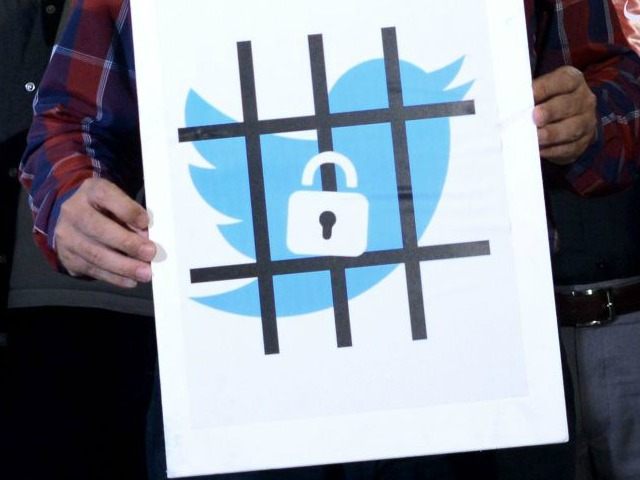
Rumours that Twitter has begun ‘shadowbanning’ politically inconvenient users have been confirmed by a source inside the company, who spoke exclusively to Breitbart Tech. His claim was corroborated by a senior editor at a major publisher.


According to the source, Twitter maintains a ‘whitelist’ of favoured Twitter accounts and a ‘blacklist’ of unfavoured accounts. Accounts on the whitelist are prioritised in search results, even if they’re not the most popular among users. Meanwhile, accounts on the blacklist have their posts hidden from both search results and other users’ timelines.

Our source was backed up by a senior editor at a major digital publisher, who told Breitbart that Twitter told him it deliberately whitelists and blacklists users. He added that he was afraid of the site’s power, noting that his tweets could disappear from users’ timelines if he got on the wrong side of the company.

Shadowbanning, sometimes known as “Stealth Banning” or “Hell Banning,” is commonly used by online community managers to block content posted by spammers. Instead of banning a user directly (which would alert the spammer to their status, prompting them to create a new account), their content is merely hidden from public view.

For site owners, the ideal shadowban is when a user never realizes he’s been shadowbanned.

However, Twitter isn’t merely targeting spammers. For weeks, users have been reporting that tweets from populist conservatives, members of the alternative right, cultural libertarians, and other anti-PC dissidents have disappeared from their timelines.

Among the users complaining of shadowbans are sci-fi author and alt-right figurehead Vox Day, geek culture blogger “Daddy Warpig,” and the popular pro-Trump account Ricky Vaughn. League of Gamers founder and former World of Warcraft team lead Mark Kern, as well as adult actress and anti-censorship activist Mercedes Carrera, have also reported that their tweets are not appearing on the timelines of their followers.

The pattern of shadowban reports, which skews towards the alt-right, the populist right, and cultural libertarians, follows close on the heels of Twitter’s establishment of a “Trust and Safety Council” packed with left-wing advocacy groups, as well as Islamic research centre the Wahid Institute.

It also follows my prediction that Twitter would use its influence to interfere in the 2016 presidential election by muffling conservative voices on the platform.

For close to a year now, Breitbart has covered Twitter’s march towards political censorship. In May 2015 Allum Bokhari reported that the site had begun to experiment with shadowbans, ostensibly to protect users from abuse. Then, as now, it was suspected that “protecting users from abuse” was an excuse to implement a system that would later be used for political censorship.

With shadowbans now confirmed by an inside source, there is little room for doubt that the platform is intent on silencing conservatives. Furthermore, it has demonstrated a complete lack of regard for transparency, concealing its shadowbanning system from users and hiding its political bias behind a veneer of opposition to online abuse. (In reality, the site turns a blind eye to abuse from left-wingers.)

Users in search of a transparent, politically unbiased platform will soon have to find — or build — an alternative.

Friday, February 12, 2016

NYPD TRACKED CITIZENS’ CELLPHONES 1,000 TIMES SINCE 2008 WITHOUT WARRANTS

Ciara McCarthy | The Guardian - FEBRUARY 11, 2016

IMAGE CREDITS: FLICKR, 49770271@N08.

New York City police have tracked citizens’ cellphones over 1,000 times since 2008 without using warrants, according to public records obtained by the New York Civil Liberties Union.


The organization announced on Thursday that the NYPD has typically used “stingrays” after obtaining lower-level court orders, but not warrants, before using the devices. The department also does not have a policy guiding how police can use the controversial devices. This is the first time that the scope of stingray use by the nation’s largest police agency has been confirmed.

The devices, generically known as stingrays, work by mimicking cell towers and tracking a cellphone’s location at a specific time. Law enforcement agencies can use the technology to track people’s movements through their cellphone use. Stingrays can also detect the phone numbers that a person has been communicating with, according to the NYCLU. The devices allow law enforcement to bypass cellphone carriers, who have provided information to police in the past, and can track data about bystanders in close proximity to the intended target.

Mariko Hirose, the NYCLU attorney who filed the records request, said the records reveal knowledge about NYPD’s stingray use that should have been divulged before police decided to start using them.

Read more

Tuesday, February 9, 2016

US intelligence chief: we might use the internet of things to spy on you

The Guardian | Spencer Ackerman and Sam Thielman | 9 February 2016 16.51 EST


The US intelligence chief has acknowledged for the first time that agencies might use a new generation of smart household devices to increase their surveillance capabilities.


As increasing numbers of devices connect to the internet and to one another, the so-called internet of things promises consumers increased convenience – the remotely operated thermostat from Google-owned Nest is a leading example. But as home computing migrates away from the laptop, the tablet and the smartphone, experts warn that the security features on the coming wave of automobiles, dishwashers and alarm systems lag far behind.

The government just admitted it will use smart home devices for spying.

In an appearance at a Washington thinktank last month, the director of the National Security Agency, Adm Michael Rogers, said that it was time to consider making the home devices “more defensible”, but did not address the opportunities that increased numbers and even categories of connected devices provide to his surveillance agency.

However, James Clapper, the US director of national intelligence, was more direct in testimony submitted to the Senate on Tuesday as part of an assessment of threats facing the United States.

“In the future, intelligence services might use the [internet of things] for identification, surveillance, monitoring, location tracking, and targeting for recruitment, or to gain access to networks or user credentials,” Clapper said.

Clapper did not specifically name any intelligence agency as involved in household-device surveillance. But security experts examining the internet of things take as a given that the US and other surveillance services will intercept the signals the newly networked devices emit, much as they do with those from cellphones. Amateurs are already interested in easily compromised hardware; computer programmer John Matherly’s search engine Shodan indexes thousands of completely unsecured web-connected devices.

Online threats again topped the intelligence chief’s list of “worldwide threats” the US faces, with the mutating threat of low-intensity terrorism quickly following. While Clapper has for years used the equivocal term “evolving” when asked about the scope of the threat, he said Tuesday that Sunni violent extremism “has more groups, members, and safe havens than at any other point in history”.


The Islamic State topped the threat index, but Clapper also warned that the US-backed Saudi war in Yemen was redounding to the benefit of al-Qaida’s local affiliate.

Domestically, “homegrown extremists” are the greatest terrorist threat, rather than Islamic State or al-Qaida attacks planned from overseas. Clapper cited the San Bernardino and Chattanooga shootings as examples of lethal operations emanating from self-starting extremists “without direct guidance from [Isis] leadership”.

US intelligence officials did not foresee Isis suffering significant setbacks in 2016 despite a war in Syria and Iraq that the Pentagon has pledged to escalate. The chief of defense intelligence, Marine Lt Gen Vincent Stewart, said the jihadist army would “probably retain Sunni Arab urban centers” in 2016, even as military leaders pledged to wrest the key cities of Raqqa and Mosul from it.

Contradicting the US defense secretary, Ashton Carter, Stewart said he was “less optimistic in the near term about Mosul”, saying the US and Iraqi government would “certainly not” retake it in 2016.

The negative outlook comes as Carter traveled on Tuesday to meet with his fellow defense chiefs in Brussels for a discussion on increasing their contributions against Isis.

On the Iran nuclear deal, Clapper said intelligence agencies were in a “distrust and verify mode”, but added: “We have no evidence thus far that they’re moving toward violation.”

Clapper’s admission about the surveillance potential for networked home devices is rare for a US official. But in an overlooked 2012 speech, the then CIA director David Petraeus called the surveillance implications of the internet of things “transformational … particularly to their effect on clandestine tradecraft”.

During testimony to both the Senate armed services committee and the intelligence panel, Clapper cited Russia, China, Iran, North Korea and the Islamic State as bolstering their online espionage, disinformation, theft, propaganda and data-destruction capabilities. He warned that the US’s ability to correctly attribute the culprits of those actions would probably diminish with “improving offensive tradecraft, the use of proxies, and the creation of cover organizations”.

Clapper suggested that US adversaries had overtaken its online capabilities: “Russia and China continue to have the most sophisticated cyber programs.”

The White House’s new cybersecurity initiative, unveiled on Tuesday, pledged increased security for nontraditional networked home devices. It tasked the Department of Homeland Security to “test and certify networked devices within the ‘Internet of Things’.” It did not discuss any tension between the US’s twin cybersecurity and surveillance priorities.

Connected household devices are a potential treasure trove to intelligence agencies seeking unobtrusive ways to listen and watch a target, according to a study that Harvard’s Berkman Center for Internet and Society released last week. The study found that the signals explosion represented by the internet of things would overwhelm any privacy benefits by users of commercial encryption – even as Clapper in his testimony again alleged that the growth of encryption was having a “negative effect on intelligence gathering”.

The report’s authors cited a 2001 case in which the FBI had sought to compel a company that makes emergency communications hardware for automobiles – similar by description to OnStar, though the company was not named – to assist agents in Nevada in listening in on conversations in a client’s car.

In February 2015, news reports revealed that microphones on Samsung “smart” televisions were “always on” so as to receive any audio that it could interpret as an instruction.

“Law enforcement or intelligence agencies may start to seek orders compelling Samsung, Google, Mattel, Nest or vendors of other networked devices to push an update or flip a digital switch to intercept the ambient communications of a target,” the authors wrote.

Robots will force experts to find other routes to the top

FT | Andrew Hill | February 8, 2016


There is a point in any talk about the automated future of the professions when the audience visibly relaxes.


It comes when futurists concede that a few expert lawyers, consultants or accountants will still be needed, even after cheaper, more efficient computer systems have taken over many of their juniors’ tasks.


It happened last week at a lecture by Richard and Daniel Susskind, which the organisers claimed was the largest ever gathering of senior managers in UK professional services firms.

The father-and-son authors of The Future of the Professions predicted radical change in the sector. But the tense scepticism in the room dissipated as each senior partner or director quietly acknowledged he or she would be a survivor, even if algorithms and artificial intelligence swept away the consultant or solicitor in the next seat.

This cohort may well reach retirement unscathed — and without much incentive to alter how they work. As Richard Susskind told me afterwards, “it’s hard to convince a room full of millionaires that they have got their model wrong”. But change is coming. The main difference of opinion is over its pace and extent.

You can already ask Kim, a legal “virtual assistant” launched by Riverview Law, for help managing your caseload, or get Ross, IBM Watson’s “super intelligent attorney”, to research the entire body of law in seconds. But a crystal-ball-gazing report by The Law Society, the trade body for solicitors in England and Wales, expects the impact of this type of automation to level off by 2020.

The society’s Stephen Denyer told last week’s gathering that clients were not only looking for practical counsel, but for “negotiating skills, judgment, ethical standards, and reassurance about the direction they’re taking”.

Fine. But how will the senior partners of the future achieve that level of wisdom when machines are doing the tasks that allow them to build and hone their expertise?

Take financial journalism. I spent three years as a trainee building confidence and skill by churning out news about corporate earnings. This is precisely the type of report that, quite rightly, Associated Press now produces automatically, in partnership with a company called — ominously for all columnists — Automated Insights.

Another parallel is aviation, where crashes often trigger fears that autopilots are undermining human skills. Interviewed last year about the 2009 Air France crash, Delmar Fadden, Boeing’s former chief of cockpit technology, told Vanity Fair that, having automated 98 per cent of pilots’ routine work, “we really worry about the tasks we ask them to do just occasionally”.

The answer is not to halt the march of the robots. Indeed, technology is part of the solution. Novice astronauts are not trained by sending them on repeated costly moonshots. They practise the tasks and challenges they will face in carefully designed simulations, until they are finally ready for the launch pad.

As Prof Susskind points out, law students at the University of Strathclyde play out real-world legal problems in a fictional virtual community called “Ardcalloch”.

In the real world, professionals must recognise much of the work they hand to juniors is repetitive servitude, often imposed on the tacit assumption that, if they had to do it, so should the new generation. Clients may still prefer dealing with human experts but they do not much like paying for their juniors’ billable training.

Knowledge can be imparted in other ways, including simply by working closely, apprentice-style, with senior colleagues. I still value the guidance I received as a beginner from experienced editors and writers but I am not sure I needed to write five similar corporate earnings stories a day to achieve mastery. Newbies can acquire specific skills through working, under close supervision, on a sample of the basic tasks they once spent years slogging through.

Meanwhile, new roles will evolve. The Susskinds suggest that one could be the “empathiser”. A sympathetic human may eventually act as assistant to Kim or Ross or their more cognitively capable descendants.

This prospect causes conniptions among some consultants and accountants. It may not happen at the top for years — or ever, in complex lawsuits or tax audits. But aspiring partners should start honing their listening skills, just in case.

Thursday, February 4, 2016

The Secretive Hedge Fund That's Generating Huge Profits for Yale

Bloomberg | By Sabrina Willmer & Tom Moroney | February 4, 2016 — 5:00 AM EST

Yale University. IMAGE CREDIT: Flickr


In a year when titans Bill Ackman and David Einhorn each lost more than 20 percent for their investors, David Swensen’s bet on a little-known hedge fund kept making him money.


Nancy Zimmerman’s Bracebridge Capital has gone from $5.8 billion in assets four years ago to $10.3 billion today with a return of about 10 percent a year since its inception. That makes it the largest hedge fund in the world run by a woman. Zimmerman, who survived a 1990s scandal involving Russia, her husband and Harvard University, is so successful at avoiding the limelight that Leda Braga’s $9.5 billion Systematica Investments Ltd. is often cited as the top woman-led firm by assets.

David Swensen 
Photographer: Peter Foley/Bloomberg
Swensen, who runs Yale University’s $25.6 billion endowment, and Thomas Steyer of Farallon Capital Management originally staked Zimmerman in 1994 with about $50 million. Yale’s investment now is valued at around $1 billion, making it one of the endowment’s most profitable.


“She’s employing this leveraged strategy to exploit pricing differentials in the fixed-income world with an obsessive focus on risk,” Swensen said in an interview.

Bracebridge has had only eight losing months since 2009. The fund’s 2 percent gain last year eclipsed the industry, which was up 0.6 percent on average, according to data compiled by Bloomberg. Hedge funds had trouble navigating unexpected market events, including a devaluation in the Chinese currency in August, a rally in European government bonds and a steep drop in oil prices.

Ackman’s Pershing Square Holdings, the publicly traded part of his activist hedge fund, lost 20.5 percent last year, hurt in part by a drop in the shares of drugmaker Valeant Pharmaceuticals International Inc. Einhorn’s Greenlight Capital suffered the second losing year in its history, with its main fund falling 20.4 percent due to wrong-way stock picks.

“There were a lot of gopher holes that you could step in,” said Gabriel Sunshine, Zimmerman’s partner at Bracebridge. “We managed to miss most of them.’’

Heavyweight Network


Zimmerman, 52, has a powerful network of allies, including former New Jersey Governor Jon Corzine, who was Zimmerman’s boss at Goldman Sachs Group Inc., where he was co-chief executive officer. Among her top investors is Princeton University’s endowment, run by Swensen protege Andrew Golden.

Corzine said he remembers Zimmerman as a brilliant trader who attracted the brightest of co-workers.

Bracebridge is a relative-value fixed-income fund that exploits small pricing differences in the credit market and hedges against those bets.

Zimmerman offered a typical scenario: Bracebridge buys a corporate bond it considers cheap while at the same time purchasing a credit-default swap on the bond in order to make money even if the company goes bankrupt. Leverage boosts returns.

The strategy hasn’t always come up roses. Long-Term Capital Management, a highly leveraged hedge fund run by John Meriwether, pursued a similar investment approach. In 1998, after Russia stiffed lenders including LTCM, the fund failed and was bailed out by its Wall Street competitors. The demise of LTCM hit other hedge funds, including Bracebridge, which held some of the same assets. Bracebridge lost about 26 percent, making it the worst year in its history.
Russian Economy

A few years prior, in 1992, Zimmerman’s husband, Harvard economist Andrei Shleifer, signed on to help privatize the Russian economy under the auspices of the university and the U.S. government. Zimmerman bought up beleaguered Russian debt, betting its value would rise, court filings show.

Complaints arose about Shleifer and his business partner allegedly using their position and influence for personal gain, according to court documents. Harvard, Shleifer and the U.S. Justice Department eventually reached an agreement in which the university paid $26.5 million to settle a civil lawsuit and Shleifer paid $2 million. Zimmerman’s company paid $1.5 million to resolve civil claims that it improperly used resources and staff from the government-funded project.

Neither Zimmerman nor her husband admitted wrongdoing in connection with their Russia dealings.

Zimmerman was born and raised just north of Chicago in Skokie, Illinois, the youngest of two girls. While attending Brown University in Providence, Rhode Island, she worked summers at O’Connor & Associates, a Chicago derivatives-trading firm. She stayed with them for three years after graduation, on the raucous floor of the Chicago Mercantile Exchange. Her first job was buying Japanese yen options, she said.

She stands a few inches over five feet with brown hair that she sometimes tucks behind her ears. Though her roots are in the Midwest, she’s a Bostonian now, relishing Red Sox games and working behind the scenes for a number of the city’s philanthropies.

Zimmerman downplays the challenges faced by women in a male-dominated industry: “The bonds don’t know who owns them.”
Cashed Out

Initially, Zimmerman and Sunshine partnered with Steyer’s Farallon, which bought a minority stake in the new management company they called Farallon Fixed Income Associates. They had one employee.

Steyer cashed out after the Russia episode, but Swensen stuck with Bracebridge. “We took a hard look and found no reason to modify our relationship,” said Swensen, who describes himself as a close friend of Zimmerman’s.

After cutting ties with Farallon and changing its name, Bracebridge ended 1999 with $600 million under management.

Bracebridge’s biggest turnaround came in 2009. After losing 18 percent in the global financial crisis, it posted a 35 percent gain. That surpassed the 25.8 percent return on the HFRI Relative Value index.

Zimmerman owns most of Bracebridge, according to a 2015 filing with the U.S. Securities and Exchange Commission. As for the value, the document only says she and Sunshine control 12.6 percent of the assets. Of the $10.3 billion, that’s about $1.3 billion. It’s split between her and Sunshine and their partners, Zimmerman said, declining to be more specific.

Zimmerman credited her more than 100 employees for the firm’s success. “I’m very proud of the people who come to work here,” she said. “They are focused, intellectually honest and they love to collaborate.”


Wednesday, February 3, 2016

These four-foot-tall robots could change the way warehouse workers do their jobs

Tech Insider | Leanna Garfield | Feb 2, 2016

Locus Robotics

The Locus robot can zip around a clothing warehouse larger than the size of six football fields. It can also work for 24 hours, without a break for lunch or a salary.


The new bot, created by Locus Robotics, just launched in its first warehouse: a Devens, Massachusetts space owned by Quiet Logistics, a warehousing company that fills online orders for both small startups and megabrands like Zara and Bonobos. The robots transport items that have been picked off the shelves by humans, and bring them to the front of the warehouse to be sealed and delivered.

"We developed a system where the robots do all the walking," Locus Robotics CEO Bruce Welty tells Tech Insider. "As retailers continue to exceed expectation around next-day shipping, they're going to look to technology to help them provide an even faster turn-around."

The bots work alongside humans and do all the normal grunt work. Warehouse workers usually walk 12 to 16 miles each day. With the robots, they don't have to.

The robots now meet the human workers in the middle of the warehouse. As soon as someone completes an order online, the bot's system knows exactly where to go in the 275,000-square-foot warehouse.

Each bot (which doesn't look anything like a human) has a platform for arms and a two-foot-diameter base with wheels for feet. It zips around at about 4.5 mph, or the equivalent of a fast walk. If stray boxes or wires stand in its path, its vision technology can "see" in real-time to avoid them.

locus robot picking
Locus Robotics

Since the robots are able to move faster than humans without tiring, Welty says the system will boost warehouse productivity by up to 800%. The bots will also not be subject to human error, which means that they can get the order right nearly every time.

As a way to increase productivity and speed, many online retailers have been using robots, conveyor belts, and cranes to fulfill orders for the past decade. Amazon has exclusive rightsto Kiva Systems' robots, but Welty says Locus' robots are smaller, and more lightweight and versatile.

Unlike Kiva's bots, the Locus robots can be incorporated into the warehouses' existing infrastructure. The warehouse doesn't need to move any shelves or aisles. Locus can program the robot to navigate the warehouse exactly how it is.
locus robot 1Locus Robotics
"The robots are less industrial and easier to work side-by-side with humans," Welty says.

The robots won't replace any human jobs in Quiet Logistics' warehouse, at least for the time being. It will change the nature of many of their responsibilities, however. Since they don't need to roam the warehouse's aisles looking for the items, they can use that time for other parts of the distribution process. They can now do what they do best: add a personal touch.

As more retailers shift online and promise greater shipping speeds, there's a growing need to make sure that the orders are not only delivered on-time but also feel personalized. This can be as simple as stuffing boxes with pretty tissue paper or even handwritten notes from the brands — a job fit best for humans.

Wednesday, January 27, 2016

TOP BILDERBERGER: “GLOBAL SUPER ELITE” MUST STOP DONALD TRUMP

Infowars | Paul Joseph Watson | JANUARY 27, 2016

IMAGE CREDITS: GAGESKIDMORE / FLICKR.

Regular Bilderberg attendee and associate editor of the Financial Times Martin Wolf insists that the “global super elite” must stop Donald Trump from winning the presidency.

According to a New Republic profile, Wolf is “staggeringly well-connected within the elite circles he is writing for” and counts amongst his close friends many influential central bankers.

In an editorial entitled The economic losers are in revolt against the elites, Wolf writes that economic “losers” have rejected “the elites that dominate the economic and cultural lives of their countries” and that “the potential consequences are frightening.”

Asserting that “it may already be too late” to stop the wave of populism that Trump has spearheaded, Wolf notes that elites have become, “detached from domestic loyalties and concerns, forming instead a global super-elite.”

This in turn has left ordinary Americans “alienated” and “abused,” with discord over high levels of immigration that only benefits big business leading to the view that elites are “incompetent and predatory.”

“Nativist populists must not win. We know that story: it ends very badly. In the case of the US, the outcome would have grave global significance. America was the founder and remains guarantor of our global liberal order. The world desperately needs well-informed US leadership. Mr Trump cannot provide this. The results could be catastrophic,” writes Wolf, adding that, “If western elites despise the concerns of the many, the latter will withdraw their consent for the elite’s projects.”

As we reported yesterday, Davos power brokers are intent on preventing Trump from capturing the White House, with prominent CEO Martin Sorrell asserting, “It doesn’t matter who the Republicans put up…Hillary will win.”

The Financial Times is the paper of record for the global elite and has been represented at Bilderberg confabs by several other individuals, including Gideon Rachman, who in 2008 called for an “global government” to be imposed.

In his editorial, Rachman admitted that such a system would only be effective if it is “anti-democratic” and promoted via “soothing language” that would prevent “people reaching for their rifles in America’s talk-radio heartland.”

More recently, the FT published an anonymous editorial which called for the abolition of cash in order to give central banks and governments more power.

Tuesday, January 26, 2016

AI Politics: How An Artificial Intelligence Algorithm Can Write Political Speeches

By Menchie Mendoza, Tech Times | January 26, 5:43 AM


Soon, the speeches that we hear from political figures may be the product of an AI machine that has been specifically designed to write political discourses.


There seems to be a formula to writing speeches. For instance, political speeches sound similar and tend to have a standard format. Arguments in these political discourses seem to be repeated as well. Speeches also seem to use familiar phrases that show the speaker's certain political affiliation or ideology.

Valentin Kassarnig of the University of Massachusetts Amherst took all of these into consideration and made an AI machine to rival human speech writers.

"In this report we present a system that can generate political speeches for a desired political party," wrote Kassarnig. "Furthermore, the system allows to specify whether a speech should hold a supportive or opposing opinion."

Kassarnig said that in order to start training a machine-learning algorithm, he first built a database of around 4,000 political speech nuggets that he got from 53 Congressional floor debates in the United States. He gathered more than 50,000 sentences out of the speeches, with each sentence having 23 words on average. He also divided the speeches into categories depending on the political party (Democrat or Republican) and whether the speech is for or against a certain topic.

After trying various database analyzing techniques, Kassarnig decided to use a method based on the n-grams approach, which focuses on analyzing sequences of words or phrases.

First, he studied and tagged each word based on what part of speech it is (noun, adjective, verb, etc.).

Next, he turned to 6-grams and tried to determine all the words that can appear after the five previous ones, which include the probability of their appearance.

When these steps are accomplished, the process of creating speeches will automatically follow.

In his report "Political Speech Generation," Kassarnig also indicated the use of two underlying models from where he based the probabilities in the word sequencing. The language model handles the grammatical correctness of the speech while the topic model is aimed at achieving textual consistency.

He added that he also used both the manual and the automated approaches when evaluating the quality of AI machine-generated speeches. After performing an experimental evaluation, Kassarnig learned that in essence, generated speeches are good when it comes to correct grammar and the way the sentences would transition.

If you're curious to know whether a machine can actually generate good speeches, here is one example of a speech with a Democratic tone that was generated automatically by the AI algorithm.

"Mr. Speaker, for years, honest but unfortunate consumers have had the ability to plead their case to come under bankruptcy protection and have their reasonable and valid debts discharged. The way the system is supposed to work, the bankruptcy court evaluates various factors including income, assets and debt to determine what debts can be paid and how consumers can get back on their feet. Stand up for growth and opportunity. Pass this legislation."

While the AI algorithm shows huge potential in generating decent political speeches, Kassarnig is not liiting the potential of the algorithm to just politics. Instead, he suggests that the algorithm can also produce other types of texts, including news articles and blog posts.