Showing posts with label spying. Show all posts

Monday, March 21, 2016

Clinton email reveals: Google sought overthrow of Syria's Assad

Washington Examiner | By RUDY TAKALA | March 19, 2016


Google in 2012 sought to help insurgents overthrow Syrian President Bashar Assad, according to State Department emails receiving fresh scrutiny this week.


Messages between former secretary of state Hillary Clinton's team and one of the company's executives detailed the plan for Google to get involved in the region.

"Please keep close hold, but my team is planning to launch a tool ... that will publicly track and map the defections in Syria and which parts of the government they are coming from," Jared Cohen, the head of what was then the company's "Google Ideas" division, wrote in a July 2012 email to several top Clinton officials.

"Our logic behind this is that while many people are tracking the atrocities, nobody is visually representing and mapping the defections, which we believe are important in encouraging more to defect and giving confidence to the opposition," Cohen said, adding that the plan was for Google to surreptitiously give the tool to Middle Eastern media.

"Given how hard it is to get information into Syria right now, we are partnering with Al-Jazeera who will take primary ownership over the tool we have built, track the data, verify it, and broadcast it back into Syria," he said.

"Please keep this very close hold and let me know if there is anything [else] you think we need to account for or think about before we launch. We believe this can have an important impact," Cohen concluded.

The message was addressed to deputy secretary of state Bill Burns; Alec Ross, a senior Clinton advisor; and Clinton's deputy chief of staff, Jake Sullivan. Sullivan subsequently forwarded Cohen's proposal to Clinton, describing it as "a pretty cool idea."

Cohen worked as a low-level staffer at the State Department until 2010, when he was hired to lead Google Ideas, but was tied to the use of social media to incite social uprisings even before he left the department. He once reportedly asked Twitter CEO Jack Dorsey to hold off of conducting system maintenance that officials believed could have impeded a brief 2009 uprising in Iran.

The unusual involvement by Google in foreign affairs highlights the difficulty of involvement in the internal politics of foreign states. While Cohen seemed to consider his company's effort as helpful to American interests, the effort to overthrow Assad helped spur the rise of the Islamic State, which eventually filled a vacuum resulting from Assad's loss of control over of Syria.

The exchange on Syria was highlighted by Wikileaks on Saturday. Earlier in the week, the secret-leaking website posted more than 30,000 emails that Clinton sent or received during her tenure leading the State Department.

Friday, February 12, 2016

NYPD TRACKED CITIZENS’ CELLPHONES 1,000 TIMES SINCE 2008 WITHOUT WARRANTS

Ciara McCarthy | The Guardian - FEBRUARY 11, 2016

IMAGE CREDITS: FLICKR, 49770271@N08.

New York City police have tracked citizens’ cellphones over 1,000 times since 2008 without using warrants, according to public records obtained by the New York Civil Liberties Union.


The organization announced on Thursday that the NYPD has typically used “stingrays” after obtaining lower-level court orders, but not warrants, before using the devices. The department also does not have a policy guiding how police can use the controversial devices. This is the first time that the scope of stingray use by the nation’s largest police agency has been confirmed.

The devices, generically known as stingrays, work by mimicking cell towers and tracking a cellphone’s location at a specific time. Law enforcement agencies can use the technology to track people’s movements through their cellphone use. Stingrays can also detect the phone numbers that a person has been communicating with, according to the NYCLU. The devices allow law enforcement to bypass cellphone carriers, who have provided information to police in the past, and can track data about bystanders in close proximity to the intended target.

Mariko Hirose, the NYCLU attorney who filed the records request, said the records reveal knowledge about NYPD’s stingray use that should have been divulged before police decided to start using them.

Read more

Wednesday, February 10, 2016

Twitter announces 'trust and safety' panel to police content

Washington Examiner | By RUDY TAKALA | 2/9/16 5:28 PM


Twitter on Tuesday announced the formation of a new “Trust and Safety Council,” which will work to develop policies censoring speech on the site. The group will be comprised of more than 40 organizations from 13 regions around the world.

“With hundreds of millions of tweets sent per day, the volume of content on Twitter is massive, which makes it extraordinarily complex to strike the right balance between fighting abuse and speaking truth to power,” Twitter said in a statement.

"It requires a multi-layered approach where each of our 320 million users has a part to play, as do the community of experts working for safety and free expression,” the statement added.

The announcement is the latest by Twitter in a string of moves aimed at improving its public image. Both the Obama administration and members of Congress have been calling on social media sites, and particularly Twitter, to do more to assist in the fight against terrorism. A California woman filed suit against Twitter in December, claiming that propaganda spread by the Islamic State on the site contributed to her husband’s shooting death in Jordan.

The latest move will contribute to combating violent speech on the site, but will likely expand Twitter’s effort to police content far beyond that as well. Groups involved with the council include the Gay and Lesbian Alliance Against Defamation, Feminist Frequency, European Schoolnet, and the International League against Racism and Anti-Semitism.

Twitter said it intended for the group to be comprised of “safety advocates, academics and researchers focused on minors, media literacy, digital citizenship, and efforts around greater compassion and empathy on the Internet,” and that it would provide input on the site’s “safety products, policies, and programs.”

“In developing the Council, we are taking a global and inclusive approach so that we can hear a diversity of voices,” Twitter explained. “As we develop products, policies, and programs, our Trust and Safety Council will help us tap into the expertise and input of organizations at the intersection of these issues more efficiently and quickly.”

Last week, the site also announced that it had silently removed as many as 125,000 accounts belonging to members of the Islamic State since the middle of 2015. And in December, Twitter amended its terms of service to more expressly prohibit abusive language.

Tuesday, February 9, 2016

US intelligence chief: we might use the internet of things to spy on you

The GuardianSpencer Ackerman and Sam Thielman | 9 February 2016 16.51 EST


The US intelligence chief has acknowledged for the first time that agencies might use a new generation of smart household devices to increase their surveillance capabilities.


As increasing numbers of devices connect to the internet and to one another, the so-called internet of things promises consumers increased convenience – the remotely operated thermostat from Google-owned Nest is a leading example. But as home computing migrates away from the laptop, the tablet and the smartphone, experts warn that the security features on the coming wave of automobiles, dishwashers and alarm systems lag far behind.

The government just admitted it will use smart home devices for spying.

In an appearance at a Washington thinktank last month, the director of the National Security Agency, Adm Michael Rogers, said that it was time to consider making the home devices “more defensible”, but did not address the opportunities that increased numbers and even categories of connected devices provide to his surveillance agency.

However, James Clapper, the US director of national intelligence, was more direct in testimony submitted to the Senate on Tuesday as part of an assessment of threats facing the United States.

“In the future, intelligence services might use the [internet of things] for identification, surveillance, monitoring, location tracking, and targeting for recruitment, or to gain access to networks or user credentials,” Clapper said.

Clapper did not specifically name any intelligence agency as involved in household-device surveillance. But security experts examining the internet of things take as a given that the US and other surveillance services will intercept the signals the newly networked devices emit, much as they do with those from cellphones. Amateurs are already interested in easily compromised hardware; computer programmer John Matherly’s search engine Shodan indexes thousands of completely unsecured web-connected devices.

Online threats again topped the intelligence chief’s list of “worldwide threats” the US faces, with the mutating threat of low-intensity terrorism quickly following. While Clapper has for years used the equivocal term “evolving” when asked about the scope of the threat, he said Tuesday that Sunni violent extremism “has more groups, members, and safe havens than at any other point in history”.


The Islamic State topped the threat index, but Clapper also warned that the US-backed Saudi war in Yemen was redounding to the benefit of al-Qaida’s local affiliate.

Domestically, “homegrown extremists” are the greatest terrorist threat, rather than Islamic State or al-Qaida attacks planned from overseas. Clapper cited the San Bernardino and Chattanooga shootings as examples of lethal operations emanating from self-starting extremists “without direct guidance from [Isis] leadership”.

US intelligence officials did not foresee Isis suffering significant setbacks in 2016 despite a war in Syria and Iraq that the Pentagon has pledged to escalate. The chief of defense intelligence, Marine Lt Gen Vincent Stewart, said the jihadist army would “probably retain Sunni Arab urban centers” in 2016, even as military leaders pledged to wrest the key cities of Raqqa and Mosul from it.

Contradicting the US defense secretary, Ashton Carter, Stewart said he was “less optimistic in the near term about Mosul”, saying the US and Iraqi government would “certainly not” retake it in 2016.

The negative outlook comes as Carter traveled on Tuesday to meet with his fellow defense chiefs in Brussels for a discussion on increasing their contributions against Isis.

On the Iran nuclear deal, Clapper said intelligence agencies were in a “distrust and verify mode”, but added: “We have no evidence thus far that they’re moving toward violation.”

Clapper’s admission about the surveillance potential for networked home devices is rare for a US official. But in an overlooked 2012 speech, the then CIA director David Petraeus called the surveillance implications of the internet of things “transformational … particularly to their effect on clandestine tradecraft”.

During testimony to both the Senate armed services committee and the intelligence panel, Clapper cited Russia, China, Iran, North Korea and the Islamic State as bolstering their online espionage, disinformation, theft, propaganda and data-destruction capabilities. He warned that the US’s ability to correctly attribute the culprits of those actions would probably diminish with “improving offensive tradecraft, the use of proxies, and the creation of cover organizations”.

Clapper suggested that US adversaries had overtaken its online capabilities: “Russia and China continue to have the most sophisticated cyber programs.”

The White House’s new cybersecurity initiative, unveiled on Tuesday, pledged increased security for nontraditional networked home devices. It tasked the Department of Homeland Security to “test and certify networked devices within the ‘Internet of Things’.” It did not discuss any tension between the US’s twin cybersecurity and surveillance priorities.

Connected household devices are a potential treasure trove to intelligence agencies seeking unobtrusive ways to listen and watch a target, according to a study that Harvard’s Berkman Center for Internet and Society released last week. The study found that the signals explosion represented by the internet of things would overwhelm any privacy benefits by users of commercial encryption – even as Clapper in his testimony again alleged that the growth of encryption was having a “negative effect on intelligence gathering”.

The report’s authors cited a 2001 case in which the FBI had sought to compel a company that makes emergency communications hardware for automobiles – similar by description to OnStar, though the company was not named – to assist agents in Nevada in listening in on conversations in a client’s car.

In February 2015, news reports revealed that microphones on Samsung “smart” televisions were “always on” so as to receive any audio that it could interpret as an instruction.

“Law enforcement or intelligence agencies may start to seek orders compelling Samsung, Google, Mattel, Nest or vendors of other networked devices to push an update or flip a digital switch to intercept the ambient communications of a target,” the authors wrote.

Thursday, February 4, 2016

Clinton’s Security Clearance Is Under Scrutiny

Bloomberg | By Eli Lake & Josh Rogin | FEB 4, 2016 6:00 AM EST

SHE'S USED TO SCRUTINY. PHOTOGRAPHER: SAUL LOEB/AFP/GETTY IMAGES

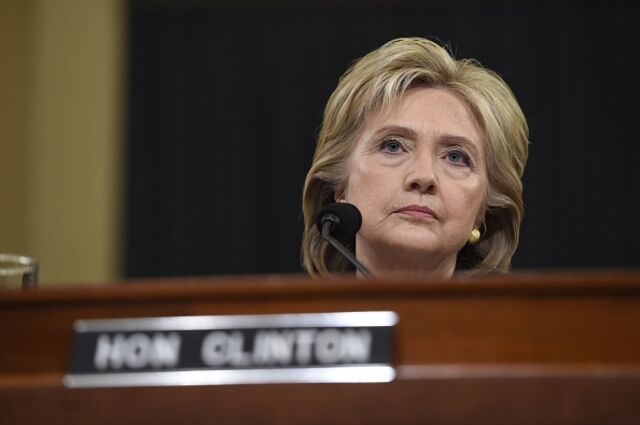
Now that several e-mails on Hillary Clinton's private server have been classified, there is a more immediate question than the outcome of the investigation: Should the former secretary of state retain her security clearance during the inquiry? Congressional Republicans and Democrats offer predictably different answers.


The State Department announced Friday that it would not release 22 e-mails from Clinton’s private server after a review found they contained information designated as top secret. U.S. officials who reviewed the e-mails tell us they contain the names of U.S. intelligence officers overseas, but not the identities of undercover spies; summaries of sensitive meetings with foreign officials; and information on classified programs like drone strikes and intelligence-collection efforts in North Korea.

The FBI is investigating the use of Clinton’s home server when she was secretary of state, which the bureau now has. The New York Times reported in August that Clinton is not a target of that investigation. We reported in September that one goal is to discover whether a foreign intelligence service hacked in.

Representative Adam Schiff, the ranking Democrat on the House Intelligence Committee, said Clinton should not lose her security clearance for receiving information that was not marked classified at the time. "I'm sure she does hold a clearance, and she should," he told us.

Representative Mike Pompeo, a Republican member of that committee who also has read the e-mails, told us, "It's important, given all the information we now know, that the House of Representatives work alongside the executive branch to determine whether it's appropriate for Secretary Clinton to continue to hold her security clearances."

Senate Intelligence Chairman Richard Burr told us the decision lies with the White House. “I think that’s up to what the National Security Council is comfortable with,” he said.

Burr, who has also read all 22 e-mails, said Clinton should have known to better protect the information they contain. “They are definitely sensitive," he said. "Anybody in the intelligence world would know that the content was sensitive.”

His Democratic counterpart, Senator Dianne Feinstein, who also read them, told us that Clinton didn’t originally send any of the e-mails and that they were largely from her staff, although she did sometimes reply. Feinstein said the intelligence community is being overly cautious by designating the e-mails as top secret.

“There’s no question that they are over-classifying this stuff,” she said.

Clinton’s discussion of classified programs on an unclassified e-mail system is hardly rare. The issue, called “spillage,” has plagued the government for years. It can apply to anything from a spoken conversation about intelligence programs outside of a secure facility, to printing out a document with classified information on an insecure printer.

Still, it is forbidden. The State Department's Foreign Affairs Manual says "transmitting classified information over a communication channel that is unauthorized for the level of information being transmitted" is a "security violation." Such violations must be investigated by the State Department's own bureaus of human resources and diplomatic security. Punishment can vary from a letter of reprimand to loss of security clearance, according to the manual.

When asked about the status of Clinton's security clearance, State Department spokesman John Kirby said: "The State Department does not comment on individuals’ security clearance status. We will say, however, that generally speaking there is a long tradition of secretaries of state making themselves available to future secretaries and presidents. Secretaries are typically allowed to maintain their security clearance and access to their own records for use in writing their memoirs and the like.”

The Clinton campaign declined to comment.

During the Obama administration, it has not been automatic for officials to lose their security clearance while an investigation is underway. Just last week, the Washington Post reported that the chief of naval intelligence, Vice Adm. Ted Branch, had his security clearance suspended because he is wrapped up in a Justice Department investigation into contracting corruption. He has not been able to read, see, or hear classified information since November 2013. Branch has not been charged with any crime and continues to serve in that post.

But when then-CIA director David Petraeus came under FBI investigation at the end of 2012, his security clearance was not formally revoked. After he resigned, his access to classified information was suspended, according to U.S. officials. In that case, Petraeus had provided notebooks with highly classified information to his biographer and mistress Paula Broadwell, whose security clearances did not permit her to receive it.

Unlike Broadwell, officials familiar with the e-mails tell us that Clinton and her e-mail correspondents were cleared to receive the information that has been classified after the fact. Steven Aftergood, who heads the project on government secrecy for the Federation of American Scientists, told us, "It's entirely possible for information to start out as unclassified and to be classified only when the question of public disclosure arises."

William Leonard, who oversaw the government's security classification process between 2002 and 2008 as the director of the Information Security Oversight Office, told us this kind of "spillage" was common. "The bottom line is this, if you have the opportunity to pore through any cleared individual's unclassified e-mail account, it's almost inevitable you would find material that someone, some way would point out should be classified." He also said that in Clinton's case, "there is no indication that she deliberately disregarded the rules for handling classified information so I see no reason why she should not remain eligible for a security clearance."

Nonetheless, Leonard added that Clinton's decision to use the private e-mail server as secretary of state "reflected exceedingly poor judgment, and those that advised her on this did not serve her well."

The FBI investigation may determine that neither Clinton nor her aides broke the law, but Clinton herself has said she used poor judgment. It's an open question how that poor judgment will affect her access to state secrets, during and after the FBI's investigation.

Monday, February 1, 2016

New Technologies Give Government Ample Means to Track Suspects, Study Finds

NY Times | By DAVID E. SANGER | JAN. 31, 2016

The F.B.I. director, James B. Comey, and other Justice Department officials have said moves by technology firms to encrypt data have choked off critical ways to monitor suspects. Credit: Kevin hagen for The New York Times


WASHINGTON — For more than two years the F.B.I. and intelligence agencies have warned that encrypted communications are creating a “going dark” crisis that will keep them from tracking terrorists and kidnappers.

Now, a study in which current and former intelligence officials participated concludes that the warning is wildly overblown, and that a raft of new technologies — like television sets with microphones and web-connected cars — are creating ample opportunities for the government to track suspects, many of them worrying.


“ ‘Going dark’ does not aptly describe the long-term landscape for government surveillance,” concludes the study, to be published Monday by the Berkman Center for Internet and Society at Harvard.

The study argues that the phrase ignores the flood of new technologies “being packed with sensors and wireless connectivity” that are expected to become the subject of court orders and subpoenas, and are already the target of the National Security Agency as it places “implants” into networks around the world to monitor communications abroad.

The products, ranging from “toasters to bedsheets, light bulbs, cameras, toothbrushes, door locks, cars, watches and other wearables,” will give the government increasing opportunities to track suspects and in many cases reconstruct communications and meetings.

The study, titled, “Don’t Panic: Making Progress on the ‘Going Dark’ Debate,” is among the sharpest counterpoints yet to the contentions of James B. Comey, the F.B.I. director, and other Justice Department officials, mostly by arguing that they have defined the issue too narrowly.

Over the past year, they have repeatedly told Congress that the move byApple to automatically encrypt data on its iPhone, and similar steps by Google and Microsoft, are choking off critical abilities to track suspects, even with a court order.

President Obama, however, concluded last fall that any effort to legislate a government “back door” into encrypted communications would probably create a pathway for hackers — including those working for foreign governments like Russia, China and Iran — to gain access as well, and create a precedent for authoritarian governments demanding similar access.

Most Republican candidates for president have demanded that technology companies create a way for investigators to unlock encrypted communications, and on the Democratic side, Hillary Clinton has taken a tough line on Silicon Valley companies, urging them to join the fight against the Islamic State.

Apple’s chief executive, Timothy D. Cook, has led the charge on the other side. He recently told a group of White House officials seeking technology companies’ voluntary help to counter the Islamic State that the government’s efforts to get the keys to encrypted communications would be a boon for hackers and put legitimate business transactions, financial data and personal communications at greater risk.

The Harvard study, funded by the Hewlett Foundation, was unusual because it involved technical experts, civil libertarians and officials who are, or have been, on the forefront of counterterrorism. Larry Kramer, the former dean of Stanford Law School, who heads the foundation, noted Friday that until now “the policy debate has been impeded by gaps in trust — chasms, really — between academia, civil society, the private sector and the intelligence community” that have impeded the evolution of a “safe, open and resilient Internet.”

Among the chief authors of the report is Matthew G. Olsen, who was a director of the National Counterterrorism Center under Mr. Obama and a general counsel of the National Security Agency.

Two current senior officials of the N.S.A. — John DeLong, the head of the agency’s Commercial Solutions Center, and Anne Neuberger, the agency’s chief risk officer — are described in the report as “core members” of the group, but did not sign the report because they could not act on behalf of the agency or the United States government in endorsing its conclusions, government officials said.

“Encryption is a real problem, and the F.B.I. and intelligence agencies are right to raise it,” Mr. Olsen said Sunday. But he noted that in their testimony officials had not described the other technological breaks that are falling their way, nor had they highlighted cases in which they were able to exploit mistakes made by suspects in applying encryption to their messages.

Jonathan Zittrain, a professor of law and computer science at Harvard who convened the group, said in an interview that the goal was “to have a discussion among people with very different points of view” that would move “the state of the debate beyond its well-known bumper stickers. We managed to do that in part by thinking of a larger picture, specifically in the unexpected ways that surveillance might be attempted.”

He noted that in the current stalemate there was little discussion of the “ever-expanding ‘Internet of things,’ where telemetry from teakettles, televisions and light bulbs might prove surprisingly, and worryingly, amenable to subpoena from governments around the world.”

Those technologies are already being exploited: The government frequently seeks location data from devices like cellphones and EZ Passes to track suspects.

The study notes that such opportunities are expanding rapidly. A Samsung “smart” television contains a microphone meant to relay back to Samsung voice instructions to the TV — “I want to see the last three ‘Star Wars’ movies” — and a Hello, Barbie brought out by Mattel last year records children’s conversations with the doll, processes them over the Internet and sends back a response.

The history of technology shows that what is invented for convenience can soon become a target of surveillance. “Law enforcement or intelligence agencies may start to seek orders compelling Samsung, Google, Mattel, Nest or vendors of other networked devices to push an update or flip a digital switch to intercept the ambient communications of a target,” the report said.

These communications, too, may one day be encrypted. But Google’s business model depends on picking out key words from emails to tailor advertisements for specific users of Gmail, the popular email service. Apple users routinely back up the contents of their phones to iCloud — a service that is not encrypted and now is almost a routine target for investigators or intelligence agencies. So are the tracking and mapping systems for cars that rely on transmitted global positioning data.

“I think what this report shows is that the world today is like living in a big field that is more illuminated than ever before,” said Joseph Nye, a Harvard government professor and former head of the National Intelligence Council. “There will be dark spots — there always will be. But it’s easy to forget that there is far more data available to governments now than ever before.”