Showing posts with label internet. Show all posts

Wednesday, February 17, 2016

FBI Prompts Apple to Issue Privacy Letter to Customers After San Bernadino Shooter Request

Apple | February 17, 2016


A Message to Our Customers


The United States government has demanded that Apple take an unprecedented step which threatens the security of our customers. We oppose this order, which has implications far beyond the legal case at hand.

This moment calls for public discussion, and we want our customers and people around the country to understand what is at stake.

The Need for Encryption


Smartphones, led by iPhone, have become an essential part of our lives. People use them to store an incredible amount of personal information, from our private conversations to our photos, our music, our notes, our calendars and contacts, our financial information and health data, even where we have been and where we are going.

All that information needs to be protected from hackers and criminals who want to access it, steal it, and use it without our knowledge or permission. Customers expect Apple and other technology companies to do everything in our power to protect their personal information, and at Apple we are deeply committed to safeguarding their data.

Compromising the security of our personal information can ultimately put our personal safety at risk. That is why encryption has become so important to all of us.

For many years, we have used encryption to protect our customers’ personal data because we believe it’s the only way to keep their information safe. We have even put that data out of our own reach, because we believe the contents of your iPhone are none of our business.

The San Bernardino Case


We were shocked and outraged by the deadly act of terrorism in San Bernardino last December. We mourn the loss of life and want justice for all those whose lives were affected. The FBI asked us for help in the days following the attack, and we have worked hard to support the government’s efforts to solve this horrible crime. We have no sympathy for terrorists.

When the FBI has requested data that’s in our possession, we have provided it. Apple complies with valid subpoenas and search warrants, as we have in the San Bernardino case. We have also made Apple engineers available to advise the FBI, and we’ve offered our best ideas on a number of investigative options at their disposal.

We have great respect for the professionals at the FBI, and we believe their intentions are good. Up to this point, we have done everything that is both within our power and within the law to help them. But now the U.S. government has asked us for something we simply do not have, and something we consider too dangerous to create. They have asked us to build a backdoor to the iPhone.

Specifically, the FBI wants us to make a new version of the iPhone operating system, circumventing several important security features, and install it on an iPhone recovered during the investigation. In the wrong hands, this software — which does not exist today — would have the potential to unlock any iPhone in someone’s physical possession.

The FBI may use different words to describe this tool, but make no mistake: Building a version of iOS that bypasses security in this way would undeniably create a backdoor. And while the government may argue that its use would be limited to this case, there is no way to guarantee such control.

The Threat to Data Security


Some would argue that building a backdoor for just one iPhone is a simple, clean-cut solution. But it ignores both the basics of digital security and the significance of what the government is demanding in this case.

In today’s digital world, the “key” to an encrypted system is a piece of information that unlocks the data, and it is only as secure as the protections around it. Once the information is known, or a way to bypass the code is revealed, the encryption can be defeated by anyone with that knowledge.

The government suggests this tool could only be used once, on one phone. But that’s simply not true. Once created, the technique could be used over and over again, on any number of devices. In the physical world, it would be the equivalent of a master key, capable of opening hundreds of millions of locks — from restaurants and banks to stores and homes. No reasonable person would find that acceptable.

The government is asking Apple to hack our own users and undermine decades of security advancements that protect our customers — including tens of millions of American citizens — from sophisticated hackers and cybercriminals. The same engineers who built strong encryption into the iPhone to protect our users would, ironically, be ordered to weaken those protections and make our users less safe.

We can find no precedent for an American company being forced to expose its customers to a greater risk of attack. For years, cryptologists and national security experts have been warning against weakening encryption. Doing so would hurt only the well-meaning and law-abiding citizens who rely on companies like Apple to protect their data. Criminals and bad actors will still encrypt, using tools that are readily available to them.

A Dangerous Precedent


Rather than asking for legislative action through Congress, the FBI is proposing an unprecedented use of the All Writs Act of 1789 to justify an expansion of its authority.

The government would have us remove security features and add new capabilities to the operating system, allowing a passcode to be input electronically. This would make it easier to unlock an iPhone by “brute force,” trying thousands or millions of combinations with the speed of a modern computer.

The implications of the government’s demands are chilling. If the government can use the All Writs Act to make it easier to unlock your iPhone, it would have the power to reach into anyone’s device to capture their data. The government could extend this breach of privacy and demand that Apple build surveillance software to intercept your messages, access your health records or financial data, track your location, or even access your phone’s microphone or camera without your knowledge.

Opposing this order is not something we take lightly. We feel we must speak up in the face of what we see as an overreach by the U.S. government.

We are challenging the FBI’s demands with the deepest respect for American democracy and a love of our country. We believe it would be in the best interest of everyone to step back and consider the implications.

While we believe the FBI’s intentions are good, it would be wrong for the government to force us to build a backdoor into our products. And ultimately, we fear that this demand would undermine the very freedoms and liberty our government is meant to protect.


Tim Cook

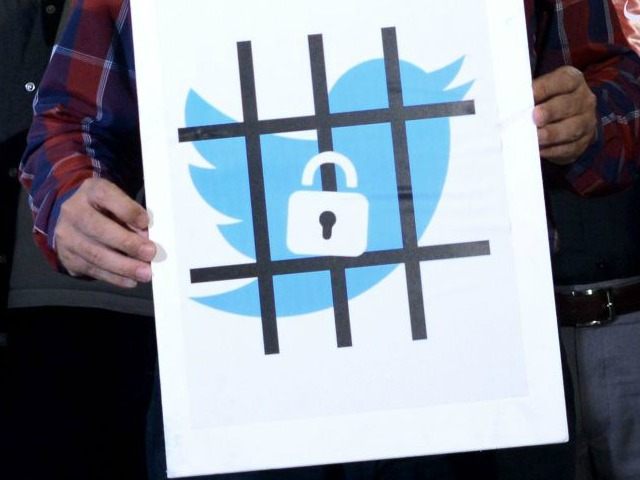
Twitter Shadowbanning ‘Real and Happening Every Day’ Says Inside Source

Breitbart | by MILO YIANNOPOULOS | 16 Feb 2016

AP Photo/Isa Simsek, Zaman

Rumours that Twitter has begun ‘shadowbanning’ politically inconvenient users have been confirmed by a source inside the company, who spoke exclusively to Breitbart Tech. His claim was corroborated by a senior editor at a major publisher.


According to the source, Twitter maintains a ‘whitelist’ of favoured Twitter accounts and a ‘blacklist’ of unfavoured accounts. Accounts on the whitelist are prioritised in search results, even if they’re not the most popular among users. Meanwhile, accounts on the blacklist have their posts hidden from both search results and other users’ timelines.

Our source was backed up by a senior editor at a major digital publisher, who told Breitbart that Twitter told him it deliberately whitelists and blacklists users. He added that he was afraid of the site’s power, noting that his tweets could disappear from users’ timelines if he got on the wrong side of the company.

Shadowbanning, sometimes known as “Stealth Banning” or “Hell Banning,” is commonly used by online community managers to block content posted by spammers. Instead of banning a user directly (which would alert the spammer to their status, prompting them to create a new account), their content is merely hidden from public view.

For site owners, the ideal shadowban is when a user never realizes he’s been shadowbanned.

However, Twitter isn’t merely targeting spammers. For weeks, users have been reporting that tweets from populist conservatives, members of the alternative right, cultural libertarians, and other anti-PC dissidents have disappeared from their timelines.

Among the users complaining of shadowbans are sci-fi author and alt-right figurehead Vox Day, geek culture blogger “Daddy Warpig,” and the popular pro-Trump account Ricky Vaughn. League of Gamers founder and former World of Warcraft team lead Mark Kern, as well as adult actress and anti-censorship activist Mercedes Carrera, have also reported that their tweets are not appearing on the timelines of their followers.

The pattern of shadowban reports, which skews towards the alt-right, the populist right, and cultural libertarians, follows close on the heels of Twitter’s establishment of a “Trust and Safety Council” packed with left-wing advocacy groups, as well as Islamic research centre the Wahid Institute.

It also follows my prediction that Twitter would use its influence to interfere in the 2016 presidential election by muffling conservative voices on the platform.

For close to a year now, Breitbart has covered Twitter’s march towards political censorship. In May 2015 Allum Bokhari reported that the site had begun to experiment with shadowbans, ostensibly to protect users from abuse. Then, as now, it was suspected that “protecting users from abuse” was an excuse to implement a system that would later be used for political censorship.

With shadowbans now confirmed by an inside source, there is little room for doubt that the platform is intent on silencing conservatives. Furthermore, it has demonstrated a complete lack of regard for transparency, concealing its shadowbanning system from users and hiding its political bias behind a veneer of opposition to online abuse. (In reality, the site turns a blind eye to abuse from left-wingers.)

Users in search of a transparent, politically unbiased platform will soon have to find — or build — an alternative.

Thursday, February 11, 2016

Google To Censor US Search Site For European Users

Forbes | Emma Woollacott | February 10, 2016

(Philippe Huguen/AFP/Getty Images)


Google is removing the loophole allowing European users to sidestep the ‘right to be forgotten’ ruling that censors their search results.


After the European Court of Justice ruled two years ago that people could ask for search results to be removed if they contained inaccurate or ‘outdated’ information, Google attempted to strike a compromise.

It complied with the order – but only for European versions of its website. This meant that European users wanting to see uncensored results have only to log on to Google.com to get the unedited version; and plenty do.


This state of affairs, as you might imagine, isn’t good enough for the European authorities, and in September last year the French data protection authority, CNIL, ordered the company to start removing offending content from its sites worldwide.

And while the initial fine was set at just €300,000 – a drop in the ocean for a company with annual revenues of about $66 billion – Google was told this could rise to an extraordinary 5% of global operating costs under new data protection legislation set to come in next year.

And now, says Reuters, the company’s come up with another compromise: to censor non-European domains, but only when they’re being accessed from the country where the right to be forgotten request has been made.

For example, if a British citizen made a successful removal request, nobody accessing Google search from the UK would be able to see the removed item, whichever national version of Google they used. Anybody searching the same domain from outside the EU, meanwhile, would see the full list of results.

Wednesday, February 10, 2016

The IRS Says Identity Thieves Hacked Its Systems Again

Fortune | by Jonathan Chew | FEBRUARY 10, 2016, 8:25 AM EST


Identity thieves attempted to breach computer systems at the Internal Revenue Service to file fraudulent tax refunds.


The criminals were especially after E-file PINs, which are used by some individuals to electronically file a return, the agency said in a statement released Tuesday. Around 464,000 unique social security numbers were involved, and of that total, 101,000 SSNs were used to successfully access an E-file PIN.

The thieves used personal taxpayer data that was stolen elsewhere to help generate the PINs, the agency said. No personal data was compromised or disclosed by IRS systems, and affected taxpayers will be notified by mail of the attack. “The IRS is also protecting their accounts by marking them to protect against tax-related identity theft,” the agency added.


Last week, the IRS temporarily could not accept many taxpayer returns after a systemwide computer failure occurred. The agency said this attack was unrelated to the outage.

This year’s attack follows a massive data breach at the IRS in 2015, when hackers stole information from 330,000 taxpayers to successfully file bogus tax refunds and obtain $50 million in federal funds.

A later inspector general report found that the computer system the IRS had been using to detect identity theft may have been vulnerable to hackers.

Twitter announces 'trust and safety' panel to police content

Washington Examiner | By RUDY TAKALA | 2/9/16 5:28 PM


Twitter on Tuesday announced the formation of a new “Trust and Safety Council,” which will work to develop policies censoring speech on the site. The group will be comprised of more than 40 organizations from 13 regions around the world.

“With hundreds of millions of tweets sent per day, the volume of content on Twitter is massive, which makes it extraordinarily complex to strike the right balance between fighting abuse and speaking truth to power,” Twitter said in a statement.

"It requires a multi-layered approach where each of our 320 million users has a part to play, as do the community of experts working for safety and free expression,” the statement added.

The announcement is the latest by Twitter in a string of moves aimed at improving its public image. Both the Obama administration and members of Congress have been calling on social media sites, and particularly Twitter, to do more to assist in the fight against terrorism. A California woman filed suit against Twitter in December, claiming that propaganda spread by the Islamic State on the site contributed to her husband’s shooting death in Jordan.

The latest move will contribute to combating violent speech on the site, but will likely expand Twitter’s effort to police content far beyond that as well. Groups involved with the council include the Gay and Lesbian Alliance Against Defamation, Feminist Frequency, European Schoolnet, and the International League against Racism and Anti-Semitism.

Twitter said it intended for the group to be comprised of “safety advocates, academics and researchers focused on minors, media literacy, digital citizenship, and efforts around greater compassion and empathy on the Internet,” and that it would provide input on the site’s “safety products, policies, and programs.”

“In developing the Council, we are taking a global and inclusive approach so that we can hear a diversity of voices,” Twitter explained. “As we develop products, policies, and programs, our Trust and Safety Council will help us tap into the expertise and input of organizations at the intersection of these issues more efficiently and quickly.”

Last week, the site also announced that it had silently removed as many as 125,000 accounts belonging to members of the Islamic State since the middle of 2015. And in December, Twitter amended its terms of service to more expressly prohibit abusive language.

Tuesday, February 9, 2016

US intelligence chief: we might use the internet of things to spy on you

The Guardian | Spencer Ackerman and Sam Thielman | 9 February 2016 16.51 EST


The US intelligence chief has acknowledged for the first time that agencies might use a new generation of smart household devices to increase their surveillance capabilities.


As increasing numbers of devices connect to the internet and to one another, the so-called internet of things promises consumers increased convenience – the remotely operated thermostat from Google-owned Nest is a leading example. But as home computing migrates away from the laptop, the tablet and the smartphone, experts warn that the security features on the coming wave of automobiles, dishwashers and alarm systems lag far behind.

The government just admitted it will use smart home devices for spying.

In an appearance at a Washington thinktank last month, the director of the National Security Agency, Adm Michael Rogers, said that it was time to consider making the home devices “more defensible”, but did not address the opportunities that increased numbers and even categories of connected devices provide to his surveillance agency.

However, James Clapper, the US director of national intelligence, was more direct in testimony submitted to the Senate on Tuesday as part of an assessment of threats facing the United States.

“In the future, intelligence services might use the [internet of things] for identification, surveillance, monitoring, location tracking, and targeting for recruitment, or to gain access to networks or user credentials,” Clapper said.

Clapper did not specifically name any intelligence agency as involved in household-device surveillance. But security experts examining the internet of things take as a given that the US and other surveillance services will intercept the signals the newly networked devices emit, much as they do with those from cellphones. Amateurs are already interested in easily compromised hardware; computer programmer John Matherly’s search engine Shodan indexes thousands of completely unsecured web-connected devices.

Online threats again topped the intelligence chief’s list of “worldwide threats” the US faces, with the mutating threat of low-intensity terrorism quickly following. While Clapper has for years used the equivocal term “evolving” when asked about the scope of the threat, he said Tuesday that Sunni violent extremism “has more groups, members, and safe havens than at any other point in history”.


The Islamic State topped the threat index, but Clapper also warned that the US-backed Saudi war in Yemen was redounding to the benefit of al-Qaida’s local affiliate.

Domestically, “homegrown extremists” are the greatest terrorist threat, rather than Islamic State or al-Qaida attacks planned from overseas. Clapper cited the San Bernardino and Chattanooga shootings as examples of lethal operations emanating from self-starting extremists “without direct guidance from [Isis] leadership”.

US intelligence officials did not foresee Isis suffering significant setbacks in 2016 despite a war in Syria and Iraq that the Pentagon has pledged to escalate. The chief of defense intelligence, Marine Lt Gen Vincent Stewart, said the jihadist army would “probably retain Sunni Arab urban centers” in 2016, even as military leaders pledged to wrest the key cities of Raqqa and Mosul from it.

Contradicting the US defense secretary, Ashton Carter, Stewart said he was “less optimistic in the near term about Mosul”, saying the US and Iraqi government would “certainly not” retake it in 2016.

The negative outlook comes as Carter traveled on Tuesday to meet with his fellow defense chiefs in Brussels for a discussion on increasing their contributions against Isis.

On the Iran nuclear deal, Clapper said intelligence agencies were in a “distrust and verify mode”, but added: “We have no evidence thus far that they’re moving toward violation.”

Clapper’s admission about the surveillance potential for networked home devices is rare for a US official. But in an overlooked 2012 speech, the then CIA director David Petraeus called the surveillance implications of the internet of things “transformational … particularly to their effect on clandestine tradecraft”.

During testimony to both the Senate armed services committee and the intelligence panel, Clapper cited Russia, China, Iran, North Korea and the Islamic State as bolstering their online espionage, disinformation, theft, propaganda and data-destruction capabilities. He warned that the US’s ability to correctly attribute the culprits of those actions would probably diminish with “improving offensive tradecraft, the use of proxies, and the creation of cover organizations”.

Clapper suggested that US adversaries had overtaken its online capabilities: “Russia and China continue to have the most sophisticated cyber programs.”

The White House’s new cybersecurity initiative, unveiled on Tuesday, pledged increased security for nontraditional networked home devices. It tasked the Department of Homeland Security to “test and certify networked devices within the ‘Internet of Things’.” It did not discuss any tension between the US’s twin cybersecurity and surveillance priorities.

Connected household devices are a potential treasure trove to intelligence agencies seeking unobtrusive ways to listen and watch a target, according to a study that Harvard’s Berkman Center for Internet and Society released last week. The study found that the signals explosion represented by the internet of things would overwhelm any privacy benefits by users of commercial encryption – even as Clapper in his testimony again alleged that the growth of encryption was having a “negative effect on intelligence gathering”.

The report’s authors cited a 2001 case in which the FBI had sought to compel a company that makes emergency communications hardware for automobiles – similar by description to OnStar, though the company was not named – to assist agents in Nevada in listening in on conversations in a client’s car.

In February 2015, news reports revealed that microphones on Samsung “smart” televisions were “always on” so as to receive any audio that it could interpret as an instruction.

“Law enforcement or intelligence agencies may start to seek orders compelling Samsung, Google, Mattel, Nest or vendors of other networked devices to push an update or flip a digital switch to intercept the ambient communications of a target,” the authors wrote.

Robots will force experts to find other routes to the top

FT | Andrew Hill | February 8, 2016


There is a point in any talk about the automated future of the professions when the audience visibly relaxes.


It comes when futurists concede that a few expert lawyers, consultants or accountants will still be needed, even after cheaper, more efficient computer systems have taken over many of their juniors’ tasks.


It happened last week at a lecture by Richard and Daniel Susskind, which the organisers claimed was the largest ever gathering of senior managers in UK professional services firms.

The father-and-son authors of The Future of the Professions predicted radical change in the sector. But the tense scepticism in the room dissipated as each senior partner or director quietly acknowledged he or she would be a survivor, even if algorithms and artificial intelligence swept away the consultant or solicitor in the next seat.

This cohort may well reach retirement unscathed — and without much incentive to alter how they work. As Richard Susskind told me afterwards, “it’s hard to convince a room full of millionaires that they have got their model wrong”. But change is coming. The main difference of opinion is over its pace and extent.

You can already ask Kim, a legal “virtual assistant” launched by Riverview Law, for help managing your caseload, or get Ross, IBM Watson’s “super intelligent attorney”, to research the entire body of law in seconds. But a crystal-ball-gazing report by The Law Society, the trade body for solicitors in England and Wales, expects the impact of this type of automation to level off by 2020.

The society’s Stephen Denyer told last week’s gathering that clients were not only looking for practical counsel, but for “negotiating skills, judgment, ethical standards, and reassurance about the direction they’re taking”.

Fine. But how will the senior partners of the future achieve that level of wisdom when machines are doing the tasks that allow them to build and hone their expertise?

Take financial journalism. I spent three years as a trainee building confidence and skill by churning out news about corporate earnings. This is precisely the type of report that, quite rightly, Associated Press now produces automatically, in partnership with a company called — ominously for all columnists — Automated Insights.

Another parallel is aviation, where crashes often trigger fears that autopilots are undermining human skills. Interviewed last year about the 2009 Air France crash, Delmar Fadden, Boeing’s former chief of cockpit technology, told Vanity Fair that, having automated 98 per cent of pilots’ routine work, “we really worry about the tasks we ask them to do just occasionally”.

The answer is not to halt the march of the robots. Indeed, technology is part of the solution. Novice astronauts are not trained by sending them on repeated costly moonshots. They practise the tasks and challenges they will face in carefully designed simulations, until they are finally ready for the launch pad.

As Prof Susskind points out, law students at the University of Strathclyde play out real-world legal problems in a fictional virtual community called “Ardcalloch”.

In the real world, professionals must recognise much of the work they hand to juniors is repetitive servitude, often imposed on the tacit assumption that, if they had to do it, so should the new generation. Clients may still prefer dealing with human experts but they do not much like paying for their juniors’ billable training.

Knowledge can be imparted in other ways, including simply by working closely, apprentice-style, with senior colleagues. I still value the guidance I received as a beginner from experienced editors and writers but I am not sure I needed to write five similar corporate earnings stories a day to achieve mastery. Newbies can acquire specific skills through working, under close supervision, on a sample of the basic tasks they once spent years slogging through.

Meanwhile, new roles will evolve. The Susskinds suggest that one could be the “empathiser”. A sympathetic human may eventually act as assistant to Kim or Ross or their more cognitively capable descendants.

This prospect causes conniptions among some consultants and accountants. It may not happen at the top for years — or ever, in complex lawsuits or tax audits. But aspiring partners should start honing their listening skills, just in case.

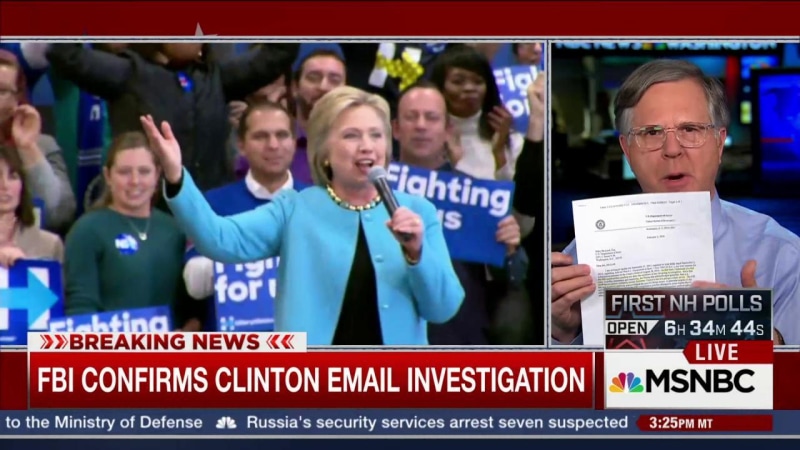
FBI formally confirms its investigation of Hillary Clinton’s email server

MSNBC | By Pete Williams | 02/08/16 05:30 PM


In a letter disclosed Monday in a federal court filing, the FBI confirms one of the world’s worst-kept secrets: It is looking into Hillary Clinton’s use of a private email server.


Why say this at all, since it was widely known to be true? Because in August in response to a judge’s direction, the State Department asked the FBI for information about what it was up to. Sorry, the FBI said at the time, we can neither confirm nor deny the existence of any investigation.

Now, in a letter dated February 2 and filed in court Monday, the FBI’s general counsel, James Baker, notes that in public statements and congressional testimony, the FBI “has acknowledged generally that it is working on matters related to former Secretary Clinton’s use of a private email server.”

Baker says the FBI has not, however, “publicly acknowledged the specific focus, scope or potential targets of any such proceedings.”

He ends the one-paragraph letter by saying that the FBI cannot say more “without adversely affecting on-going law enforcement efforts.”

The letter was filed in one of the Freedom of Information Act cases brought against the State Department over access to documents from Hillary Clinton’s time as secretary of state. This one was filed by Judicial Watch.

Monday, February 8, 2016

Russian Hackers Moved Currency Rate With Malware, Group-IB Says

Bloomberg | Jake Rudnitsky & Ilya Khrennikov | February 8, 2016 — 5:42 AM EST


Hackers used malware to penetrate the defenses of a Russian regional bank and move the ruble-dollar rate more than 15 percent in minutes, according to a Moscow-based cyber-security firm hired to investigate the attack.


Russian-language hackers deployed a virus known as the Corkow Trojan to infect Kazan-based Energobank and place more than $500 million in orders at non-market rates in February 2015, Group-IB told Bloomberg, without identifying individuals behind the attack. The resulting rate swing prompted a Russian central bank investigation last year into potential market manipulation.

Malicious software of the type used in the attack can open a back door into computers via seemingly legitimate websites or files and then force them to carry out hackers’ orders. Corkow, which regularly updates itself to evade detection by anti-virus programs, has infiltrated 250,000 computers worldwide and infected more than 100 financial institutions, according to Group-IB, which investigated the attack on behalf of Energobank.

“This is the first documented attack using this virus and it has potential to do much more damage,” Dmitry Volkov, the head of Group-IB’s cyber intelligence department, said by phone. “Once the malware has penetrated a local network, it is sophisticated enough to infect computers that are even not connected to the Internet.”

The Moscow Exchange has said its systems were not hacked in the incident on Feb. 27, 2015. In a separate investigation, the central bank said it found no evidence of currency market manipulation, noting the fluctuations could have been caused by traders’ mistakes.

The volatility lasted 14 minutes and caused the exchange rate to swing between 55 and 66 rubles per dollar, which “significantly differed from the prevailing market rate,” the central bank said in a statement on Dec. 17.

The bank claimed losses of 244 million rubles ($3.2 million) due to the trades, Vedomosti newspaper reported last year, citing a suit filed by Energobank in a Kazan court. There is no evidence that the hackers profited from the operation and it may have been a test to prepare for future attacks, according to Group-IB.

Energobank, the exchange and the central bank did not respond to e-mailed queries.

The virus was also used in an attack on a Russian bank card system that resulted in hundreds of millions of rubles being stolen via ATMs in August, Group-IB said.

Thursday, February 4, 2016

Condoleezza Rice Aides, Colin Powell Also Got Classified Info on Personal Emails

NBC | by KEN DILANIAN | FEB 4 2016, 11:48 AM ET

Former Secretary of State Colin Powell speaks at the International Rescue Committee Freedom Award Dinner at The Waldorf Astoria Hotel in New York on Wednesday Nov. 9, 2011. Eric Reichbaum / AP file


The State Department's Inspector General has found classified information sent to the personal email accounts of former Secretary of State Colin Powell and the senior staff of former Secretary of State Condoleezza Rice, NBC News has learned.


In a letter to Undersecretary of State Patrick Kennedy dated Feb. 3, State Department Inspector General Steve Linick said that the State Department has determined that 12 emails examined from State's archives contained national security information now classified "Secret" or "Confidential." The letter was read to NBC News.

Two of the messages were sent to Powell's personal account, and 10 were sent to personal accounts of Rice's senior aides, the letter said.

None of the messages were marked classified when originally sent, and none were determined to include information from the intelligence community, Linick said in the document.

Colin Powell told NBC News he strongly disputed that the information in the messages was classified, and characterized the contents as innocuous. Said Powell, "I wish they would release them so that a normal, air-breathing mammal would look at them and say, 'What's the issue?'"

Linick said his initial findings suggest there could be a lot more classified material in State's unclassified archives. He recommended that State take steps to find and remove it.

Hillary Clinton on FBI Email Investigation: 'Not Concerned' 1:27
The IG came upon the material during the course of a review of how current and past secretaries of state deal with classified material and with email. The review was prompted by the current controversy over Democratic presidential candidate Hillary Clinton's use of a personal computer server to conduct government business while secretary of state.

Linick's findings will be seen as helpful to Clinton, because they show that past secretaries of state and senior officials used personal accounts to conduct government business and occasionally allowed secrets to spill into the insecure traffic.

Wednesday, February 3, 2016

These four-foot-tall robots could change the way warehouse workers do their jobs

Tech Insider | Leanna Garfield | Feb 2, 2016

Locus Robotics

The Locus robot can zip around a clothing warehouse larger than the size of six football fields. It can also work for 24 hours, without a break for lunch or a salary.


The new bot, created by Locus Robotics, just launched in its first warehouse: a Devens, Massachusetts space owned by Quiet Logistics, a warehousing company that fills online orders for both small startups and megabrands like Zara and Bonobos. The robots transport items that have been picked off the shelves by humans, and bring them to the front of the warehouse to be sealed and delivered.

"We developed a system where the robots do all the walking," Locus Robotics CEO Bruce Welty tells Tech Insider. "As retailers continue to exceed expectation around next-day shipping, they're going to look to technology to help them provide an even faster turn-around."

The bots work alongside humans and do all the normal grunt work. Warehouse workers usually walk 12 to 16 miles each day. With the robots, they don't have to.

The robots now meet the human workers in the middle of the warehouse. As soon as someone completes an order online, the bot's system knows exactly where to go in the 275,000-square-foot warehouse.

Each bot (which doesn't look anything like a human) has a platform for arms and a two-foot-diameter base with wheels for feet. It zips around at about 4.5 mph, or the equivalent of a fast walk. If stray boxes or wires stand in its path, its vision technology can "see" in real-time to avoid them.

locus robot picking
Locus Robotics

Since the robots are able to move faster than humans without tiring, Welty says the system will boost warehouse productivity by up to 800%. The bots will also not be subject to human error, which means that they can get the order right nearly every time.

As a way to increase productivity and speed, many online retailers have been using robots, conveyor belts, and cranes to fulfill orders for the past decade. Amazon has exclusive rightsto Kiva Systems' robots, but Welty says Locus' robots are smaller, and more lightweight and versatile.

Unlike Kiva's bots, the Locus robots can be incorporated into the warehouses' existing infrastructure. The warehouse doesn't need to move any shelves or aisles. Locus can program the robot to navigate the warehouse exactly how it is.
locus robot 1Locus Robotics
"The robots are less industrial and easier to work side-by-side with humans," Welty says.

The robots won't replace any human jobs in Quiet Logistics' warehouse, at least for the time being. It will change the nature of many of their responsibilities, however. Since they don't need to roam the warehouse's aisles looking for the items, they can use that time for other parts of the distribution process. They can now do what they do best: add a personal touch.

As more retailers shift online and promise greater shipping speeds, there's a growing need to make sure that the orders are not only delivered on-time but also feel personalized. This can be as simple as stuffing boxes with pretty tissue paper or even handwritten notes from the brands — a job fit best for humans.

JOHN KERRY USED PERSONAL ACCOUNT TO SEND HILLARY ‘SECRET’ EMAIL

Mikael Thalen | Infowars | FEBRUARY 2, 2016


Secretary of State John Kerry used a personal email account to discuss “secret” information with Hillary Clinton during his time as a senator, the State Department confirmed Tuesday.


The heavily-redacted email, according to State Department spokesman John Kirby, was undoubtedly “sent from a non-official account.”

“The one that we talked about being upgraded to ‘Secret’ was sent from a non-official account, and the account from which it was sent is no longer active,” Kirby said.

Sent from Kerry’s iPad in May of 2011, the email was classified as “secret” before being released Friday over its mention of sensitive U.S. foreign relations.

The few unredacted sections reveal the discussion to be centered around policy in Pakistan, Afghanistan and India.

“We all know this will be a troubled relationship because that is it’s [sic] nature,” Kerry wrote. “But there are real possibilities at this moment to put options to the test.”

The discovery of yet another high-ranking Obama administration official using a private email to discuss sensitive information hints at an even larger disregard for national security than previously known.

Friday’s release of new Clinton emails also revealed that the State Department had suggested creating a “stand-alone” computer for Clinton in 2009 that would operate outside of the department’s network.

“Days after Clinton was sworn in as secretary of State, department official Lewis Lukens offered to give her a computer that would be ‘connected to the internet (but not through our system) to enable her to check emails from her desk,'” writes The Hill.

Clinton also received more than 18 emails from President Obama despite claims from the commander-in-chief that he had learned of the private email account from the “media.”

According to former Secret Service Agent Dan Bongino, who joined the Alex Jones Show earlier this month, Clinton continued using her private email despite knowing that her server had been hacked.

Monday, February 1, 2016

HACKERS ALLEGEDLY HIJACK DRONE AFTER MASSIVE BREACH AT NASA

Mikael Thalen | Infowars | JANUARY 31, 2016

IMAGE CREDIT: INFOWARS.COM


Members of the AnonSec hacking group have released more than 276GB of data after allegedly spending months inside NASA’s internal network.


The collection of files, provided to Infowars by AnonSec admin Dêfãult Vírüsa prior to being made public Sunday, include 631 videos from aircraft and weather radars, 2,143 flight logs as well as the names, email addresses and phone numbers of 2,414 NASA employees.

A “zine,” or self-published paper detailing the hack, dubbed “OpNasaDrones,” reveals everything from AnonSec’s motives to the specific technical vulnerabilities that enabled the extensive breach.


“NASA has been breached more times than most people can honestly remember… However, this hack into NASA wasn’t initially focused on drones [sic] data and upper atmosphere chemical samples. In fact the original breach into NASA systems wasn’t even planned, it was caught up in a gozi virus spread,” the hackers write, referring to an infamous Trojanthat has infected more than 1 million computers to date.

The Hack


After purchasing an “initial foothold” from a hacker with knowledge of NASA servers over two years ago, the group says it began testing how many machines it could “break into” and “root” – a term referring to an account with complete control over a computer or network.

Brute forcing an administrator’s SSH password, which reportedly only took “0.32” seconds due to the credentials being left as default, AnonSec gained further access inside – allowing them to grab even more login data with a hidden packet sniffer (tcpdump).

The hackers say while some members mapped the network, others analyzed the “different missions, airbases and aircraft” listed by the agency. Public missions like “OIB – Operation Ice Bridge” and drones such as the “Global Hawk“ were among those mentioned.

Deleting records of their presence as they hacked deeper into the agency’s system, AnonSec, who even hacked security cameras and uncovered the schematics to one base’s camera layout, then infiltrated the networks at “Glenn Research Center, Goddard Space Flight Center and Dryden Flight Research Center.”

Once inside, the group says it began noticing numerous systems and networked devices “popping up in scans that were not previously visible…”

After sniffing a password belonging to the system administrator, the hackers say they were eventually able to gain full root access to three network-attached storage (NAS) devices tasked with compiling backups of aircraft flight logs.

“Now we had all 3 NAS devices automatically making copies of the logs as they are uploaded from the drones and renaming them to look like semi ordinary index files,” the group writes, mocking the system administrator responsible for protecting the data.

Hackers Attempt to Crash Drone into Pacific Ocean

As the information began flowing unsuspectingly to an AnonSec-controlled server outside of the NASA network, analysis of the data yielded what the hackers described as “weird traffic.”

According to the group, the traffic consisted of “pre-planned route option” files which allow NASA to upload specific flight paths prior to take off.

After protest from several hackers, the group says it decided to carry out a man-in-the-middle (MiTM) attack several months later that replaced the drone route file with one of their own in an attempt to crash the aircraft into the ocean.

“Several members were in disagreement on this because if it worked, we would be labeled terrorists for possibly crashing a $222.7 million US Drone… but we continued anyways lol,” the zine states.

A screenshot from the hackers shows their intended flight path, which they say was cut short after drone pilots on the ground likely noticed the aircraft’s unusual behavior, forcing NASA to restore manual control.


“This recreated flight is from our attempt to crash the GlobalHawk [sic] into the Pacific Ocean but seemed to have been taken off of the malicious pre-planned route and was controlled via SatCom [sic] by a pilot once GroundControl [sic] realized,” the hackers write.

Soon after the alleged drone episode, the group says it was completely shut out from NASA’s networks.

“Whether it was the high amount of traffic sending drone logs across their compromised network or the attempted crashing of a GlowbalHawk [sic] that caused them to FINALLY inspect their networks, we don’t know. But it went down for a while soon after.”

“When they came back up several days later, we had completely lost access.”


Despite NASA’s ability to boot the hackers by changing passwords and patching critical vulnerabilities, vast amounts of information had already been exfiltrated.

“People might find this lack of security surprising but its [sic] pretty standard from our experience,” the group says. “Once you get past the main lines of defense, its [sic] pretty much smooth sailing propagating through a network as long as you can maintain access.”

Aircraft Footage & Flight Logs


The 631 videos siphoned out, filmed during 2012 and 2013, feature footage of weather radar readings as well as both manned and unmanned aircraft in multiple stages of flight.

One 59-minute video from May of 2012 shows one such drone taking off from a NASA runway before cutting out 30 minutes into its mission.


Other videos appear to be above large bodies of ice, likely related to the agency’s climate studies.


Flight logs which seem to coincide with some of the video files include the location of take off, aircraft model, mission name, sensor readings and GPS coordinates.

A screenshot showing a small portion of one log file, possibly from 2014, details the flight of a DC-8 involved in the public “Alternative-Fuel Effects on Contrails and Cruise EmiSSions” project.


The Dox


After examining the list of 2,414 employee names, emails and phone numbers, Infowars was able to confirm the legitimacy of several entries.


Although no calls were answered, names mentioned on each answering machine matched those listed in the hack.

At the time of publishing, Infowars did not receive calls back from any employees on the list or representatives at the Glenn Research Center, Goddard Space Flight Center, Dryden Flight Research Center and the NASA Media Room.

Infowars briefly spoke to NASA’s IT Security Division but did not receive a call back for comment.

Infowars did not receive comment from the FBI after both calling and emailing the agency.

Method Behind the Madness


AnonSec’s zine specifically cites climate engineering methods such as cloud seeding and geoengineering as the main driver behind the hack.

“One of the main purposes of the Operation was to bring awareness to the reality of Chemtrails/CloudSeeding/Geoengineering/WeatherModification, whatever you want to call it, they all represent the same thing. NASA even has several missions dedicated to studying Aerosols [sic] and their affects on the environment and weather, so we targeted their systems.”

Cloud seeding, a weather modification method that uses silver iodide to create precipitation in clouds, was most famously used by the U.S. military under “Operation Popeye” during the Vietnam war. After seeding clouds in the northern part of the country, U.S. forces were able to thwart Viet Cong supply lines by creating heavy rain over the Ho Chi Minh Trail.

Geoengineering, according to NASA’s Erik Conway, involves “injecting sulfate particles into the upper atmosphere – essentially mimicking a large volcanic eruption,” in an attempt to reflect sunlight away from the planet.

A poll conducted by the Independent in 2009, outlined in the article “Climate scientists: it’s time for ‘Plan B,'” states that more than 50 percent of climate scientists support looking into geoengineering.

“Just over half – 54 per cent – of the 80 international specialists in climate science who took part in our survey agreed that the situation is now so dire that we need a backup plan that involves the artificial manipulation of the global climate to counter the effects of man-made emissions of greenhouse gases.”

The hackers link to several mainstream reports and patents as evidence of current weather modification programs.

A 2013 article from Slate entitled, “Climate Intelligence Agency: The CIA is now funding research into manipulating the climate,” examines a 21-month, $630,000 project carried out by The National Academy of Sciences.

“The goal of the CIA-backed NAS study is to conduct a ‘technical evaluation of a limited number of proposed geoengineering techniques,’ according to the NAS website,” the article reads. “Scientists will attempt to determine which geoengineering techniques are feasible and try to evaluate the impacts and risks of each (including ‘national security concerns’).”

Another article from The Telegraph listed by the hackers mentions how “The Chinese government covered Beijing in snow… after meteorologists seeded clouds to bring winter weather to the capital in an effort to combat a lingering drought.”

The hackers argue that if cloud seeding, geoengineering and weather modification “are all publicly acknowledged as real, why are Chemtrails [sic] discredited when its [sic] literally the same exact thing just with a different name?”

“We find it staggering how many people still dont [sic] believe the federal government is doing this when its [sic] already public knowledge that the CIA is funding studies, certain states and countries already have WeatherModification [sic] programs in place for the past several years, not to mention all the government whistleblowers,” the zine says.

AnonSec’s Dêfãult Vírüsa, who spoke with Infowars over encrypted communications, stated that no one involved in the NASA breach has been apprehended by law enforcement.

Is technology causing us to 'evolve' into a new SPECIES? Expert believes super humans called Homo optimus will talk to machines and be 'digitally immortal' by 2050

Daily Mail | By SARAH GRIFFITHS | PUBLISHED: 06:14 EST, 1 February 2016


If you're under the age of 40, there is a good chance you will achieve 'electronic immortality' during your lifetime.

This is the idea that all of your thoughts and experiences will be uploaded and stored online for future generations.

That's according to a futurologist who not only believes technology will let humans merge with computers, that this will create an entirely new species called Homo optimus.

And, he claims this could occur as soon as 2050.

The predictions were made by Dr Ian Pearson as part of the lead up to The Big Bang Fair 2016.

He believes that within the next 35 years, humans will 'live' online, and our pets could even 'talk' to us, like real-life Furbies.

He also claims transhumanism – the idea we can make people technologically better – will be the norm by 2050.

'With optimised genomes and bodies enhanced by links to external technology, people could be more beautiful...more intelligent, more emotionally sophisticated, more physically able, more socially connected, generally healthier and happier all round.'

As humans embrace technological advances and gradually become androids, we could gradually see Homo sapiens being replaced by Homo optimus.

'We can expect our evolutionary process to change in response to technology.

'What's exciting is that it is no longer nature which is forcing changes on us but our own breakthroughs enabling changes we want, ' Dr Pearson explained.

 
Futurologist Dr Ian Pearson claims that in the next 35 years, humans will be able to communicate with computers to evolve better senses, memory and even intelligence. Electronic gold skin and tiny implants between cells could enable a direct link with devices, while we could 'wear' muscle too (illustrated above)

As humans embrace technological advances and gradually become androids, we could gradually see Homo sapiens being replaced by Homo optimus. This conceptual image shows four stages of human evolution (left to right) showing Australopithecus, Homo habilis, Homo erectus and Homo sapiens

WE MAY TURN INTO 'FAIRIES' TO EXPLORE SPACE 

Biotech and nanotech developments will make it possible to develop small brains with far greater capabilities, so the rest of the body could be scaled down accordingly.
There are big advantages in being tiny for space travel, Dr Pearson explained, because it is a lot easier to accommodate and transport tiny people.
'It is not frivolous to suggest that most space travellers will be rather like fairies, and wings would make it easy to get around in zero gravity too,' he said.
'This could give rise to some weird and wonderful future forms and creations – from changing video displays on our faces to controlling our own dreams - our (evolving) imaginations are the only limit.'

Dr Pearson believes that with a full link between the human brain and a computer, people could move their mind into an improved android body.

'This would allow people to have multiple expistences and identities, or to carry on living long after their biological death,' he wrote in the 'Future Human Report.'

While this technology could be available as soon as in 2050, it may become cheap enough to be widespread by 2070.

Plus, by the end of the century, there will likely be several types of humans, including human-machine hybrids, and people living in android bodies, as well as 'smart creatures'.

Dr Pearson continued that anyone under the age of 40 today will have a good chance of electronic immortality, meaning they could essentially 'upload' their personality so it can continue posting after their death. In the film Transcendence (pictured) the character played by Johnny Depp uploads his consciousness onto a computer

Research from academics and experts, collated by Dr Pearson for The Big Bang Fair, suggests humans will be able to directly communicate with electronics  and we could clone teeth, fix surfaces and edit genes to make them self-replace (illustrated above)
Research from academics and experts, collated by Dr Pearson for The Big Bang Fair, suggests humans will be able to directly communicate with electronics and we could clone teeth, fix surfaces and edit genes to make them self-replace (illustrated above)

WHAT THE FUTURE COULD LOOK LIKE - FROM SKIN TO MUSCLE TIGHTS

Research from academics and experts collated by Dr Pearson for The Big Bang Fair suggests:
  • We will be able to connect directly with technology through 'electronic skin' or tiny implants between our skin cells.
  • Electronic 'support tights' will boost leg strength with wearable polymer gel muscles 1cm thick.
  • Smudged make-up will be a thing of the past with smart make-up applied on top of a membrane on the skin surface to give a flawless, changeable look.
  • Nanotechnology will monitor and repair our bodies from the inside, making self-replacing teeth a possibility.
  • Technology will be used to enhance pets and wildlife, with the potential to hear our pets talk or to increase their IQ, and to create real versions of kids-craze Furbies. 

'We will certainly technologically advance some of our pets and even wildlife too and we might create entirely new species such as real Furbies,' Dr Pearson continued.

The predictions mean futuristic characters such as Dug the talking dog in Pixar's Up and the human-robot hybrids popular in hit TV shows like Humans could be a reality.

The Big Bang Fair – the UK's largest celebration of science, technology, engineering and maths (Stem) for young people - will give access to technologies shaping these developments, from a sensor placed on the skin that allows people to hear music using bone conduction, to robot orchestras.

'We will certainly technologically advance some of our pets and even wildlife too and we might create entirely new species such as real Furbies,' Dr Pearson continued

'It's the young people who come to the fair who will help drive through the innovations our experts are predicting,' said Paul Jackson, chief executive of EngineeringUK, organisers of The Big Bang Fair.

'Today's young people will not only get to experience 'wearing' muscles or owning smart-pets, they will decide what these look like.'

The Big Bang Fair is free and runs from 16 to 19 March at the Birmingham NEC.

Company Developing ‘Tech Tattoos’ So People Can Track Their Medical, Financial Info

CBS | January 29, 2016 11:18 PM


NEW YORK (CBSNewYork) — Could we soon be carrying all of our medical and financial information on a tattoo?

Software company Chaotic Moon has developed a “tech tattoo” that gets embedded into a person’s arm and can track a person’s financial and medical information.


Eric Schneider, the company’s hardware creative technologist, explained the tattoo can monitor if a person is about to get sick.

“Rather than going to the doctor once a year for your physical, this tech tattoo can be something you put on your body once a year and it monitors everything that they would do in a physical and it sends that to your doctor, and if there’s an issue they can call you,” Schneider said. “So the tech tattoos can really tie in everything into one package. It can look at early signs of fever, your vital signs, heart rate, everything it needs to look at to notify you that you’re getting sick or your child is getting sick.”

The tattoo will transmit this information wirelessly to a mobile app or computer being monitored by their health professionals.

Schneider also said that people would be able to carry their financial information through this tattoo.

“We carry wallets around and they are so vulnerable. With the tech tattoo you can carry all your information on your skin and when you want your credit card information or your ID, you can pull that up automatically through the system,” he said.

The tattoos are made with “electro conductive ink” that contain various sensors, and in some cases tiny microchips. The makers say they will last for up to a year.

Tim Moynihan of Wired Magazine thinks there could be a future with these tech tattoos.

“Twenty percent of Americans, I think, have tattoos so there is a potential market there.” Moynihan told CBS2.

Lance Ulanoff of Mashable called it a “fascinating idea” that could potentially be used to help track missing children or checking up on soldiers in combat.

“Right now they wear suits to try and keep track of all their vitals, and if something goes wrong with the suit then maybe there’s a problem, but if it’s on your skin, they know all the time,” Ulanoff told CBS2.

Cosmetic company L’Oreal is also getting in on the action with a temporary tattoo that can track UV exposure and alert people if they’re in danger of burning.

Thursday, January 28, 2016

SANDERS CAMPAIGN WORRIED MICROSOFT APP WILL MISREPRESENT IOWA CAUCUS VOTE

Kurt Nimmo | Infowars - JANUARY 28, 2016


IMAGE SOURCE: INFOWARS.COM

On Wednesday the Bernie Sanders campaign said it is concerned software giant Microsoft will tamper with caucus election vote tallies in Iowa next week.

Microsoft has partnered with both establishment parties and will provide a “mobile-enabled, cloud-based platform that will facilitate accuracy and efficiency of the reporting process,” according to its website.

Under the new system, each Iowa political party will have their own app available on all mobile and PC platforms, which will support the party’s unique caucus voting process. The reporting apps may be used in every precinct in Iowa by both parties. The results will be securely stored and managed in Microsoft’s Azure cloud computing platform.

“You’d have to ask yourself why they’d want to give something like that away for free,” said Pete D’Alessandro, who is heading up the Sanders campaign in Iowa.

Both the Sanders and Clinton campaigns have built reporting systems based on the Microsoft app.

In addition to taking money in the past from Citigroup, Goldman Sachs, JPMorgan and George Soros, Clinton has connections to Microsoft through Mark Penn, a former top advisor to both Bill and Hilary Clinton. Penn was Hillary’s “pollster, chief strategist and message guru all wrapped into one,” according to Politico. In 2012, he was named Corporate Vice President for Strategic and Special Projects at Microsoft. Penn was behind Microsoft’s award-winning Super Bowl 2014 ad “Empowering Us All” and the corporation’s “Celebrating the Heroic Women of 2013.”

Last September the Clinton Global Initiative used Microsoft’s audience engagement technology Bing Pulse to gauge audience feedback in real-time during CNBC’s interview with President Bill Clinton. The former president also keynoted the Microsoft SharePoint Conference in Las Vegas in March, 2014 and was interviewed by Wired magazine alongside Microsoft founder Bill Gates in 2013.
Establishment Will Pull Out All Stops to Beat Sanders and Trump

The establishment is in disarray over the presidential campaigns of Sanders and Donald Trump.

“With ever-growing hysteria, the Establishment is begging, cajoling and warning American voters not to elect a rogue President from the Right or the Left, neither Donald Trump nor Bernie Sanders, but to accept instead one of the ‘sane’ mainstream options. Yet, the unspoken truth is that the American Establishment has been off its rocker for decades,” writes Robert Parry.

The establishment’s derailment of the Ron Paul campaign demonstrates it will take drastic measures to distort primary results.

Going into Iowa, Ron Paul held a lead over the other Republican candidates. In response the Iowa GOP changed the final vote count to a secret location and results from 8 precincts—including results from colleges in a state where Paul won 48% of the youth vote—put Mitt Romney and Rick Santorum in the lead. Rule changes and similar tactics were used in the early primary states of Nevada and Florida to defeat Paul.

Activist Bev Harris and others have demonstrated how black box voting is used to flip votes and rig the election process. “We now know that the machines that they’re making that count the votes are not secure from tampering. And add to that, we’ve got a situation where everything inside the machines is secret, we’re not allowed the see how they count the votes. So this is not an acceptable situation,” Harris said back in 2003 when the first Diebold electronic voting machines were rolled out.

During the globalist confab in Davos, Switzerland, the elite expressed their consternation at the prospect of a Donald Trump victory. Harvard University’s Niall Ferguson said Trump’s chances “could be over before Super Tuesday,” and that populists never win the presidency, but that the public is “mad as hell” and this is what’s driving the Trump phenomenon.

Meanwhile, the GOP is working to take down Trump, preferably before the primaries.

According to columnist Ann Coulter, the establishment may cook up a scandal that will be floated before the primaries to take the edge off Trump’s commanding lead. “Look for a fake Trump scandal to break—probably from a conservative news outlet—right before the Iowa caucus,” she wrote on January 20.

Despite the frantic effort to derail the Trump campaign—and that of alleged outsider Ted Cruz as well—some believe Hillary Clinton will win the election regardless of Republican challenge or the email scandal and the Benghazi imbroglio. In the end, Democrats will abandon Sanders and line up behind Clinton.

“It doesn’t matter who the Republicans put up… Hillary will win,” the highly influential CEO of WPP PLC (Wire and Plastic Products), Martin Sorrell, told DC Whispers on January 24.

Fraud at the polls and manipulated poll results in Iowa may help, but in the final wash it will be Hillary because of the fear level of a Republican victory. The Democrat establishment has mastered the art of fear, hysteria and stampeding the rank and file.

The New York Times reports “the Sanders surge is about to hit a wall: the rank and file of the Democratic primary electorate… Nearly half of the Democratic primary electorate is moderate or even conservative” and deathly afraid of a Republican victory despite the obvious fact there is little difference between the two sides of a domineering establishment party.

Follow Kurt Nimmo on Twitter: https://twitter.com/kurt_nimmo