Tuesday, February 23, 2016

MSNBC CENSORS SANDERS CONDEMNING TPP

Kit Daniels | Infowars - FEBRUARY 23, 2016

IMAGE CREDITS: GAGE SKIDMORE / FLICKR.

MSNBC cut away from live coverage of a Bernie Sanders press conference once he began to condemn the controversial Trans-Pacific Partnership.


Social media exploded as a result as viewers felt the break in Monday’s coverage was due to MSNBC’s owner, Comcast, not wanting to air criticism of the TPP because it benefits greatly from the treaty.


Scroll to the 1:40 mark.

“Of the near $16 million Comcast spent lobbying politicians in 2015, $40,000 alone was spent in the first three months of the year targeting the Senate and House of Representatives on issues relating to TPP,” RTreported. “Over an 18-month period between 2013 and 2015, Media Matters found that MSNBC only discussed TPP twice, with the exception of Ed Schultz, who discussed the agreement during 71 broadcasts while he was still hosting The Ed Show for MSNBC.”

Schultz later left MSNBC for RT America.

MSNBC isn’t alone in suppressing TPP coverage; CBS, ABC and NBC also barely mentioned the treaty over an 18-month period despite the TPP’s severe implications on both the U.S. economy and global human trafficking.

For one thing, not long after the White House invited Thailand to join the TPP, the AP reported the country was relying on slave labor to ship shrimp to the U.S.

“For… 16 hours, No. 31 and his wife stood in the factory that owned them with their aching hands in ice water,” the AP revealed. “They ripped the guts, heads, tails and shells off shrimp bound for overseas markets, including grocery stores and all-you-can-eat buffets across the United States.”

“After being sold to the Gig Peeling Factory, they were at the mercy of their Thai bosses, trapped with nearly 100 other Burmese migrants.”

It’s unlikely Thailand’s billion-dollar slave industry would prevent it from joining the TPP considering that President Obama previously removed an anti-slavery provision from the treaty and also allowed Vietnam to join the partnership despite its flourishing slave trade.

Interestingly, Obama quietly removed the TPP’s anti-slavery clause at the same time he was attacking the Confederate flag as a “symbol of slavery” last summer.

VIDEO: OBAMA CRACKS JOKE ABOUT SCALIA’S DEATH

Infowars - FEBRUARY 22, 2016


During his National Governors Association speech Monday, President Obama joked there was a lot to get done during his final days in office, including “appointing judges.”


“Some of you may be in the final year of your term, working as hard as you can to get as much done as possible for the folks you represent, fixing roads, educating our children, helping people retrain, appointing judges, the usual stuff,” the president jested, as the crowd in attendance burst into laughter.

Last week, the president was criticized after it was announced he would not be attending the funeral of Associate Supreme Court Justice Antonin Scalia.

Obama was further lambasted when it was reported he spent less than two minutes paying his respects to Justice Scalia during the Saturday service at the National Shrine of the Immaculate Conception in Washington, D.C.

Wednesday, February 17, 2016

FBI confiscated witness video showing agents open fire on occupants of vehicle prior to LaVoy’s death

Iran snubs Doha proposal, won't freeze oil output

AP | By ALI AKBAR DAREINI | February 17, 2016


TEHRAN, Iran (AP) - Iran appeared Wednesday to back a plan laid out by four influential oil producers to cap their crude output if others do the same, though it offered no indication that it has any plans to follow suit itself.


The agreement reached in Doha the day before by Qatar, Saudi Arabia, Russia and Venezuela is aimed at stabilizing global oil prices, which recently plunged to less than $30 a barrel, a 13-year low. But Iran is keen to ramp up exports to regain market share now that sanctions related to its nuclear program have been lifted under a landmark agreement.

"Iran supports any measure to boost oil prices," Oil Minister Bijan Namdar Zanganeh said after talks with his counterparts from Iraq, Venezuela and Qatar.

"The decision taken to freeze the production ceiling of OPEC and non-OPEC members to stabilize and boost prices is also supported by us," he added, in comments posted on the ministry's website late Wednesday.

Iran's envoy to OPEC, Mahdi Asali, had earlier blamed the fall in prices on oversupply, and said it was up to Saudi Arabia and others to cut production. He said the four nations that participated at the Doha gathering could stabilize oil prices on their own -- if they cut their production by 2 million barrels a day.

"These countries increased their production by 4 million barrels when Iran was under sanctions," Asali was quoted as saying by the Shargh daily. "Now it's primarily their responsibility to help restore balance on the market. There is no reason for Iran to do so."

The four countries made their announcement following an unexpected meeting in the Qatari capital that pointedly did not include Iran. They agreed to act only if other producers made similar freezes.

Iran has previously said it hopes to put another 500,000 barrels a day on the market. Figures from the International Energy Agency show it pumped 2.9 million barrels daily in December, before sanctions were lifted.

Iran used to export 2.3 million barrels per day, but its crude exports fell to 1 million in 2012, when sanctions were tightened.

On Tuesday, Iran's oil minister said it had no intention of giving up its share of the market. Zanganeh acknowledged that global markets are "oversupplied," but said Iran "will not overlook its quota," according to comments carried by his ministry's Shana news service.

Even with Iran's cooperation, it was unclear if the Doha plan would be enough to put a floor under prices.

The United Arab Emirates' energy minister, Suhail Mohamed al-Mazrouei, refused on Wednesday to discuss the Doha proposal after giving a keynote address at a Dubai conference in which he mentioned low oil prices only in passing.

"I will only talk about this conference," he said, before smiling and walking away from reporters' shouted questions.

He later took to Twitter to say his country's oil policy "is open to cooperate with all producers toward mutual interest of the market stability and we are optimistic on the future."

Kuwait, another Gulf OPEC member, signaled it was willing to go along with the Doha plan.

Anas al-Saleh, who is Kuwait's deputy premier, finance minister and acting oil minister, said in a statement that his country was committed to the proposal if others join in.

"Kuwait hopes the agreement would provide a positive atmosphere for oil prices, and for the market to regain balance, and calls on all to support stability of markets," he said.

___

Associated Press writers Jon Gambrell and Adam Schreck in Dubai, United Arab Emirates, contributed to this report.

FBI Prompts Apple to Issue Privacy Letter to Customers After San Bernadino Shooter Request

Apple | February 17, 2016


A Message to Our Customers


The United States government has demanded that Apple take an unprecedented step which threatens the security of our customers. We oppose this order, which has implications far beyond the legal case at hand.

This moment calls for public discussion, and we want our customers and people around the country to understand what is at stake.

The Need for Encryption


Smartphones, led by iPhone, have become an essential part of our lives. People use them to store an incredible amount of personal information, from our private conversations to our photos, our music, our notes, our calendars and contacts, our financial information and health data, even where we have been and where we are going.

All that information needs to be protected from hackers and criminals who want to access it, steal it, and use it without our knowledge or permission. Customers expect Apple and other technology companies to do everything in our power to protect their personal information, and at Apple we are deeply committed to safeguarding their data.

Compromising the security of our personal information can ultimately put our personal safety at risk. That is why encryption has become so important to all of us.

For many years, we have used encryption to protect our customers’ personal data because we believe it’s the only way to keep their information safe. We have even put that data out of our own reach, because we believe the contents of your iPhone are none of our business.

The San Bernardino Case


We were shocked and outraged by the deadly act of terrorism in San Bernardino last December. We mourn the loss of life and want justice for all those whose lives were affected. The FBI asked us for help in the days following the attack, and we have worked hard to support the government’s efforts to solve this horrible crime. We have no sympathy for terrorists.

When the FBI has requested data that’s in our possession, we have provided it. Apple complies with valid subpoenas and search warrants, as we have in the San Bernardino case. We have also made Apple engineers available to advise the FBI, and we’ve offered our best ideas on a number of investigative options at their disposal.

We have great respect for the professionals at the FBI, and we believe their intentions are good. Up to this point, we have done everything that is both within our power and within the law to help them. But now the U.S. government has asked us for something we simply do not have, and something we consider too dangerous to create. They have asked us to build a backdoor to the iPhone.

Specifically, the FBI wants us to make a new version of the iPhone operating system, circumventing several important security features, and install it on an iPhone recovered during the investigation. In the wrong hands, this software — which does not exist today — would have the potential to unlock any iPhone in someone’s physical possession.

The FBI may use different words to describe this tool, but make no mistake: Building a version of iOS that bypasses security in this way would undeniably create a backdoor. And while the government may argue that its use would be limited to this case, there is no way to guarantee such control.

The Threat to Data Security


Some would argue that building a backdoor for just one iPhone is a simple, clean-cut solution. But it ignores both the basics of digital security and the significance of what the government is demanding in this case.

In today’s digital world, the “key” to an encrypted system is a piece of information that unlocks the data, and it is only as secure as the protections around it. Once the information is known, or a way to bypass the code is revealed, the encryption can be defeated by anyone with that knowledge.

The government suggests this tool could only be used once, on one phone. But that’s simply not true. Once created, the technique could be used over and over again, on any number of devices. In the physical world, it would be the equivalent of a master key, capable of opening hundreds of millions of locks — from restaurants and banks to stores and homes. No reasonable person would find that acceptable.

The government is asking Apple to hack our own users and undermine decades of security advancements that protect our customers — including tens of millions of American citizens — from sophisticated hackers and cybercriminals. The same engineers who built strong encryption into the iPhone to protect our users would, ironically, be ordered to weaken those protections and make our users less safe.

We can find no precedent for an American company being forced to expose its customers to a greater risk of attack. For years, cryptologists and national security experts have been warning against weakening encryption. Doing so would hurt only the well-meaning and law-abiding citizens who rely on companies like Apple to protect their data. Criminals and bad actors will still encrypt, using tools that are readily available to them.

A Dangerous Precedent


Rather than asking for legislative action through Congress, the FBI is proposing an unprecedented use of the All Writs Act of 1789 to justify an expansion of its authority.

The government would have us remove security features and add new capabilities to the operating system, allowing a passcode to be input electronically. This would make it easier to unlock an iPhone by “brute force,” trying thousands or millions of combinations with the speed of a modern computer.

The implications of the government’s demands are chilling. If the government can use the All Writs Act to make it easier to unlock your iPhone, it would have the power to reach into anyone’s device to capture their data. The government could extend this breach of privacy and demand that Apple build surveillance software to intercept your messages, access your health records or financial data, track your location, or even access your phone’s microphone or camera without your knowledge.

Opposing this order is not something we take lightly. We feel we must speak up in the face of what we see as an overreach by the U.S. government.

We are challenging the FBI’s demands with the deepest respect for American democracy and a love of our country. We believe it would be in the best interest of everyone to step back and consider the implications.

While we believe the FBI’s intentions are good, it would be wrong for the government to force us to build a backdoor into our products. And ultimately, we fear that this demand would undermine the very freedoms and liberty our government is meant to protect.


Tim Cook

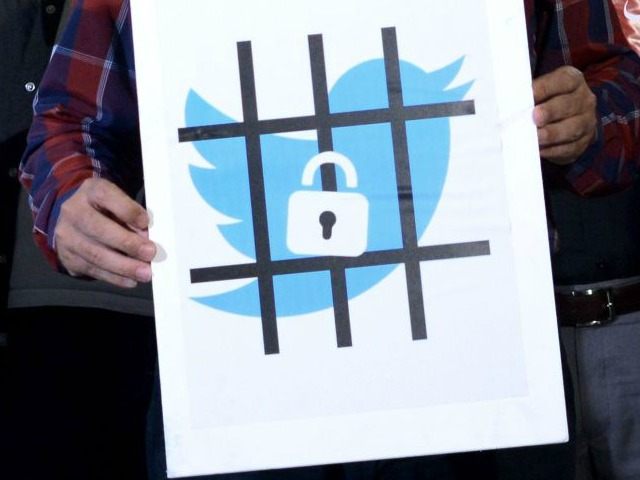
Twitter Shadowbanning ‘Real and Happening Every Day’ Says Inside Source

Breitbart | by MILO YIANNOPOULOS | 16 Feb 2016

AP Photo/Isa Simsek, Zaman

Rumours that Twitter has begun ‘shadowbanning’ politically inconvenient users have been confirmed by a source inside the company, who spoke exclusively to Breitbart Tech. His claim was corroborated by a senior editor at a major publisher.


According to the source, Twitter maintains a ‘whitelist’ of favoured Twitter accounts and a ‘blacklist’ of unfavoured accounts. Accounts on the whitelist are prioritised in search results, even if they’re not the most popular among users. Meanwhile, accounts on the blacklist have their posts hidden from both search results and other users’ timelines.

Our source was backed up by a senior editor at a major digital publisher, who told Breitbart that Twitter told him it deliberately whitelists and blacklists users. He added that he was afraid of the site’s power, noting that his tweets could disappear from users’ timelines if he got on the wrong side of the company.

Shadowbanning, sometimes known as “Stealth Banning” or “Hell Banning,” is commonly used by online community managers to block content posted by spammers. Instead of banning a user directly (which would alert the spammer to their status, prompting them to create a new account), their content is merely hidden from public view.

For site owners, the ideal shadowban is when a user never realizes he’s been shadowbanned.

However, Twitter isn’t merely targeting spammers. For weeks, users have been reporting that tweets from populist conservatives, members of the alternative right, cultural libertarians, and other anti-PC dissidents have disappeared from their timelines.

Among the users complaining of shadowbans are sci-fi author and alt-right figurehead Vox Day, geek culture blogger “Daddy Warpig,” and the popular pro-Trump account Ricky Vaughn. League of Gamers founder and former World of Warcraft team lead Mark Kern, as well as adult actress and anti-censorship activist Mercedes Carrera, have also reported that their tweets are not appearing on the timelines of their followers.

The pattern of shadowban reports, which skews towards the alt-right, the populist right, and cultural libertarians, follows close on the heels of Twitter’s establishment of a “Trust and Safety Council” packed with left-wing advocacy groups, as well as Islamic research centre the Wahid Institute.

It also follows my prediction that Twitter would use its influence to interfere in the 2016 presidential election by muffling conservative voices on the platform.

For close to a year now, Breitbart has covered Twitter’s march towards political censorship. In May 2015 Allum Bokhari reported that the site had begun to experiment with shadowbans, ostensibly to protect users from abuse. Then, as now, it was suspected that “protecting users from abuse” was an excuse to implement a system that would later be used for political censorship.

With shadowbans now confirmed by an inside source, there is little room for doubt that the platform is intent on silencing conservatives. Furthermore, it has demonstrated a complete lack of regard for transparency, concealing its shadowbanning system from users and hiding its political bias behind a veneer of opposition to online abuse. (In reality, the site turns a blind eye to abuse from left-wingers.)

Users in search of a transparent, politically unbiased platform will soon have to find — or build — an alternative.

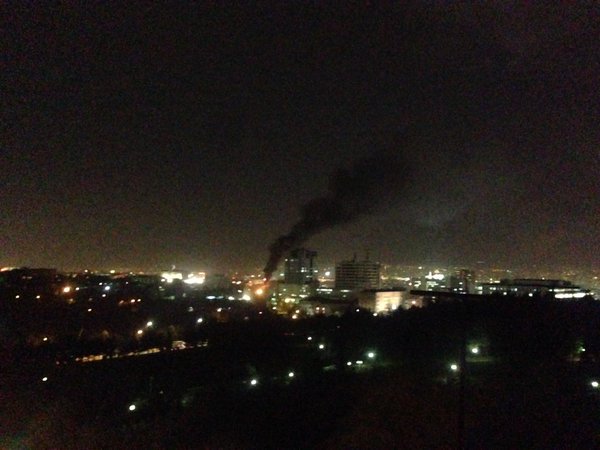
At Least 5 Dead After Massive Explosion In Turkish Capital, Military Dormitory Targeted

Zero Hedge | February 17, 2016


With Turkey on the brink of going to war with Russia and, implicitly, Iran, President Recep Tayyip Erdogan is looking for an excuse to invade Syria.


The rebels Turkey and Saudi Arabia back are staging what amounts to a last stand at Aleppo and the Kurdish YPG is moving to cut the Azaz corridor, which would effectively mean that Turkey has no way of resupplying the insurgency.

For the past five days, Ankara has been shelling the YPG in a futile attempt to stop their advance.

The only thing that can save the rebellion against Bashar al-Assad is an outright ground operation by the rebels' Sunni benefactors, including Turkey.

All Erdogan needs is a pretext and he may have just gotten one as reports indicate there's been a huge explosion in Ankara near parliament and at least 5 people are dead.

Early indications are that military barracks were targeted. A "large number of casulaties" are rumored. Expect this to be pinned on either ISIS or the PKK. If it's the latter, Ankara will once again claim that the group is working in concert with the YPG and that will be all the evidence Erdogan needs to march across the border.
  • EXPLOSION REPORTED IN TURKISH CAPITAL ANKARA, AHABER SAYS
  • ANKARA EXPLOSION OCCURRED NEAR MILITARY RESIDENCES: OFFICIAL
  • 5 PEOPLE KILLED IN ANKARA BLAST: T24 CITES ANKARA GOVERNOR
  • ANKARA BLAST WAS SUSPECTED CAR BOMB: CNN-TURK CITES GOVERNOR